The Cartagena issue
Cartagena on Foot and the One Ride You Still Need
The walled city, Getsemaní and even the fortress on the hill are all within walking distance. Here is how to time the heat, which doors are difficult, and the one trip that really does need a taxi.

By Sanne VermeerWalls, courtyards and the slower Cartagena
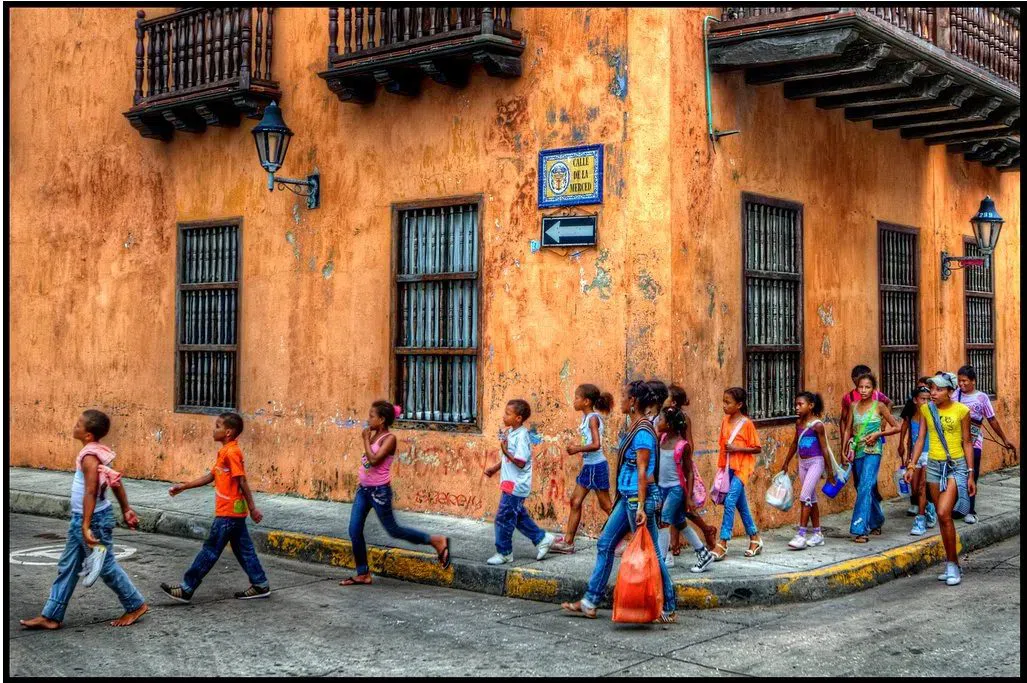
From the Torre del Reloj to the far wall of San Diego is a walk of about twenty minutes, and you will stop twice for a juice on the way. Cartagena's reputation for requiring a driver comes from its heat, not from its distances. Get the hours right and the walled city, Getsemaní and the fortress on the rise behind them fold into one slow, entirely pedestrian week.
The heat sets the timetable, not the map
A walking day here has two shifts. The first runs from about seven in the morning until eleven, when the stone is still cool from the night and the fruit sellers are setting up in the squares. The second begins around half past four and lasts as long as you want it to. Between those, the light comes straight off the flagstones and the sensible response is a museum, a long lunch or a hotel fan.
The old streets help. They are narrow, the balconies overhang, and there is shade on one side of nearly every calle; the habit to build is crossing the road rather than pushing on in the sun. Wear shoes with a sole, because the flagstones are uneven and the colonial kerbs are high. Carry water, accept that you will shower twice a day, and treat air-conditioned interiors as part of the route rather than as a retreat from it.
The other thing worth knowing early is that Cartagena's walkable core is small. The Centro inside the walls, San Diego in its northern corner and Getsemaní just outside the Puente Román are three adjoining districts, not three destinations. Almost every restaurant, bar and museum in this guide sits within a twenty-minute walk of the others.
Plan your Cartagena trip
Live prices from our booking partners.
Free cancellation on many rooms. We may earn a commission when you book.
Two hours that make the map stick
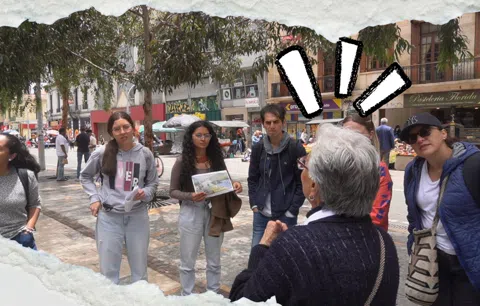
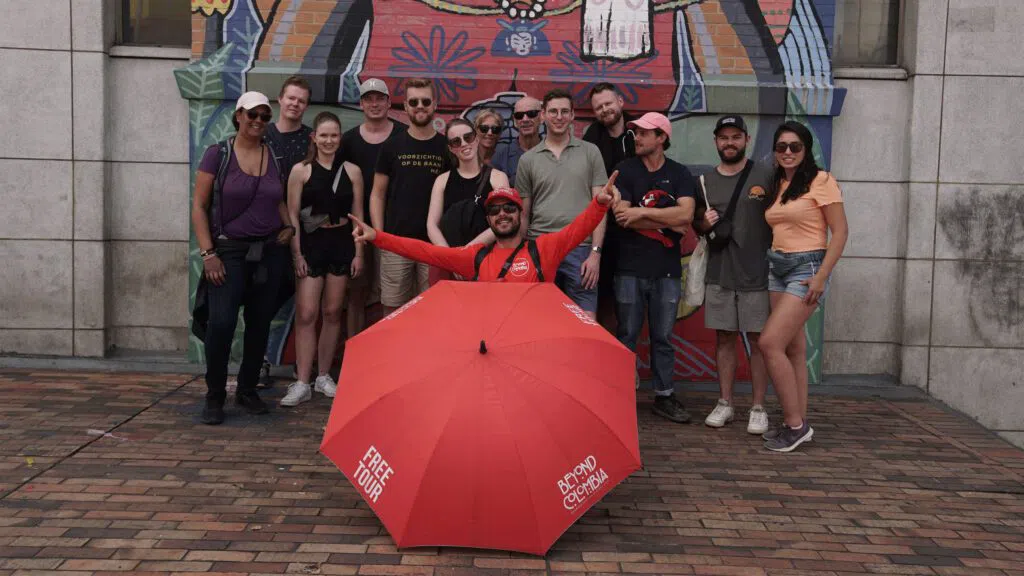
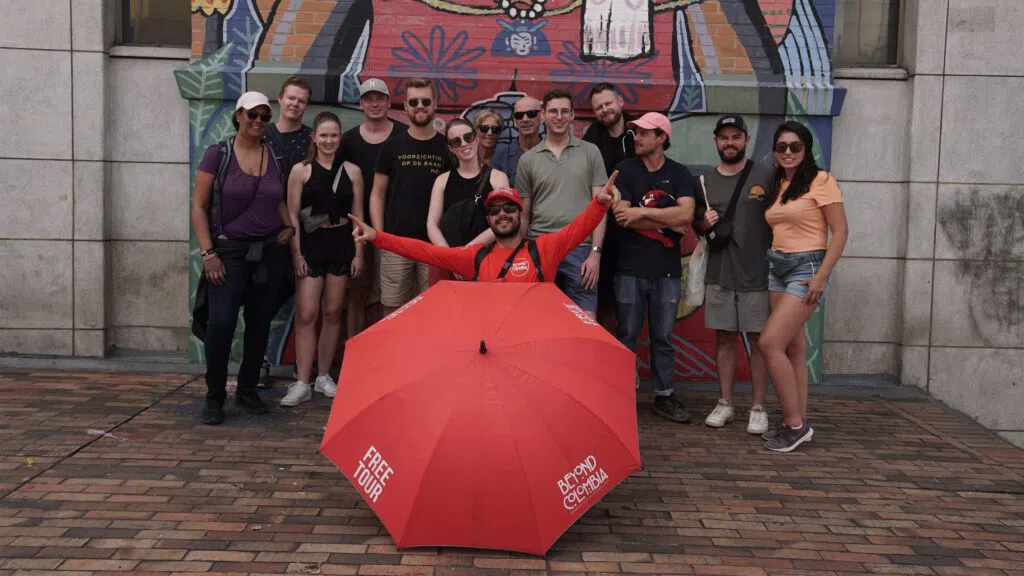
Do the orientation walk on your first morning and you stop needing a car by the second day. Beyond Colombia Free Walking Tour (meeting in the Old Town) runs five daily routes, among them the Old Town, Getsemaní and a San Felipe castle walk, in two-hour loops. It is free in the sense that you pay at the end; the suggested tip runs COP 30,000 to 50,000 per person, which is the cheapest way anyone learns this street grid. You can walk up, though booking ahead is wise. The format is worth knowing before you commit to it: these are large mixed groups by design, so you will spend some of it at the back of a crowd. It is orientation rather than intimacy, and for a solo traveller or a first-timer it does its job well.
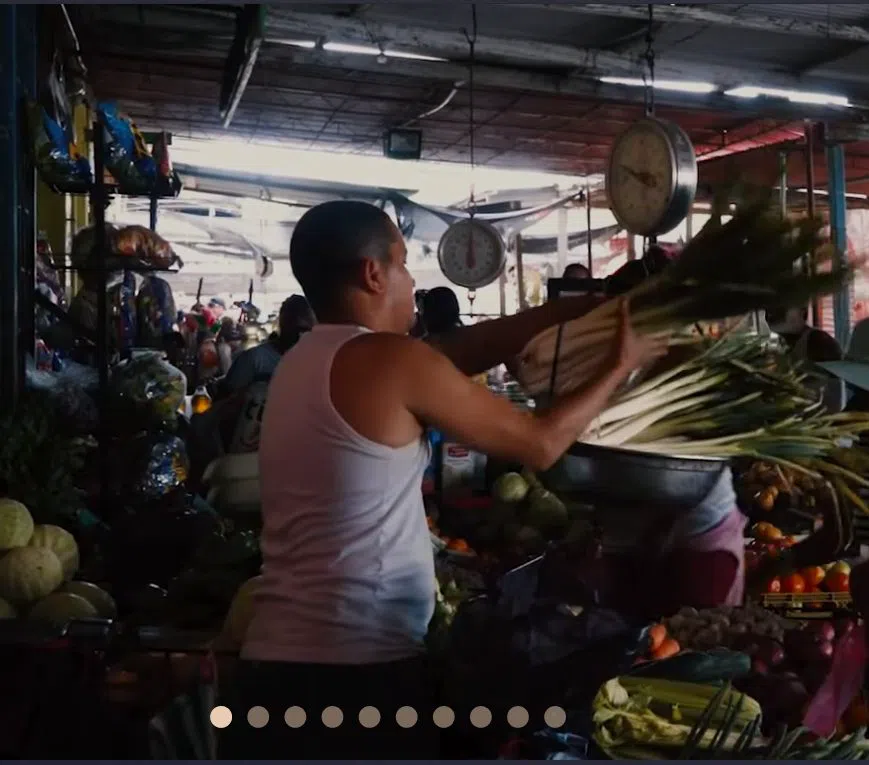
For something closer, Cartagena Connections Walking Tours (Old Town and Getsemaní, booked over WhatsApp) is owner-run and consistently the best-reviewed paid operator in the city. Expect around USD 35 to 60 per person depending on the route. Small groups are the standard product and private bookings are available, which makes this the better choice for a family or a group of friends who want to ask questions and actually hear the answers. The street-art, street-food and Bazurto market routes are the argument for paying: they cover ground most visitors otherwise hire a driver to skim past through a car window, and the market in particular is a place where going with someone who knows it changes the experience entirely.
Where a bicycle earns its keep

There is one gap in the walk-everything plan, and it is the flat, sun-exposed stretch south and east of the walls. Free Biking Tour Cartagena (meeting ten minutes' walk from the Clock Tower) fills it, covering Bocagrande, Manga and the marshside roads, distances that are a dull slog on foot and too short to justify a driver. Group tours are the core product and, like the walking equivalent, it runs on tips. Private and food-tour variants are arranged over WhatsApp. If you would rather go alone, rentals start at roughly COP 40,000 for a few hours, which is enough to see Manga's decaying mansions at your own pace and be back before the midday heat closes in.
Interiors stacked within one block
The walled city's best rooms are absurdly close together, which is what makes the middle of the day survivable. Museo del Oro Zenú (Plaza de Bolívar, in the Centro) is free, needs no booking, and reopened after a full restoration in 2023. It takes thirty to forty minutes, the galleries are small and beautifully lit, and it is air-conditioned, which makes it the best mid-afternoon heat shelter in the old town. A free guided visit is offered daily. Two practical notes: it closes on Mondays, and because the rooms are small, a group of more than six should split and meet outside afterwards.

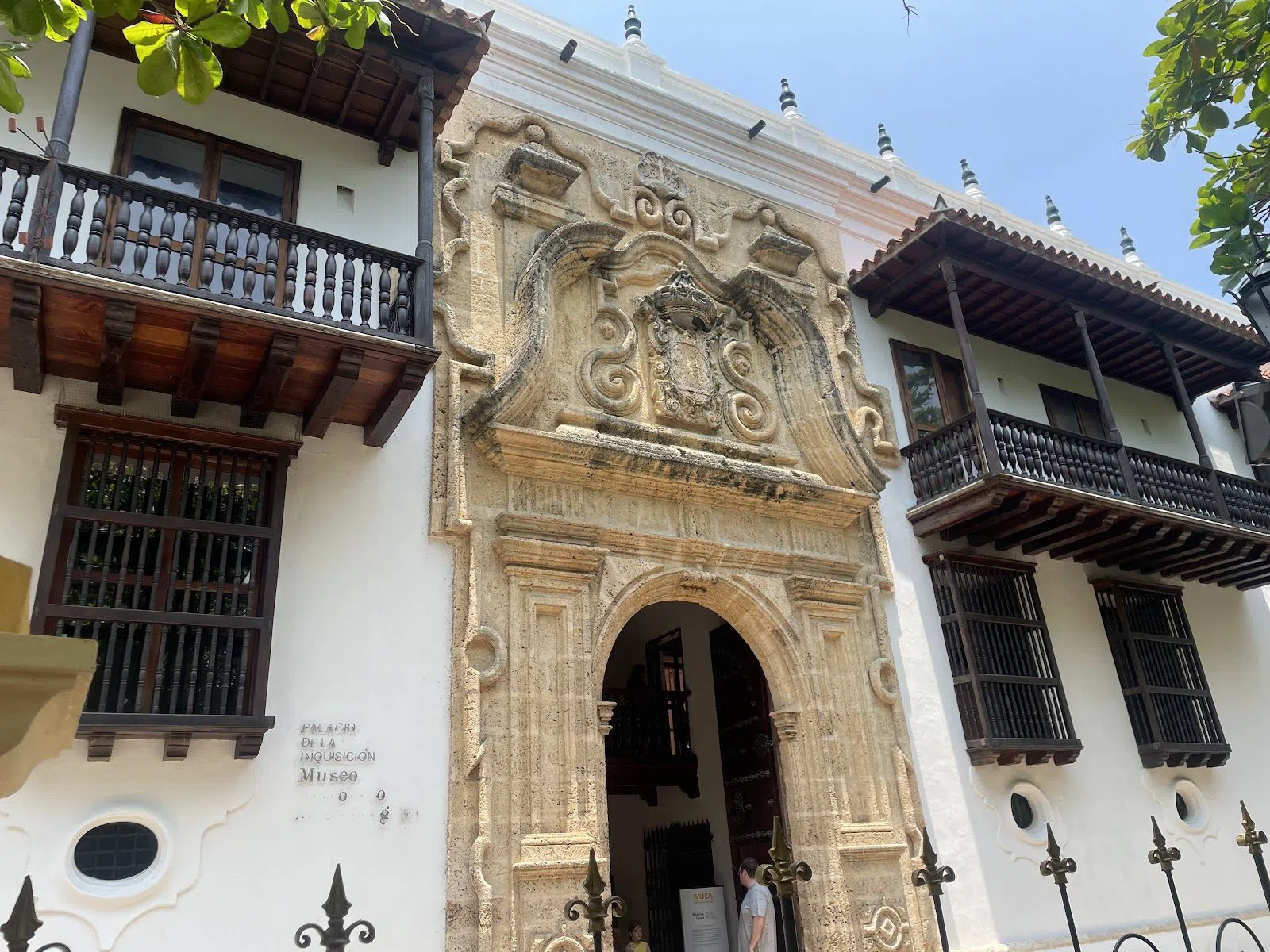
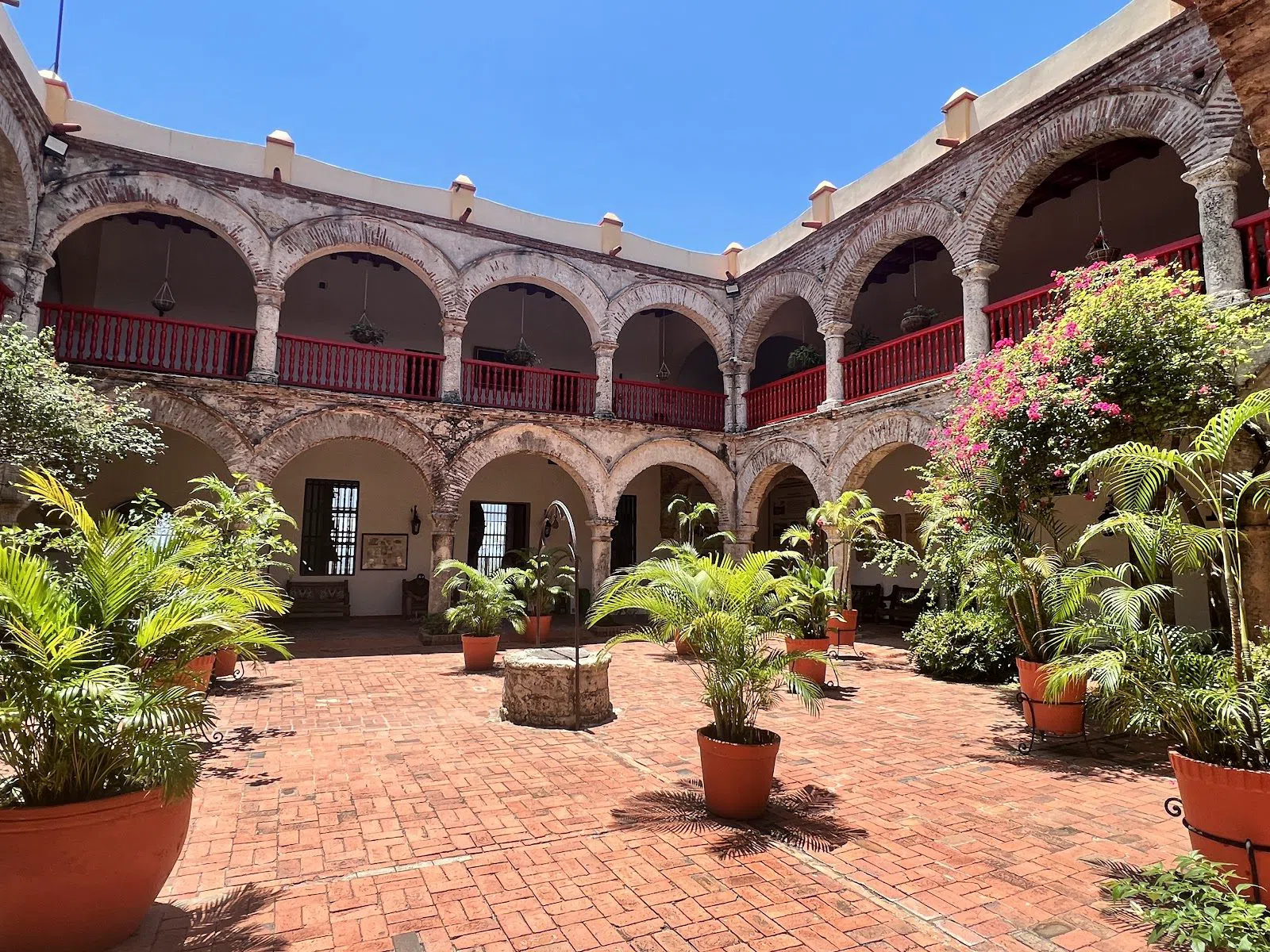
Ninety seconds' walk across the same square is the Museo Histórico de Cartagena (the Palacio de la Inquisición, Plaza de Bolívar), where COP 24,000 buys adult entry, COP 20,000 covers concessions and under-fives go free. It is a ticketed, staffed museum that handles groups without fuss; school and institutional parties are taken by arrangement. The building does more to explain what this city was than any amount of walking will: the courtyard, the balconied façade, the instruments in the back rooms. And the fact that you can leave one museum and be inside the other before your sunglasses have demisted is the whole case for staying inside the walls.
Sunset on the bastion now the bar has gone
Baluarte de Santo Domingo (on the sea wall, in the Centro) is where the city watches the sun go down, and the terms have changed. The Café del Mar bar that occupied this bastion for years was evicted after a State Council ruling ordered the public space recovered, and the city reopened the baluarte as a free public viewpoint. The sunset is exactly where it always was; the cocktail service is not. That is worth knowing before you arrive expecting a table and a waiter.
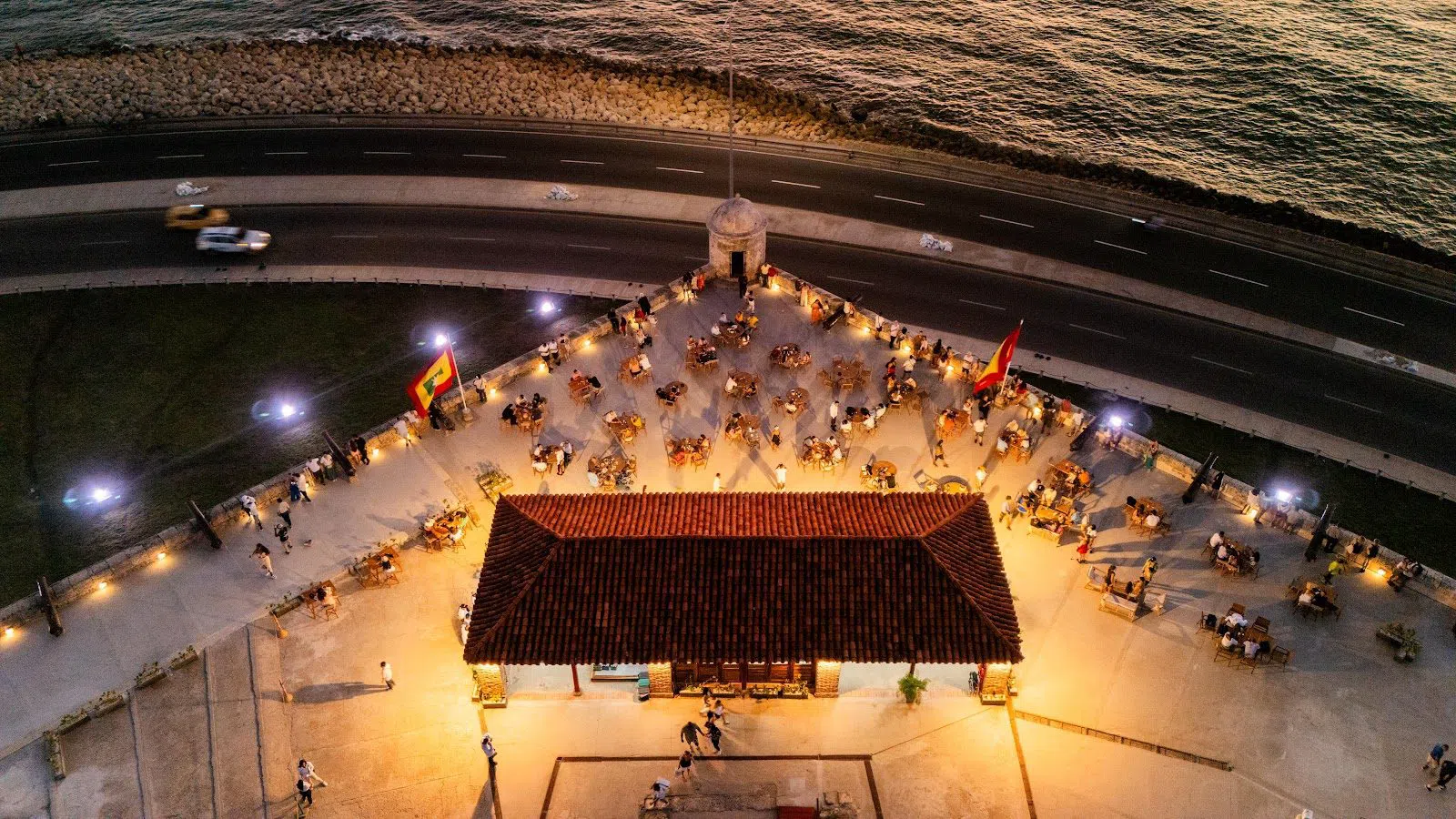
What you get instead is an open, free, unpoliced piece of city wall with no door policy and no reservation, which suits a group of any size. Arrive half an hour before sunset, sit on the warm stone, and buy your drink somewhere with a roof afterwards.
The castle is a walk, not an excursion
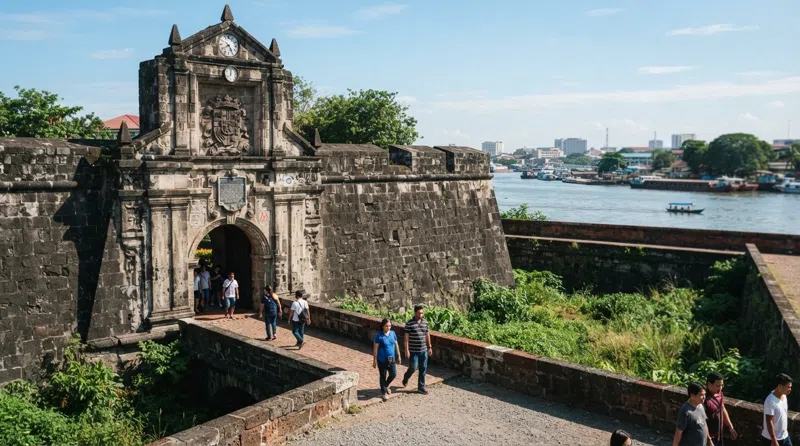
Castillo San Felipe de Barajas (east of Getsemaní, over the Puente Román side) is the single best proof that a driver is optional. Most itineraries present it as a cross-town trip. It is a flat twenty-to-thirty-minute walk from Getsemaní, and if you go at eight in the morning you get shade on the ramps and empty tunnels, which is when the fortress is worth the climb rather than merely large.
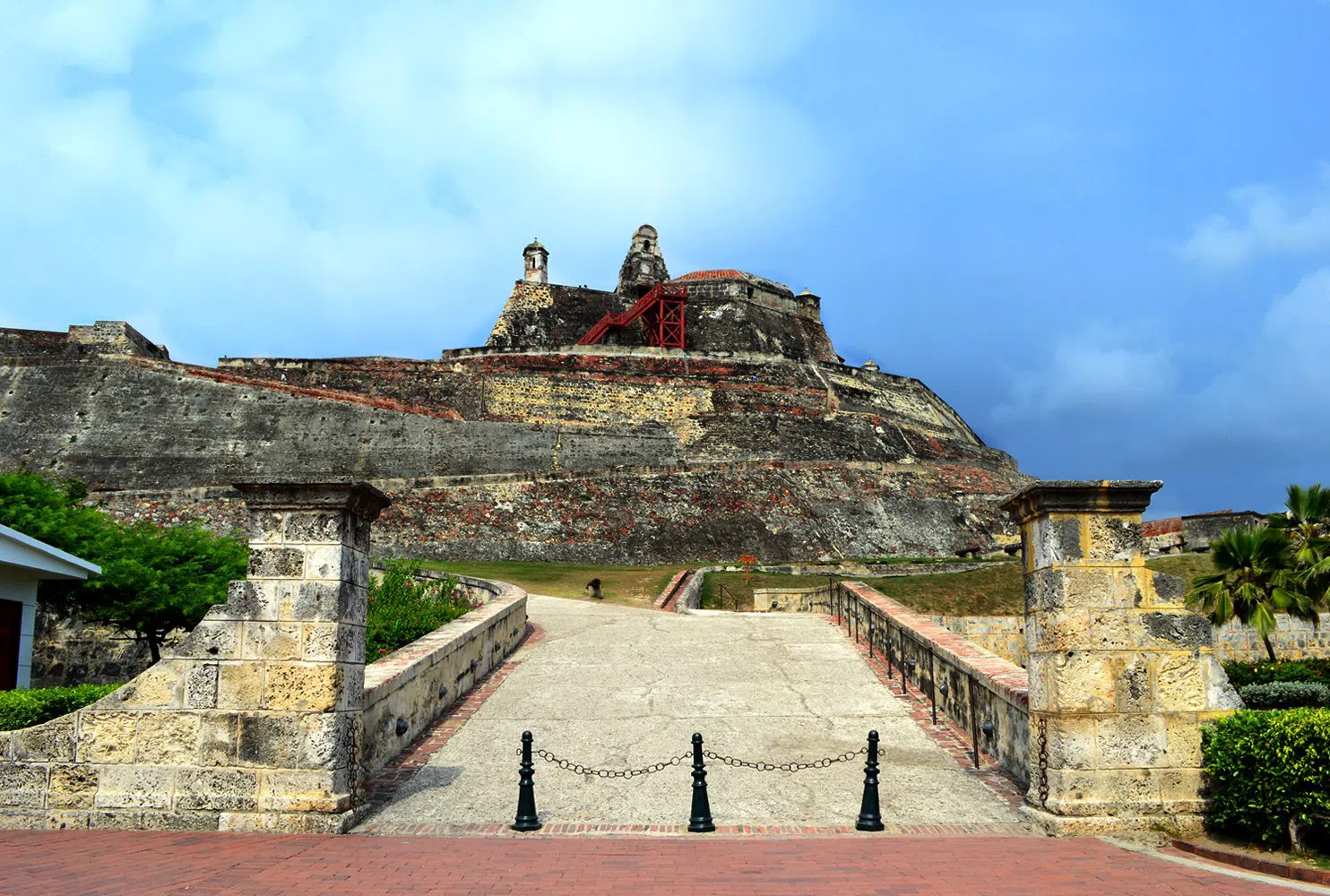
Adult tickets run COP 25,000 to 50,000, with an audio guide sold separately at about COP 15,000. Take it, because the tunnel system makes no sense unaided. Entry is free on the last Sunday of each month, which also makes that the busiest morning to attempt it. Walk-up ticketing copes with groups perfectly well, so there is no need to book anything in advance.
Getsemaní measured from the church steps
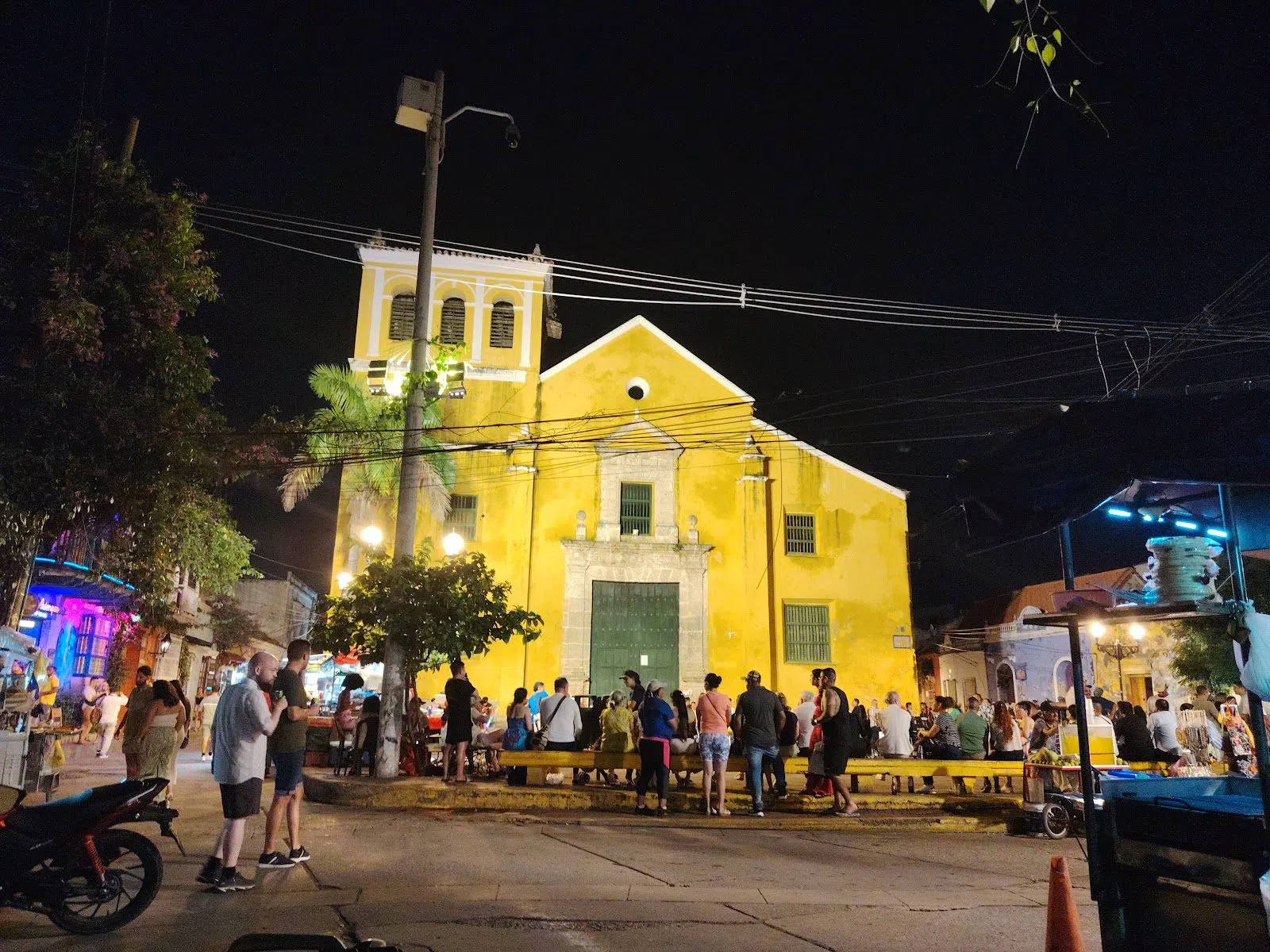
Everything in Getsemaní is described by its distance from one square. Plaza de la Trinidad (Getsemaní) is where the barrio sits out in the evening: free, open, no door, and busiest from about nine at night, when the church steps fill up with people eating COP 5,000 to 20,000 street food and drinking beer bought from a cooler. It is the default meeting point, and once you have it fixed in your head, walking home after dark becomes legible.
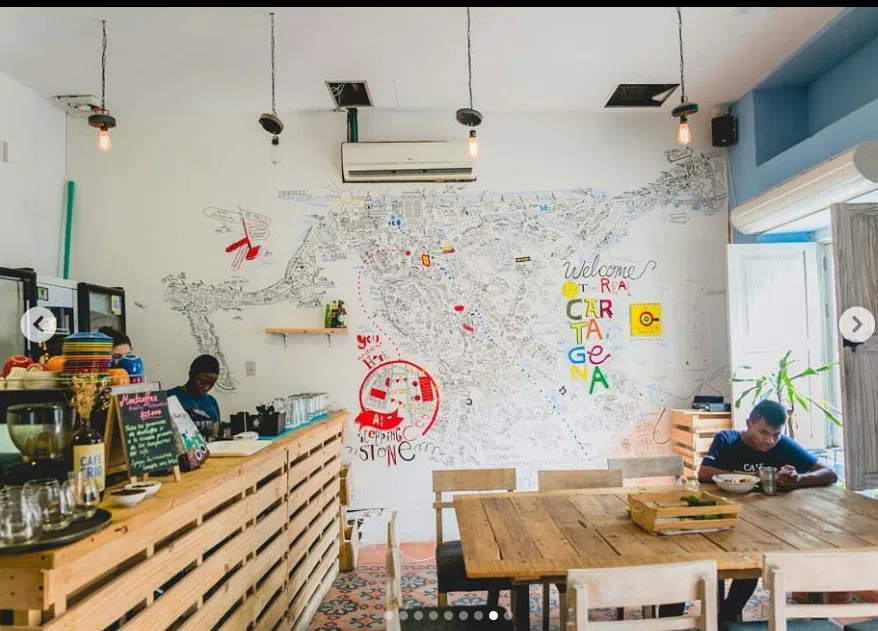
Mornings belong to Café Stepping Stone (Getsemaní), an Australian-founded social enterprise that trains and employs young people from the barrio through paid internships. It is the neighbourhood's breakfast anchor, open Monday to Saturday and closed on Sundays, with breakfast and coffee at COP 20,000 to 45,000. The room is small; a group of more than six should come outside the nine-to-eleven rush or accept a wait on the pavement.
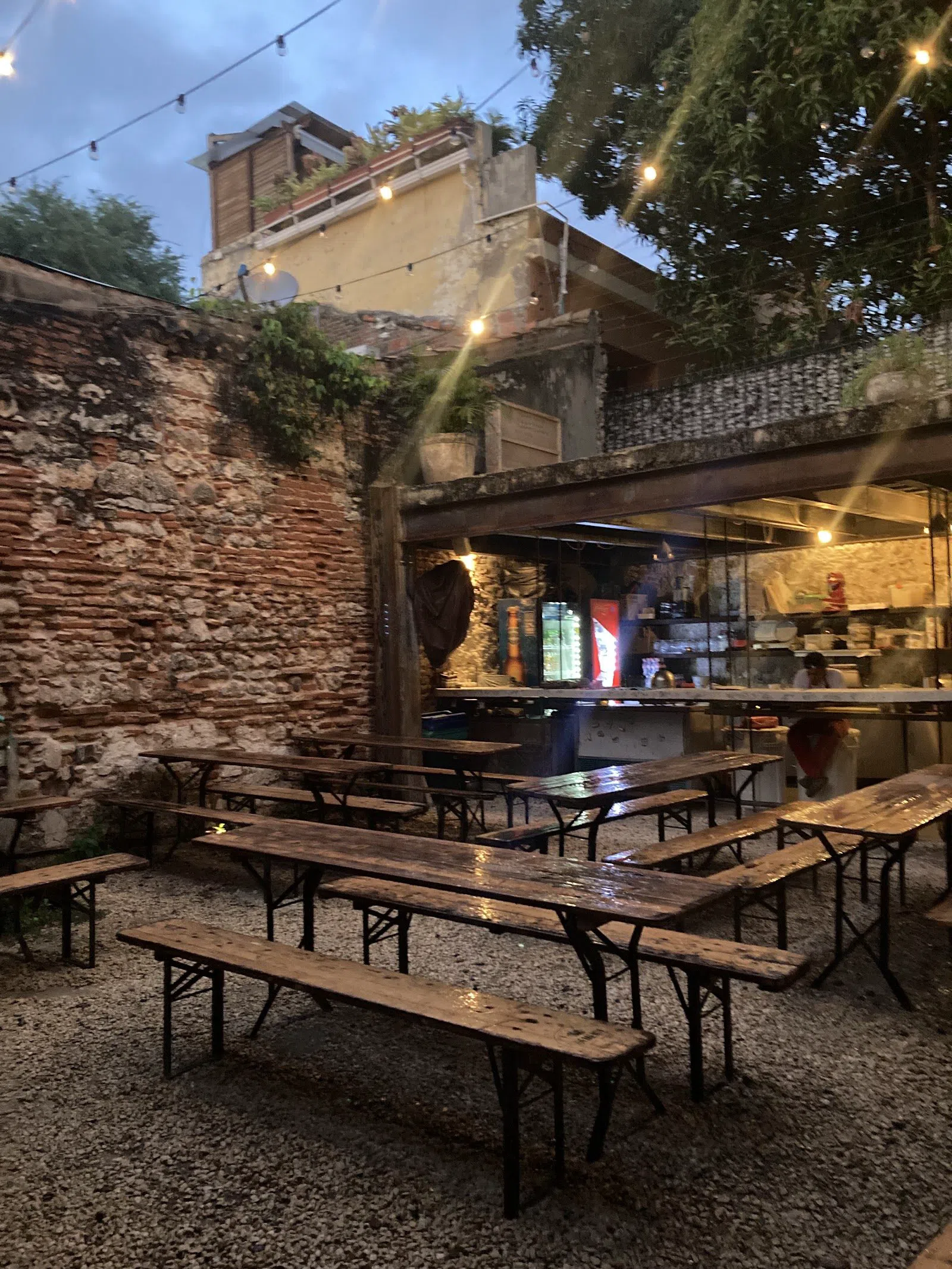
For dinner without leaving the barrio, Demente Tapas Bar (Plaza de la Trinidad, Getsemaní) opens daily from 5pm to 1am and does Spanish tapas with Caribbean edges plus wood-fired pizza, at COP 40,000 to 90,000 a head. Reservations are advised at weekends, and the rear garden takes groups that the front room cannot. Then there is Celele (Getsemaní), chef Jaime Rodríguez's Proyecto Caribe Lab kitchen, which reached No. 5 on Latin America's 50 Best and debuted at No. 48 on the World's 50 Best in 2025. The tasting menu runs COP 250,000 to 400,000 per head, reservations are essential and hard to come by, and you should book weeks out. Large parties need arranging in advance; small groups are seated normally. That a restaurant of that standing sits within walking distance of most Old Town hotels is the strongest argument there is for choosing where you sleep carefully. See the Cartagena hotel search if you are still deciding, and weight the Centro, San Diego and Getsemaní above anything further out.
Lunch in San Diego and the queue you should plan for
La Cevichería (San Diego) is chef-owner Jorge Escandón's seafood room, open lunch and dinner seven days a week, at COP 60,000 to 120,000 per person. It is deservedly famous and genuinely tiny, which is the tension. A walk-in queue is normal; anything larger than four people will either wait or should book. Go at an early lunch rather than into the eight o'clock crush and it is a different, better restaurant: a table on a quiet San Diego corner instead of a scrum.

Two bars, one difficult door
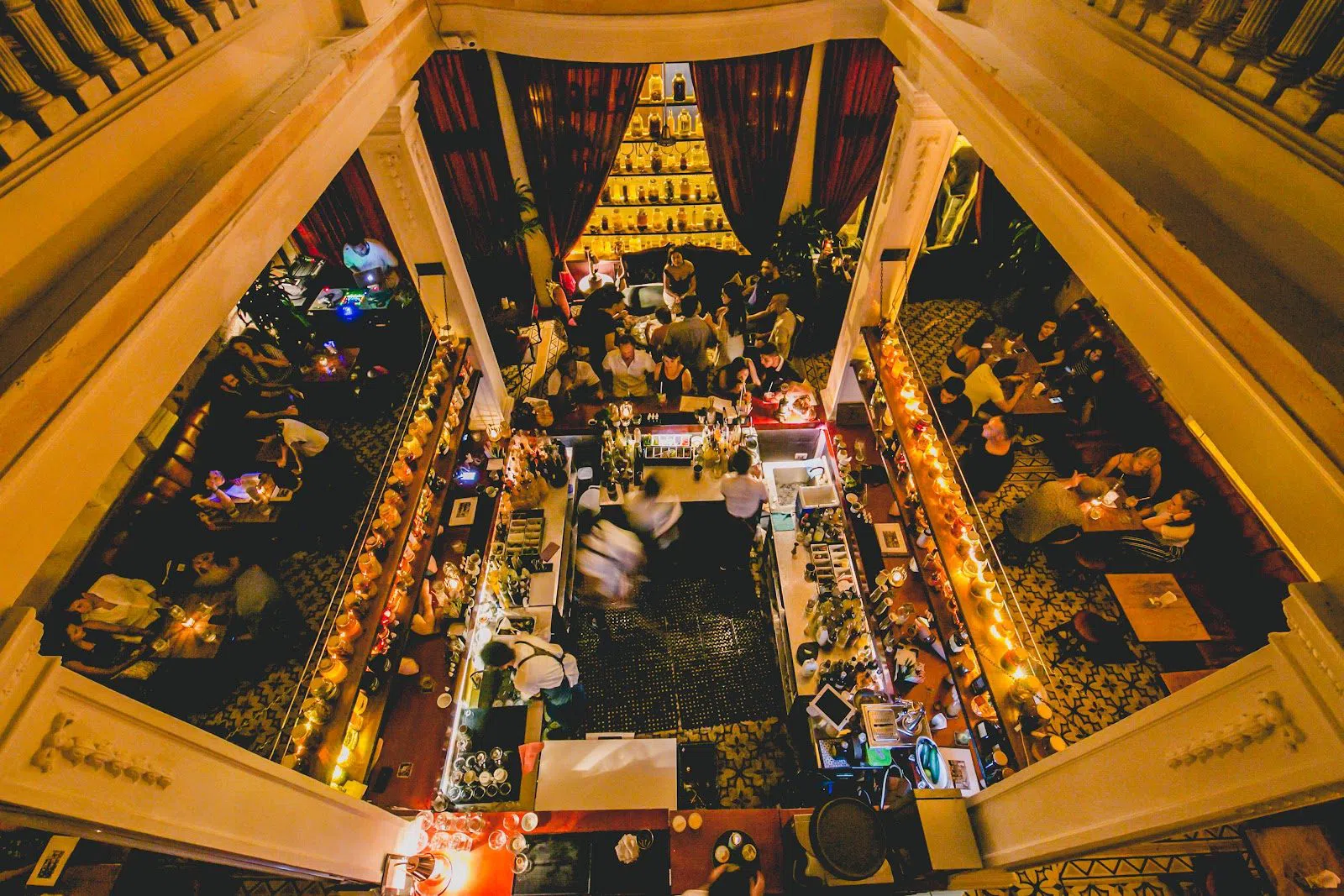
Alquímico (Centro) was ranked No. 11 in the World's 50 Best Bars in 2025 and took the Michter's Art of Hospitality Award in 2026, and it takes no reservations at all. It opens at 7pm daily, spreads across three floors, and the house reserves right of admission, so arrive before ten, come as a group that can split across floors, and dress like you meant to come out. Cocktails run COP 45,000 to 70,000. Walk-in only sounds democratic and mostly is, though it favours the people who turn up early and are willing to wait.
El Barón (Plaza San Pedro Claver, Centro) is the more forgiving option and one of the few places in the walled city that works at both ends of the day: open from breakfast through to one or two in the morning, taking bookings as well as walk-ins, with plaza tables that suit a group. It is a 50 Best Discovery bar with a sustainability angle to its sourcing. Cocktails are COP 40,000 to 60,000 and food COP 30,000 to 70,000. Morning coffee and a last drink at midnight in the same chair is a rare and useful thing.
Salsa four blocks from your bed
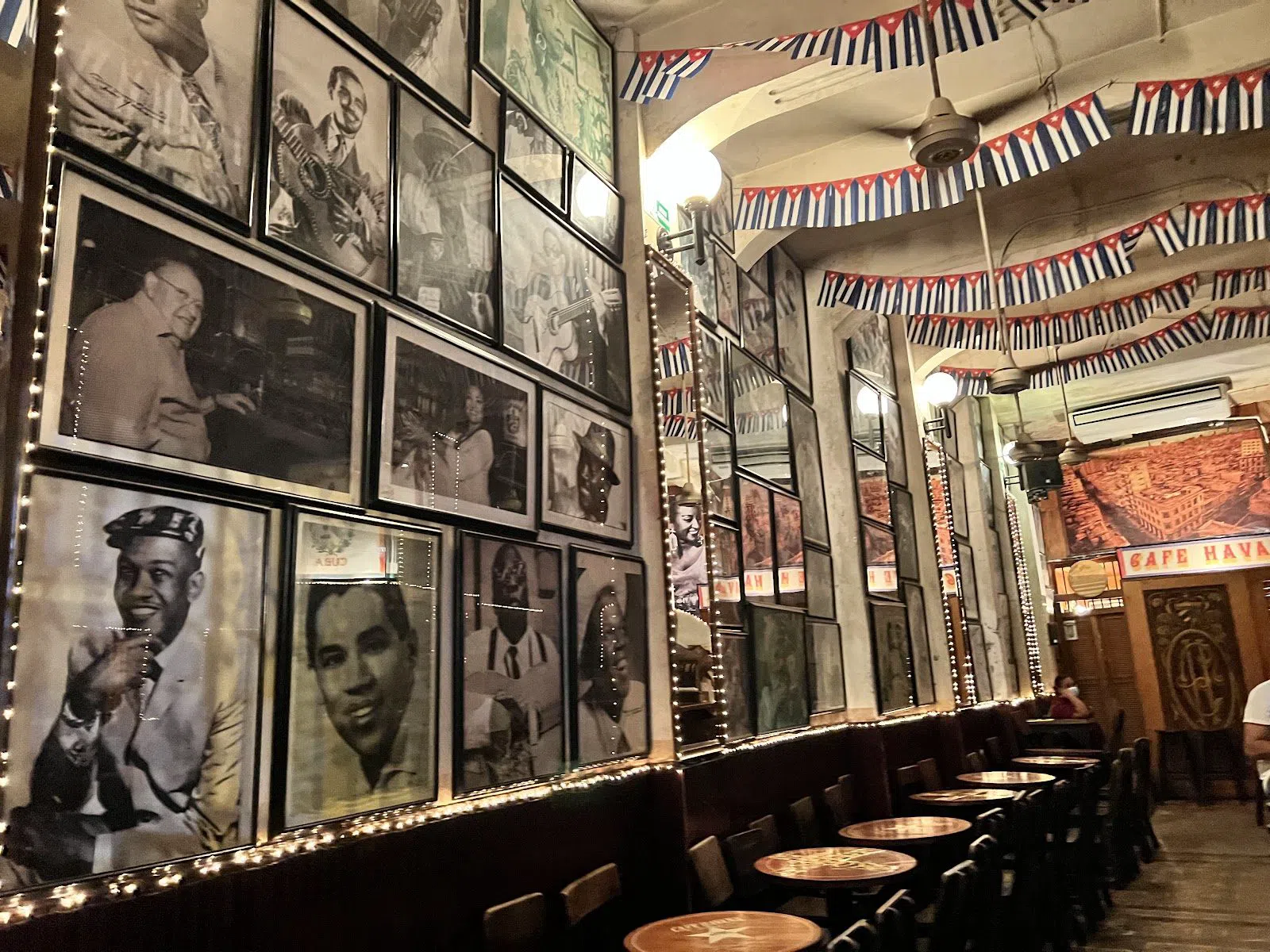
Café Havana (Getsemaní) runs Wednesday to Saturday from 9pm to 3am, plus holiday Sundays, with a cover of COP 40,000 to 60,000 and drinks on top. Two live orchestras rotate most nights, which means real Cuban salsa played by people rather than a playlist. It fills, it is cash-friendly, and there is no guarantee of a table; groups are fine as long as everyone accepts they may be standing. The point for a walking trip is the geography. It sits four blocks from Plaza de la Trinidad, so the night out needs no vehicle at either end.
The one climb worth a taxi
Convento de la Popa (La Popa hill) is the honest exception. It is open daily from 8:30am to 5:30pm, entry is about COP 14,000, and the view over the bay explains the city's whole geography in one glance. But the access road skirts a rough neighbourhood and walking up is not advised, so this is the trip to book a car for. A round trip runs roughly COP 40,000 to 60,000, and the important instruction is to ask your driver to wait at the top rather than trying to flag one down when you come out. There is no reliable rank up there.
Cash, timing and what a walking week costs
Carry Colombian pesos in small notes. Cover charges, tips on the free tours and street food on the plaza steps all run better on cash, and card acceptance thins out the moment you step off a restaurant terrace. City taxis do not run meters, so agree the fare before you get in; on the rare occasions you need one, for La Popa, the airport or a late arrival with luggage, that is the whole negotiation.
Build the day around the shifts. Museums and the fortress in the morning, food and shade in the middle, walls and squares in the evening. The walled city is well lit and busy after dark, and Getsemaní's nights orbit one square, so walking home is normal rather than brave; keep your phone in your pocket rather than your hand and stick to streets with people on them, which in practice is most of them.
A reasonable daily spend for a walking traveller, excluding a room, sits somewhere around COP 150,000 to 250,000: breakfast at a café, a free museum or a COP 24,000 one, a tip-based tour, street food on the square and a couple of cocktails. A Celele evening or a night at a salsa club doubles it, and both are worth doing once. Set aside COP 60,000 for the single taxi up the hill and you have covered the only transport this city genuinely asks of you. The Cartagena guide fills in around the edges of this one: where to stay, when to come, what else is worth your morning.
Before you go
Is Cartagena actually walkable, or do I need a driver?
The Centro, San Diego and Getsemaní adjoin each other, and almost everything worth seeing sits within a twenty-minute walk. Even Castillo San Felipe de Barajas is a flat 20 to 30 minute walk from Getsemaní over the Puente Román side, not the cross-town trip most itineraries imply. The obstacle is heat rather than distance: walk from about 7am to 11am and again from 4.30pm onwards, and spend the middle of the day indoors.
Where do I genuinely need a taxi in Cartagena?
Convento de la Popa is the exception. The access road skirts a rough area and walking up is not advised. Budget roughly COP 40,000 to 60,000 for the round trip and ask your driver to wait at the top rather than trying to flag one down afterwards. Beyond that, the airport and a late arrival with luggage. City taxis do not run meters, so agree the fare before you get in.
Which walking tour should I book first?
Beyond Colombia Free Walking Tour runs five daily two-hour routes, including Old Town, Getsemaní and a San Felipe castle walk, tips-based at a suggested COP 30,000 to 50,000 per person, though the groups are large and mixed. For small groups, families or anyone wanting the street-art, street-food or Bazurto market routes, Cartagena Connections Walking Tours is owner-run, booked over WhatsApp, at around USD 35 to 60 per person.
Can I still get a sunset cocktail on the city walls?
Not at Baluarte de Santo Domingo. The Café del Mar bar there was evicted after a State Council ruling ordered the public space recovered, and the city reopened the bastion as a free public viewpoint with no door policy and no reservations. The sunset and the wall are still there for any size of group; buy your drink afterwards at El Barón or Alquímico in the Centro.
Which restaurants and bars need booking, and which take walk-ins?
Celele needs reservations weeks out, and large parties must be arranged in advance. La Cevichería is very small, so a walk-in queue is normal and groups over four should book or wait; go at an early lunch. Demente advises reservations at weekends. Alquímico takes no reservations at all, opens at 7pm and reserves right of admission, so arrive before ten. El Barón takes both bookings and walk-ins, from breakfast until 1 or 2am.