Especial Cartagena
Pie de la Popa, Cartagena's barrio under the fortress
What the castle costs and when to go, why La Popa is a taxi both ways, which rooftops look at the ramparts, and the only beds worth booking in Pie de la Popa.

Por Sanne VermeerWalls, courtyards and the slower Cartagena
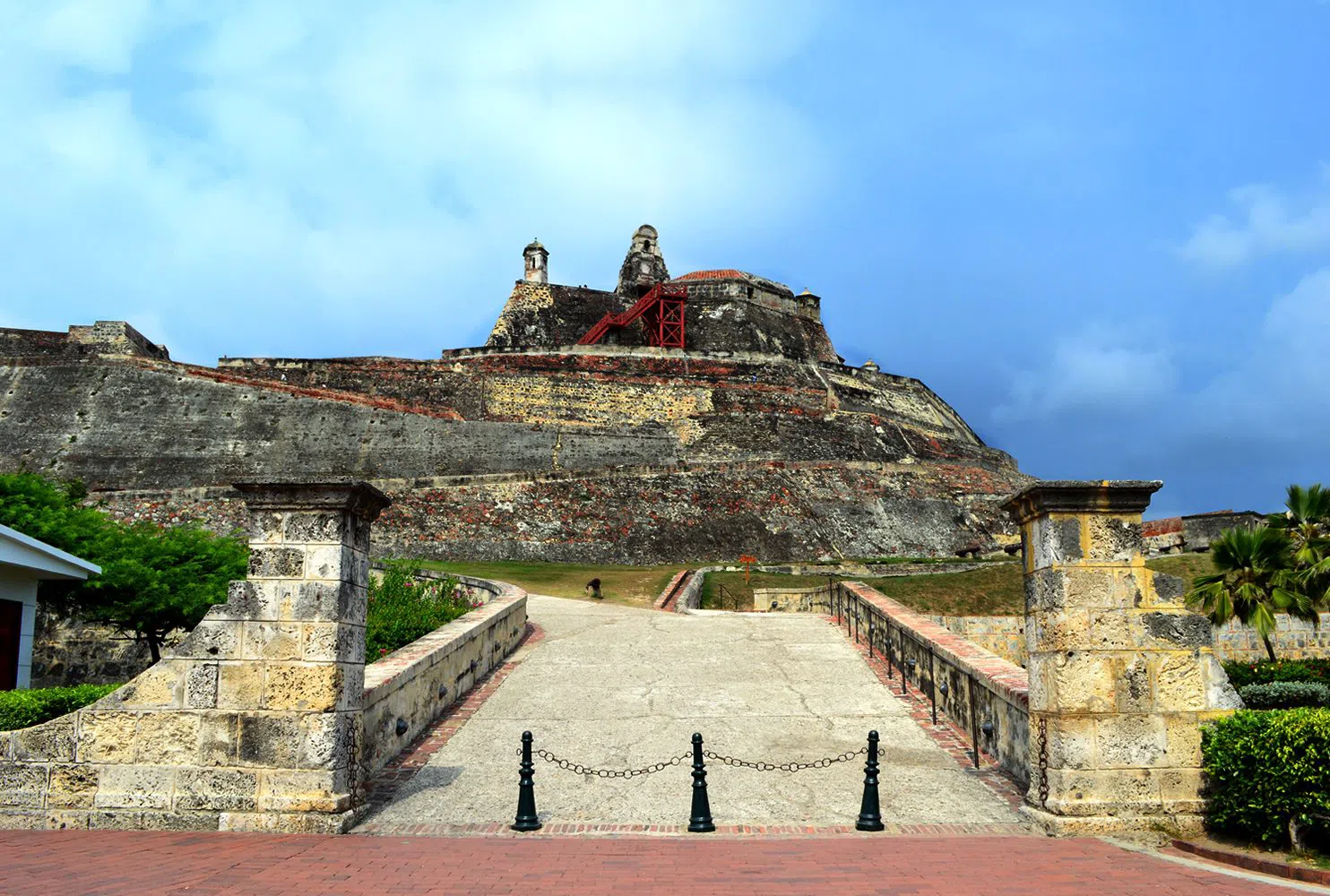
Foreign adults pay COP $36,000 to climb into Castillo San Felipe de Barajas, and the gate takes its last visitors at 5:30 p.m. Behind it, in a small paved park, a pair of giant bronze boots costs nothing. Both stand in Pie de la Popa, the barrio that runs from the fortress to the bridge into the walled city.
The fortress on San Lázaro hill
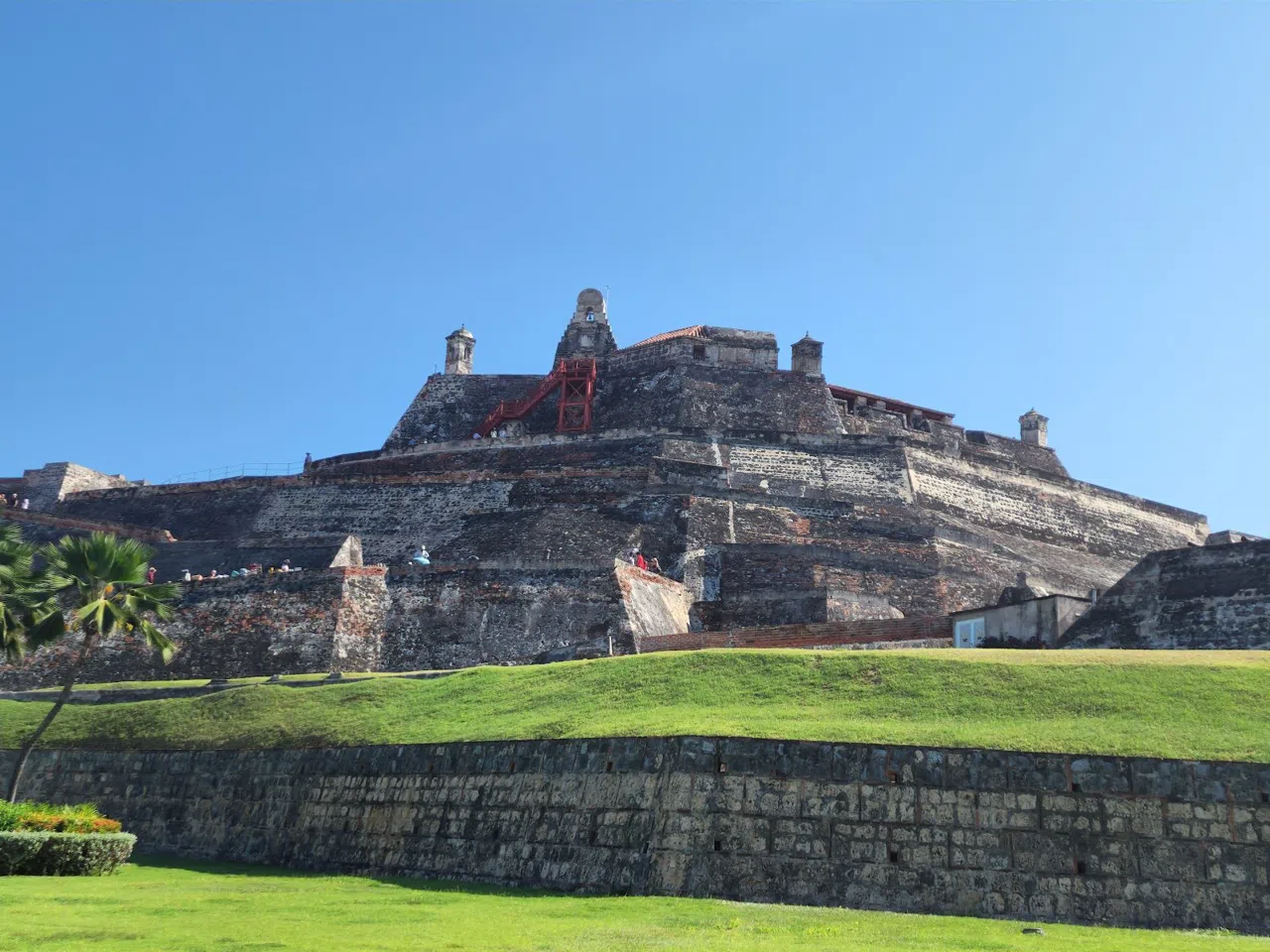
Castillo San Felipe de Barajas is the largest Spanish fortification in the Americas and the fixed point of Pie de la Popa: sand-coloured zigzag batteries stepped up San Lázaro hill, black tunnel mouths cut into the base, the Colombian flag on the crown. It opens at 8 a.m.
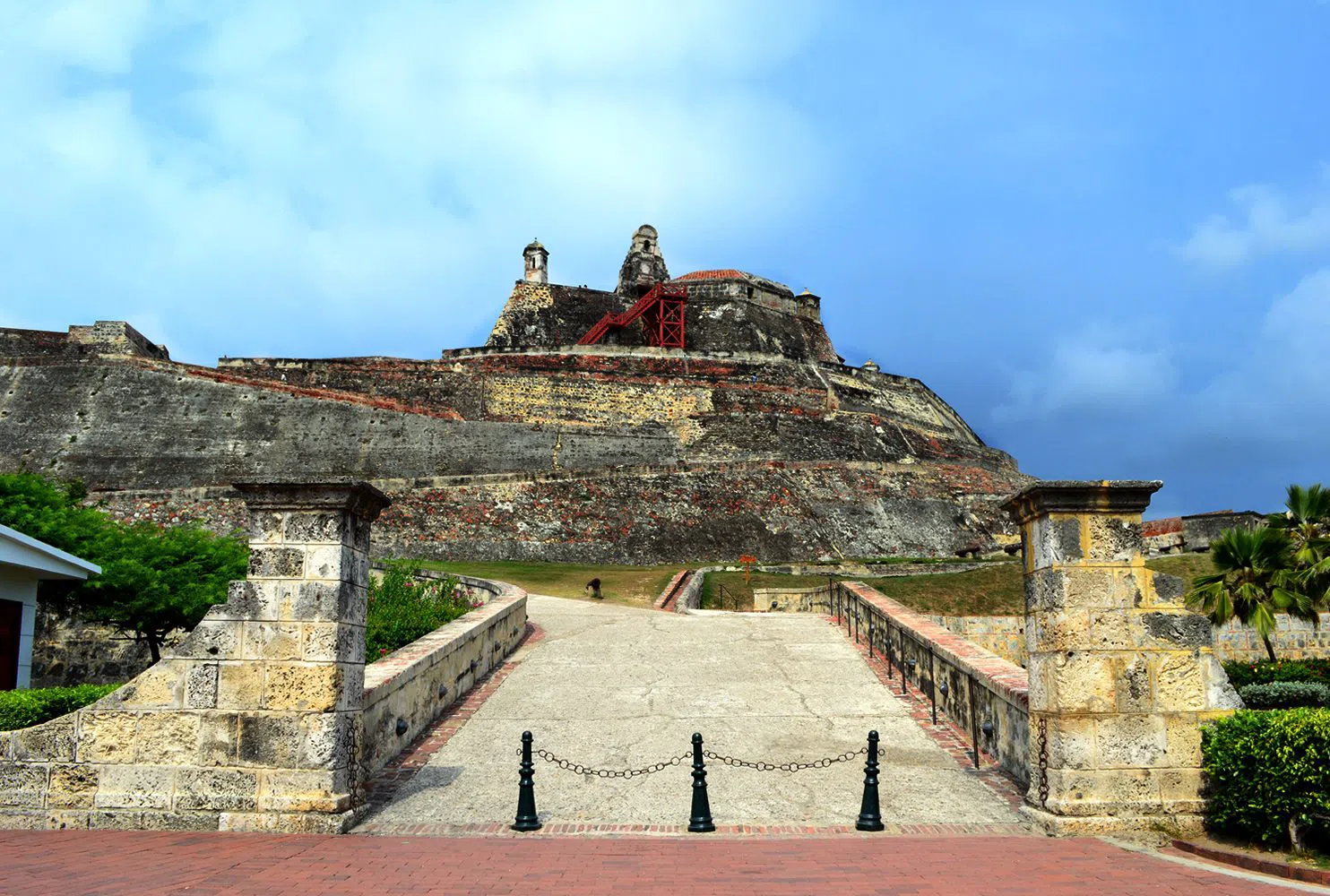
Go before 9 a.m. or after 3 p.m., because almost no shade falls on the long ramps.
Colombians pay COP $31,000. Children aged 6 to 13 and students pay $15,000, and under-6s enter free. The site's own tariff sheet carries a tour-operator rate and a COP $1,000 rate for public-school groups, and large coach parties are the norm. Guides tout for work at the gate.
Planifica tu viaje a Cartagena
Precios en directo de nuestros socios de reservas.
Cancelación gratuita en muchas habitaciones. Podemos recibir una comisión cuando reservas.
The convent on La Popa
Convento de Santa Cruz de la Popa sits on the hill behind the barrio, a whitewashed cloister with an arcaded patio drowned in bougainvillea and a gilded altar of the Virgen de la Candelaria. The parapet is 150m up and looks down on the walled city and the bay. It is the best panorama in Cartagena.
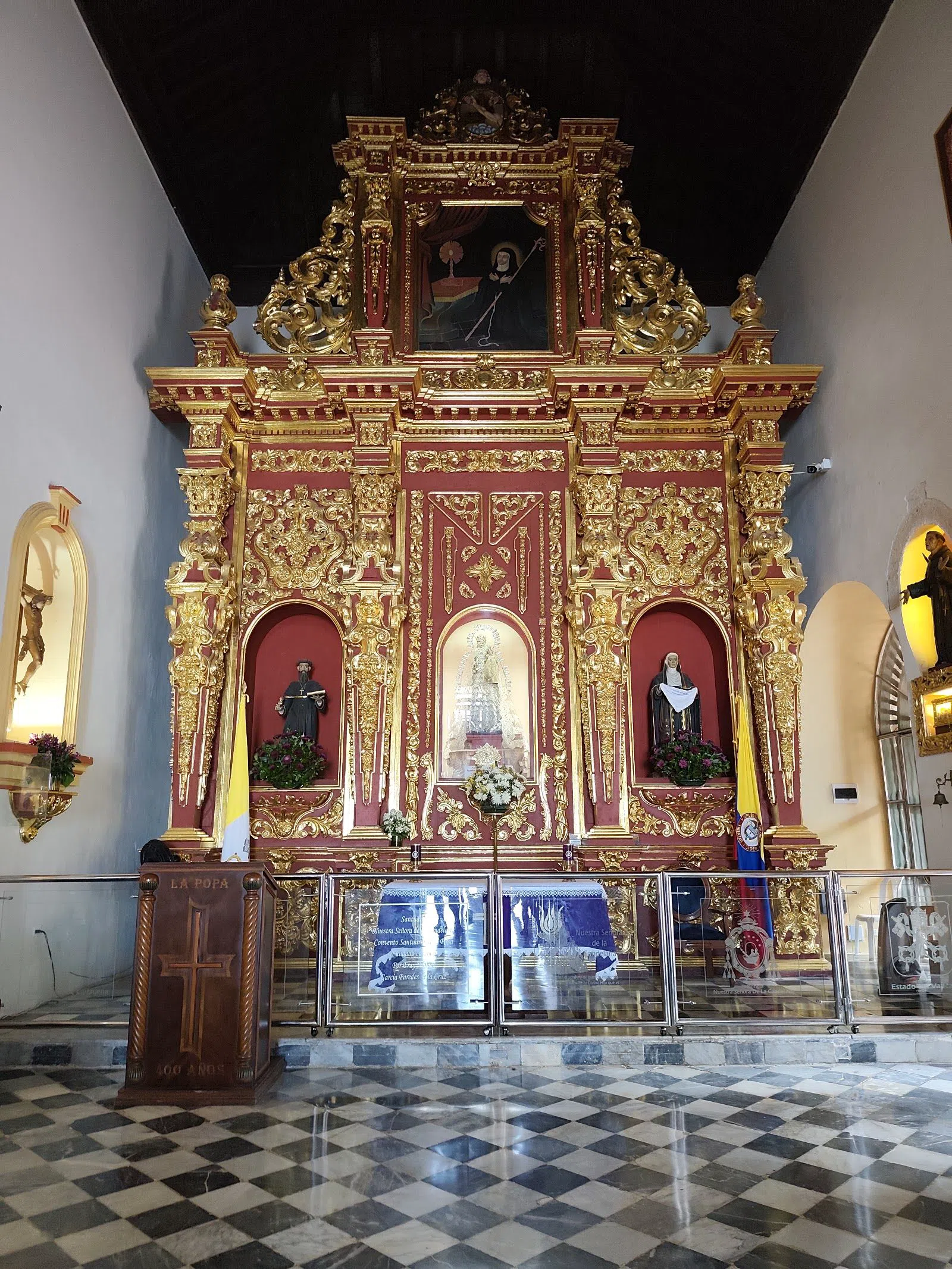
The convent is open daily 8:30 a.m. to 5:30 p.m. Adults pay COP $13,000, children $11,000. Guided tours run Saturday and Sunday mornings from 8 a.m., ahead of the general opening.
Take a taxi both ways, COP $10,000 to $16,000. The neighbourhoods on the walk up are not safe on foot, least of all near dusk. Minibuses and taxis come and go from the gate all day, so you will not be stranded at the top.
The boots behind the castle
Monumento a los Zapatos Viejos is five minutes from the fortress gate in Pie de la Popa, the ochre stone flank of San Felipe rising directly behind the plinth. Hector Lombana made it in 1957 for the poet Luis Carlos López, who called his home city a pair of old shoes.
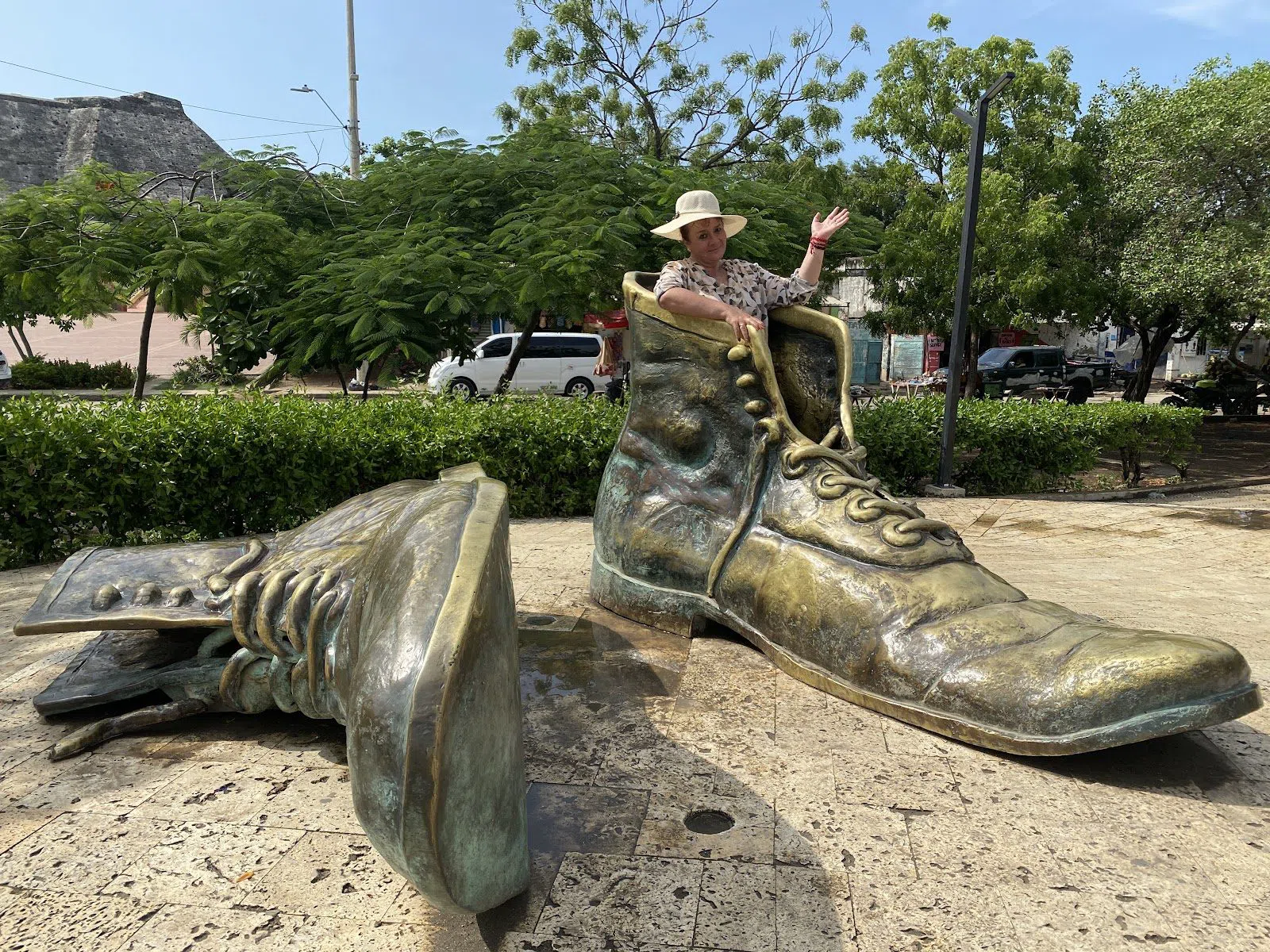
The bronze pair you photograph is a replica; the crumbling cement original was retired in 1994. The park has no door and no limit on numbers, and every tour stops there after the castle.
The parish church and the February procession
Ermita Nuestra Señora de la Candelaria, known in Pie de la Popa as the Parroquia de Pie de la Popa, is a modest white-and-ochre church with a bell gable on a tree-shaded street of faded 1900s mansions at the foot of the hill. It is eighty years old and free to enter.
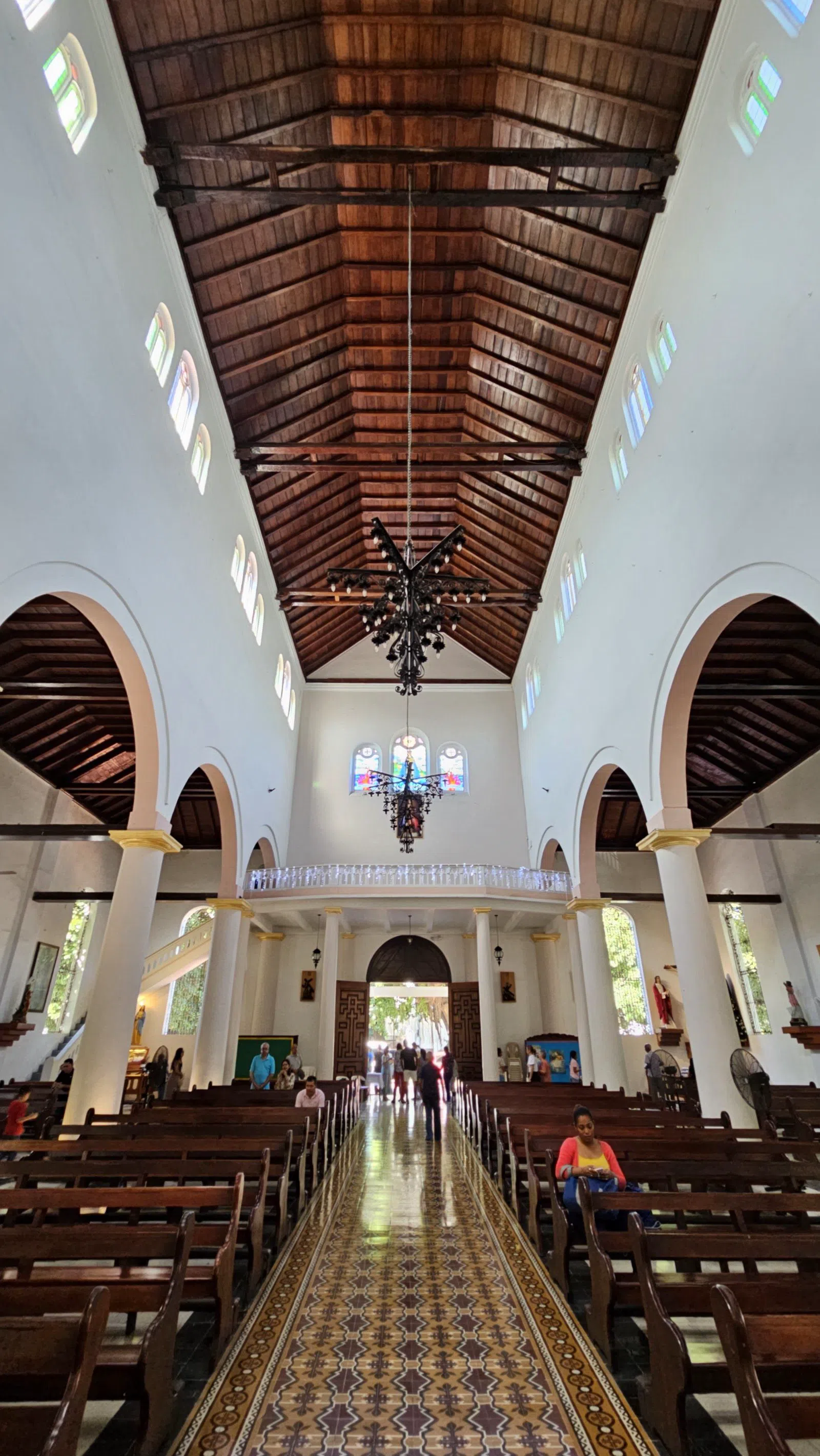
Every February the Virgin is carried down from the convent on the hill to this altar, and that is the one day the barrio out-draws the old city. The church fills completely during the Candelaria novenas. It is a working parish: come outside Mass and groups are welcome.
India Catalina and the way into the walled city
Monumento a la India Catalina stands on a round stone pedestal where Avenida Pedro de Heredia meets Avenida Venezuela in Pie de la Popa, one arm raised, traffic and palms around her. Eladio Gil cast her in 1974 for the Carib interpreter who guided Pedro de Heredia.
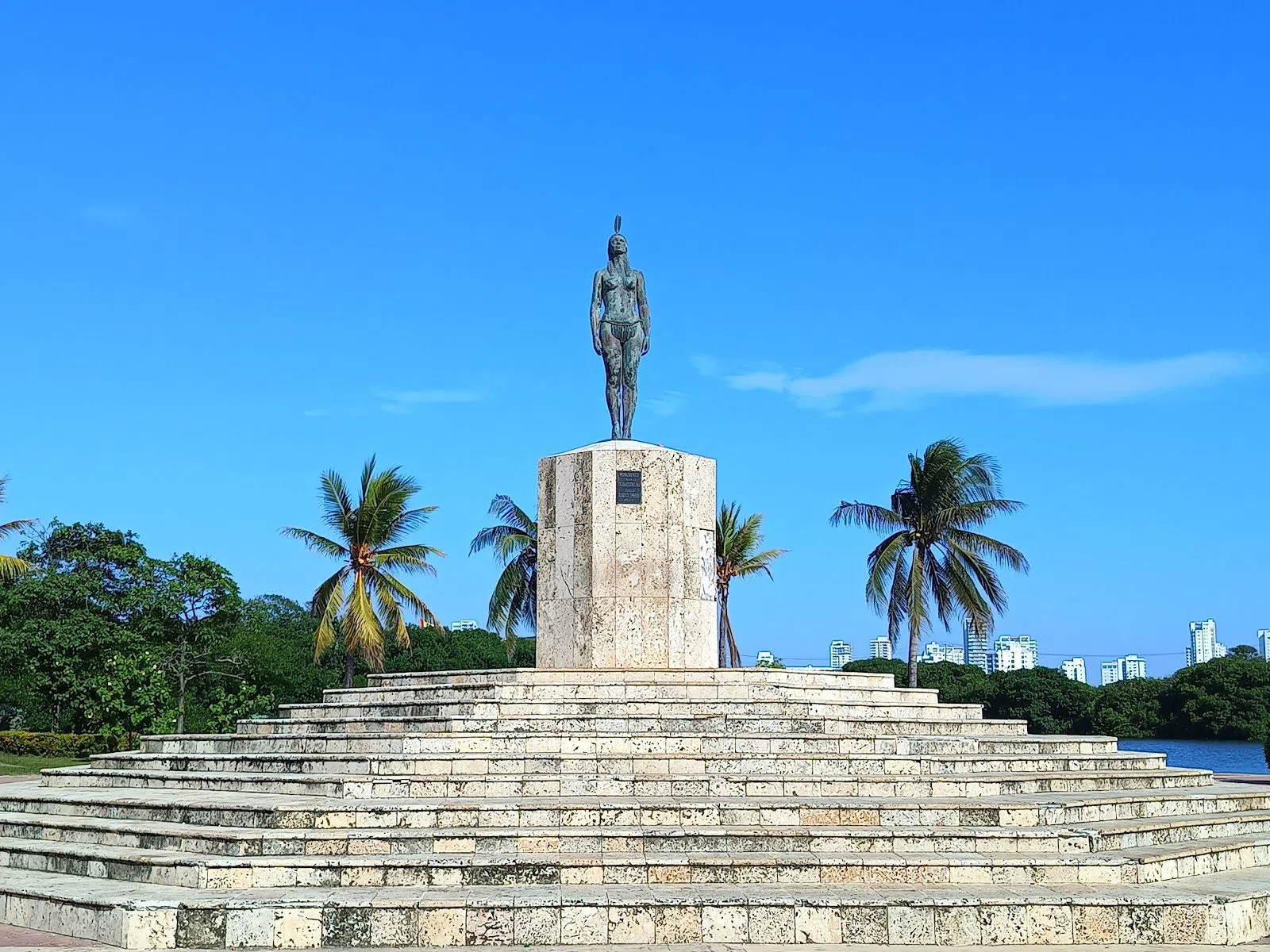
The metal was cleaned and restored during 2026 under the Puerto Duro works, and she is in better shape than she has been in years. The monument marks the point where the barrio hands over to the walled city, 10 minutes' walk from the junction. Coach tours pull in at the roadside plaza on their way in.
The mangrove boardwalk on the Chambacú lagoon
Parque Espíritu del Manglar is the waterside walk of Pie de la Popa, set on the Chambacú lagoon between the castle and the walls. A raised timber boardwalk winds over mangrove roots and still water, uplit after dark, with the old-city skyline across on the far bank.
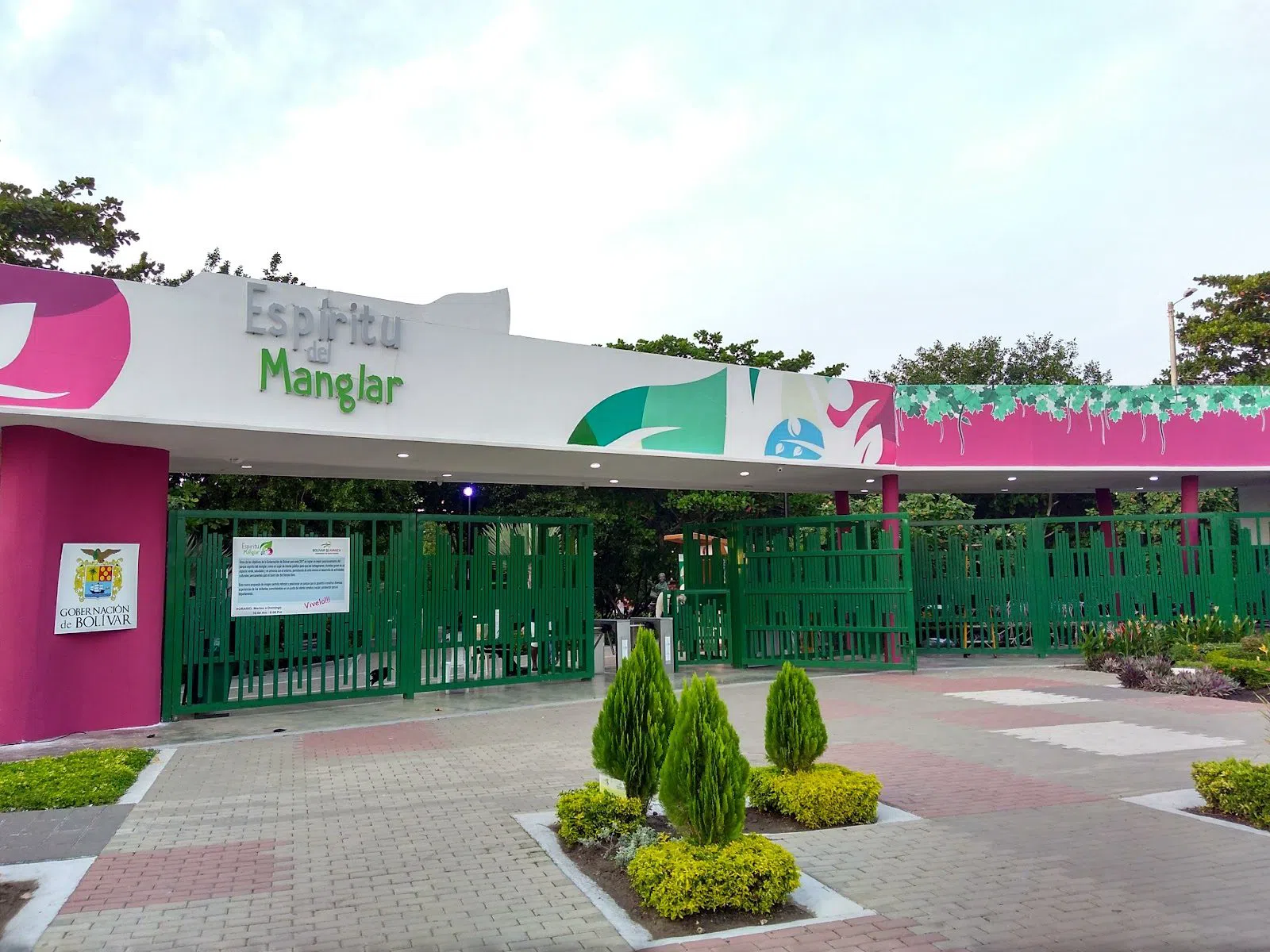
Entry is free. The park opens 3 p.m. to 9 p.m., the hours when the heat breaks. It was built for families and school groups, with games, sports areas and eco-trails along the water.
Baseball at the Estadio Once de Noviembre
Estadio Once de Noviembre – Abel Leal is a 1947 concrete grandstand in Pie de la Popa, tall floodlight pylons above it, tiger livery on the paint and La Popa hill rising behind the outfield. It is called the temple of Colombian baseball, it was refurbished for the current cycle, and it is home to the Tigres de Cartagena.
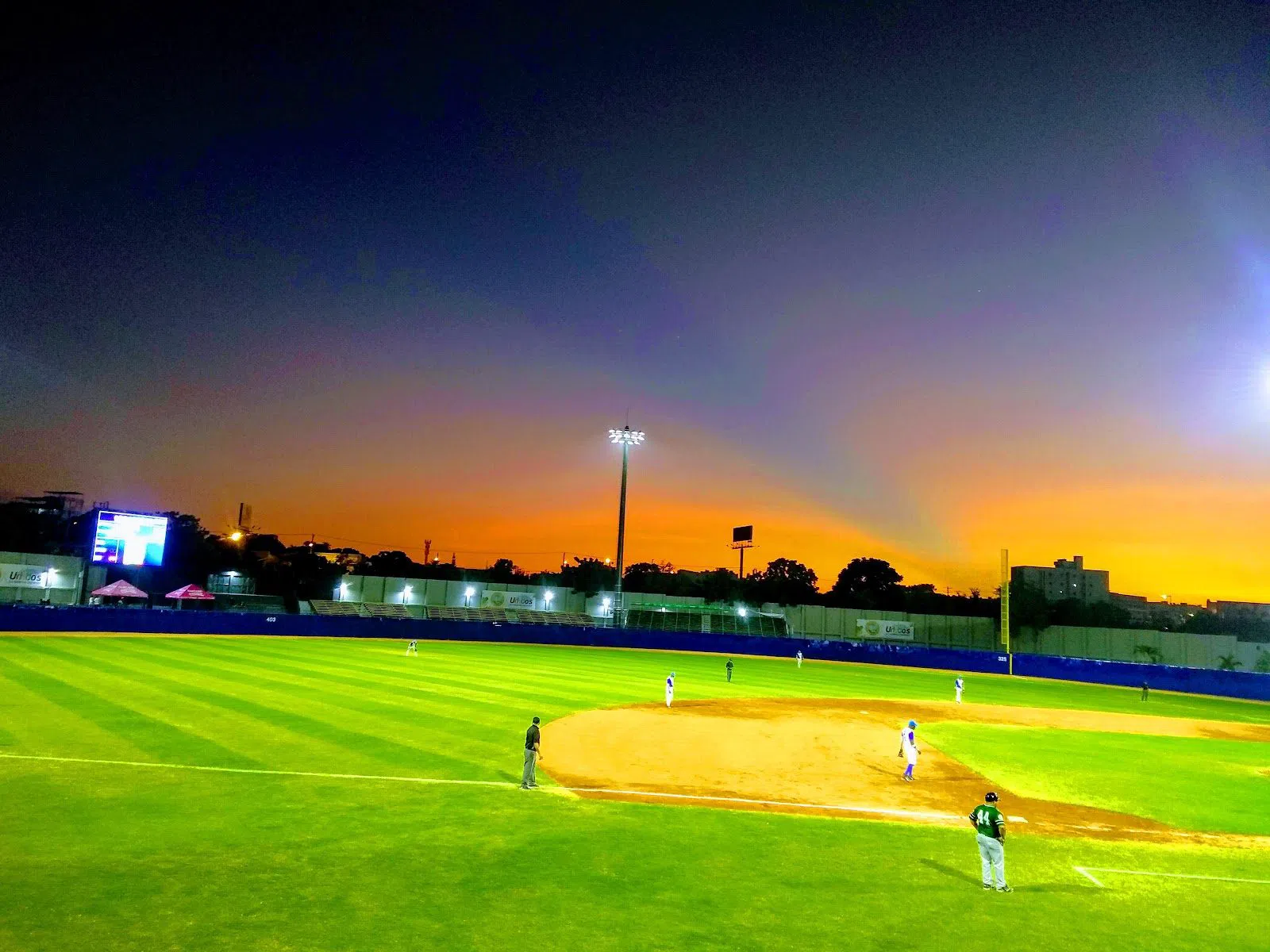
The professional season runs 20 November 2026 to 3 February 2027. Tickets are in the $ band and block sales are routine across the 12,500 seats. Sit in the cheap terraces, where the drums and brass are. It is the most local night out in the district.
Rooftops facing the ramparts
Mirador del Carajo looks straight at the castle from a Pie de la Popa rooftop of rattan and dark-wood furniture, the lit walls filling the view, cocktails along a long bar. It opens 11 a.m. to midnight, which makes it the default lunch or sundowner after San Felipe.
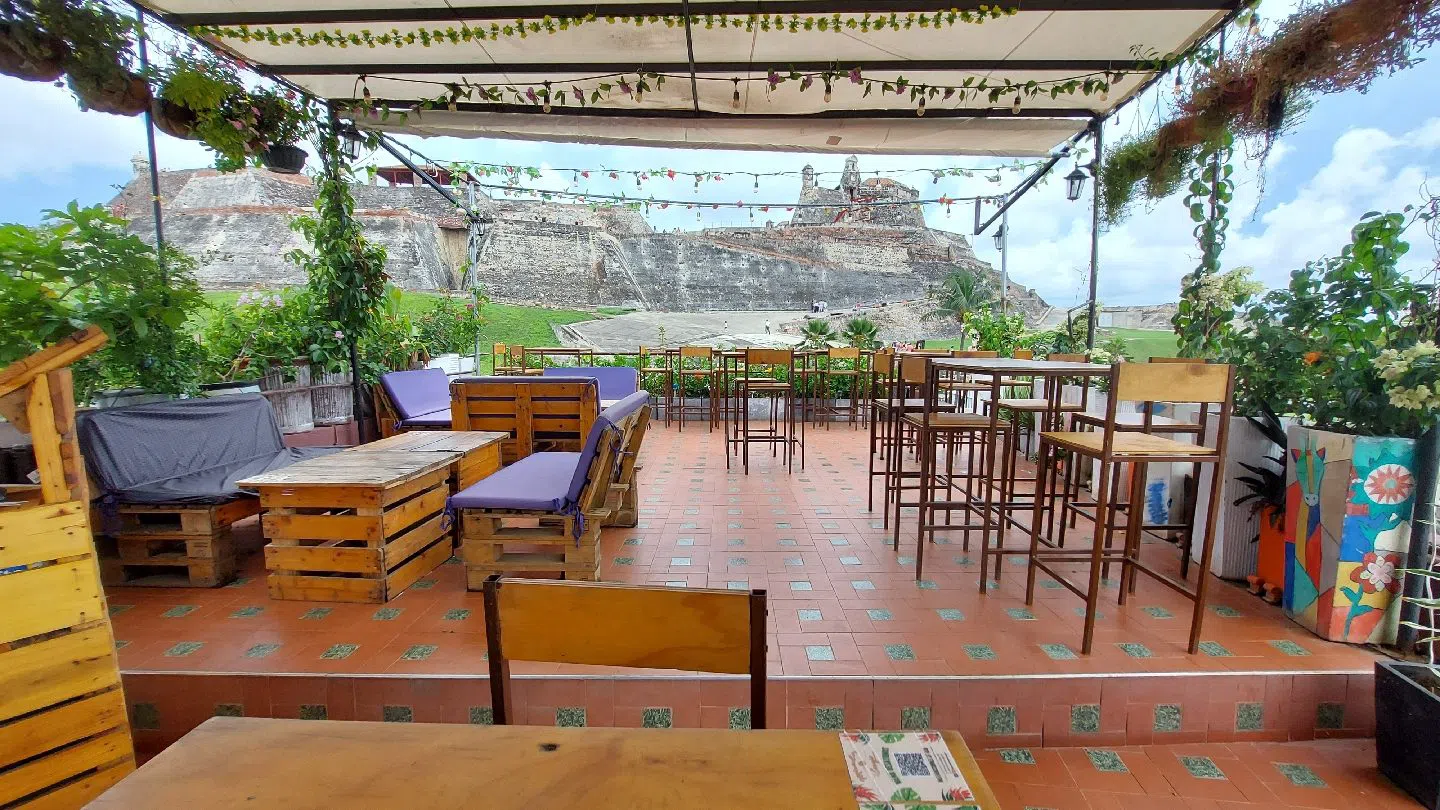
Order from the Caribbean end of the menu: prawns, coconut rice, ceviche. Reserve by WhatsApp. Prices run to $$, the terrace markets itself for birthdays and celebrations, and service slows when every table is taken.
Henry's – Rooftop San Felipe (Calle 30 #17-140) is an open deck in Pie del Cerro strung with warm bulbs, with long communal tables, craft beer and loaded burgers, and the floodlit ramparts of San Felipe straight ahead. The kitchen does burgers and hot dogs, and the view is the reason you go.

It opens at 3 p.m. daily and closes at 11 p.m., 11:30 p.m. on Fridays and Saturdays. Prices run to $$. Henry's takes reservations, books private events, and will hold a big table.
Caribe Plaza and the tables in Manga

Centro Comercial Caribe Plaza (Calle 29D #22-108) is a three-level white atrium in Pie de la Popa under big skylights, with glass lifts, a wide car park and palms outside, and La Popa hill visible above the roofline. Entry is free.
The mall holds more than 170 units, Cine Colombia screens, a supermarket, the Playland arcade and a food court where mains are $. Independent dining in Pie de la Popa is thin, and this is the air-conditioned bolt-hole in the worst of the afternoon heat.
Crepes & Waffles (Caribe Plaza) is a bright dining room inside the mall, with an open ice-cream counter, savoury crepes and waffle plates, and pastel tiled surfaces. It is a Colombian institution and the best-rated sit-down meal inside the barrio. Tables are large, walk-ins are fine, and the ice cream is the reliable bribe for overheated children after the castle. Prices run to $$.
Atrium Food & Drinks (Calle Real #19-26) is five minutes' walk over into Manga, a bright open-fronted corner joint on a leafy residential street serving burgers, pizzas and desgranado bowls on simple wooden tables. It is cheap at $ and open late. The spaces are informal and shared, and there is no reservation system. Six Cartagena branches take delivery and WhatsApp orders.

Where to sleep in Pie de la Popa
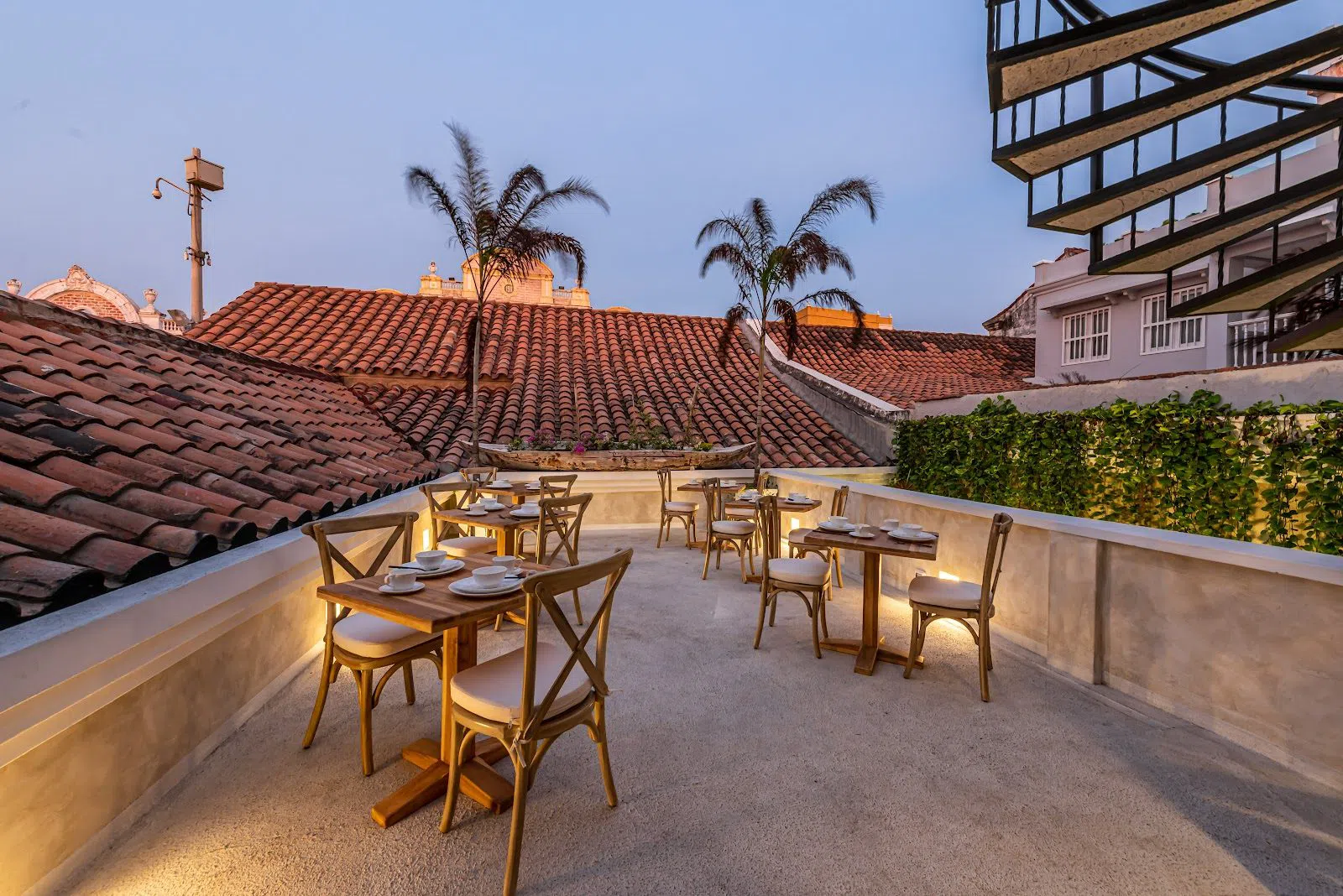
Piemont Hotel Boutique (Callejón Méndez #29A-97) is a restored early-1900s barrio mansion with eight rooms off a green interior courtyard, a small plunge pool, patterned tile floors and tropical planting. Breakfast is included, the old city is 10 minutes away and the cruise port five. Prices run to $$$. Eight rooms suit a couple or one family, and a party has to book the whole house.
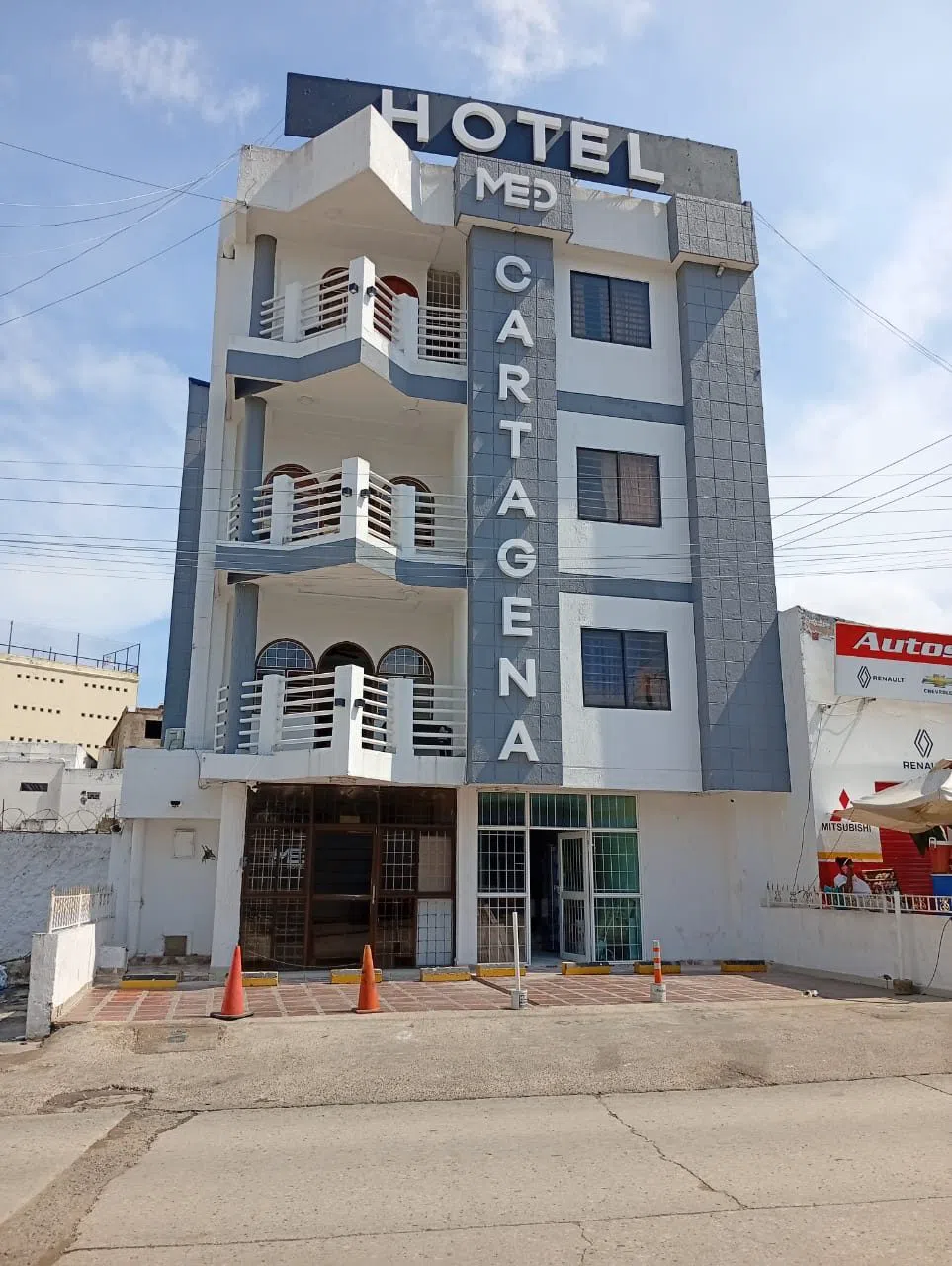
Hotel Med Cartagena (Carrera 21 #30-65) is a plain white three-storey block on a busy Pie de la Popa street corner, 600m from the foot of the La Popa climb. It has 37 rooms including family rooms, real air conditioning and a small ground-floor restaurant. Prices run to $$.
Booking, timing and taxis
Only two things here need arranging in advance: a table at Mirador del Carajo by WhatsApp, and a reservation at Henry's if your party is large. Both rooftops and the lagoon park open in the afternoon, the church keeps parish hours, and the ride up La Popa is a taxi job in both directions.
See the Cartagena guide and the Cartagena hotel search.
Antes de ir
How much does Castillo San Felipe de Barajas cost in 2026?
Foreign adults pay COP $36,000, Colombians $31,000, and children aged 6 to 13 and students $15,000. Under-6s go free. The fortress opens 8 a.m. to 6 p.m. with last entry at 5:30 p.m., and the ramps have almost no shade, so go before 9 a.m. or after 3 p.m.
Can you walk up to the Convento de Santa Cruz de la Popa?
No. Take a taxi both ways, COP $10,000 to $16,000, because the neighbourhoods on the walk up are not safe on foot, especially near dusk. The convent is open daily 8:30 a.m. to 5:30 p.m. and costs COP $13,000 for adults and $11,000 for children, with guided tours on Saturday and Sunday mornings from 8 a.m.
Where do you eat in Pie de la Popa?
Mirador del Carajo is directly opposite the castle and opens 11 a.m. to midnight; reserve by WhatsApp. Henry's Rooftop San Felipe on Calle 30 opens at 3 p.m. for burgers and hot dogs under the floodlit walls. Caribe Plaza has a Crepes & Waffles and a food court, and Atrium Food & Drinks is five minutes' walk into Manga.
When is the baseball season at the Estadio Once de Noviembre?
The professional season runs 20 November 2026 to 3 February 2027, with the Tigres de Cartagena at home in the refurbished 1947 grandstand. The ground holds 12,500 and block sales are routine. The cheap terraces are where the drums and brass sit.
How far is Pie de la Popa from the walled city?
From the Monumento a la India Catalina, at the junction of Avenida Pedro de Heredia and Avenida Venezuela, the walled city is 10 minutes' walk. Piemont Hotel Boutique is 10 minutes from the old city and five from the cruise port, and Hotel Med Cartagena is 600m from the foot of the La Popa climb.