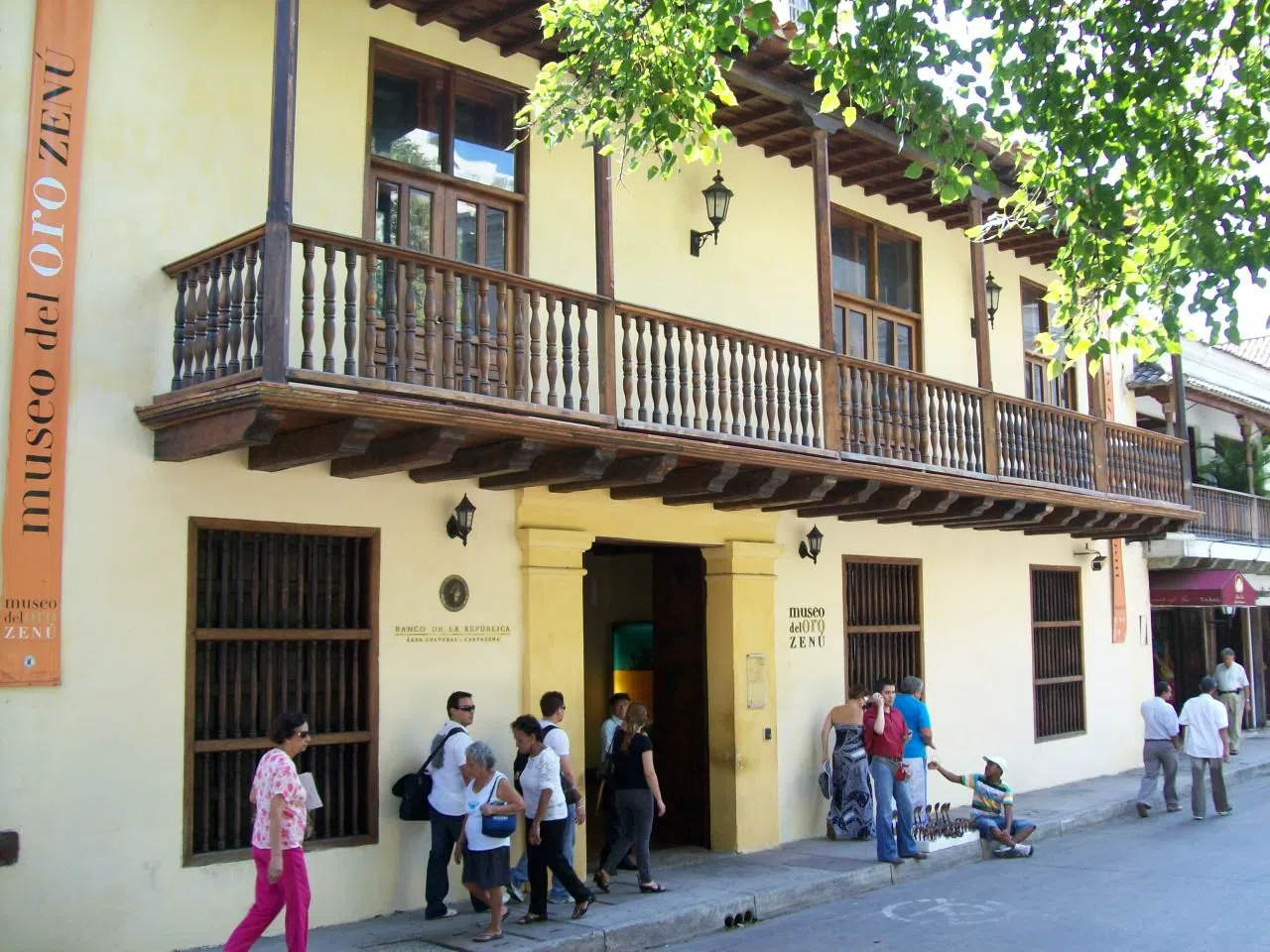

Cartagena sells you gold before it sells you anything else. Walk in through any of the old gates and within twenty minutes you will have passed a museum built to hold pre-Columbian gold, a tribunal built to police who was allowed to hold it, and a jewelry arcade where a stone the size of a fingernail can run to five figures. The emerald trade here is not a shopping detour bolted onto the history — it is the history, and it is still open for business. This walk traces it from the ground up: the culture, the crown, and the counter.
Before the Spanish: Museo del Oro Zenú
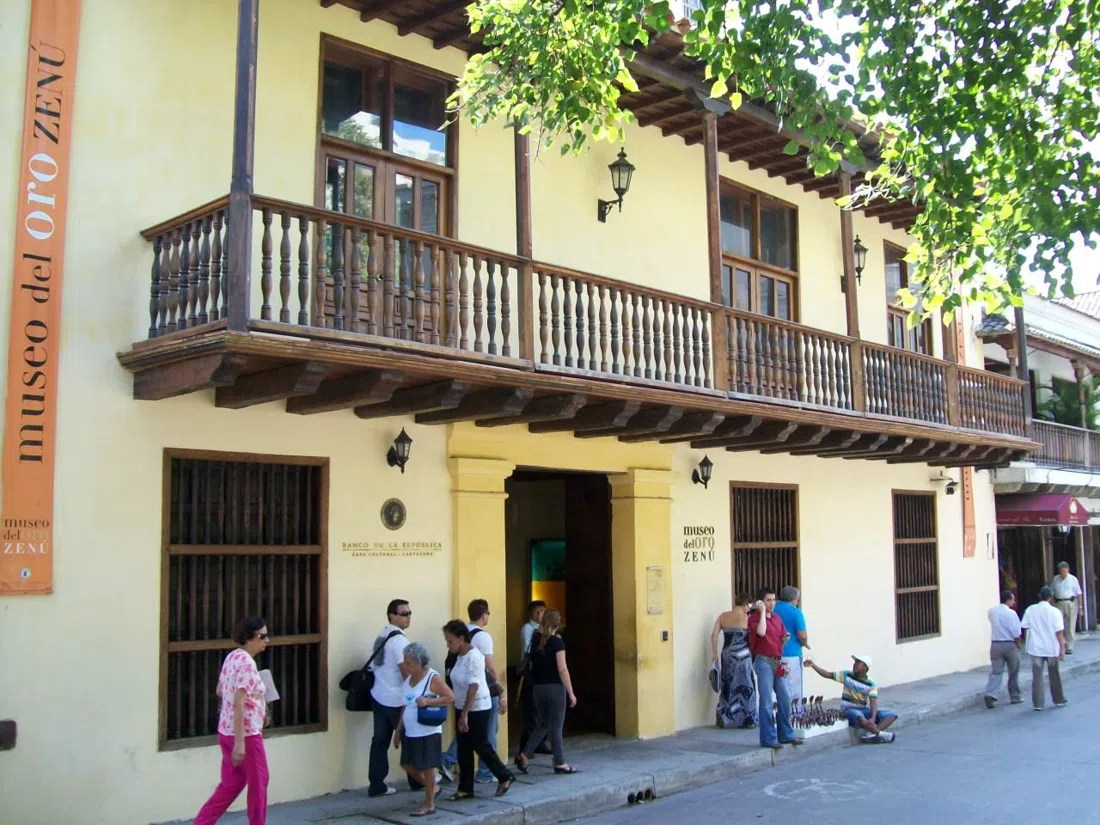
Start at the Museo del Oro Zenú, in the Old City, because everything that follows makes more sense once you've seen what came before the emeralds. The Zenú people worked gold into fine, deliberate forms — nose rings, breastplates, ceremonial pieces — roughly two thousand years before a Spanish ship ever cleared the harbor mouth. The museum is small, the galleries modest, and that's the point: this isn't a hall built to overwhelm you, it's a hall built to correct you, gently, if you arrived thinking Cartagena's relationship with precious stones started with colonization. Entry is free and there's no advance booking, though if you're leading a group larger than about fifteen, split into two waves — the rooms are tight enough that a single mass tour flattens the experience into a shuffle. Give it thirty to forty minutes, no more; it's a preface, not the main text.
The Tribunal That Watched the Merchants
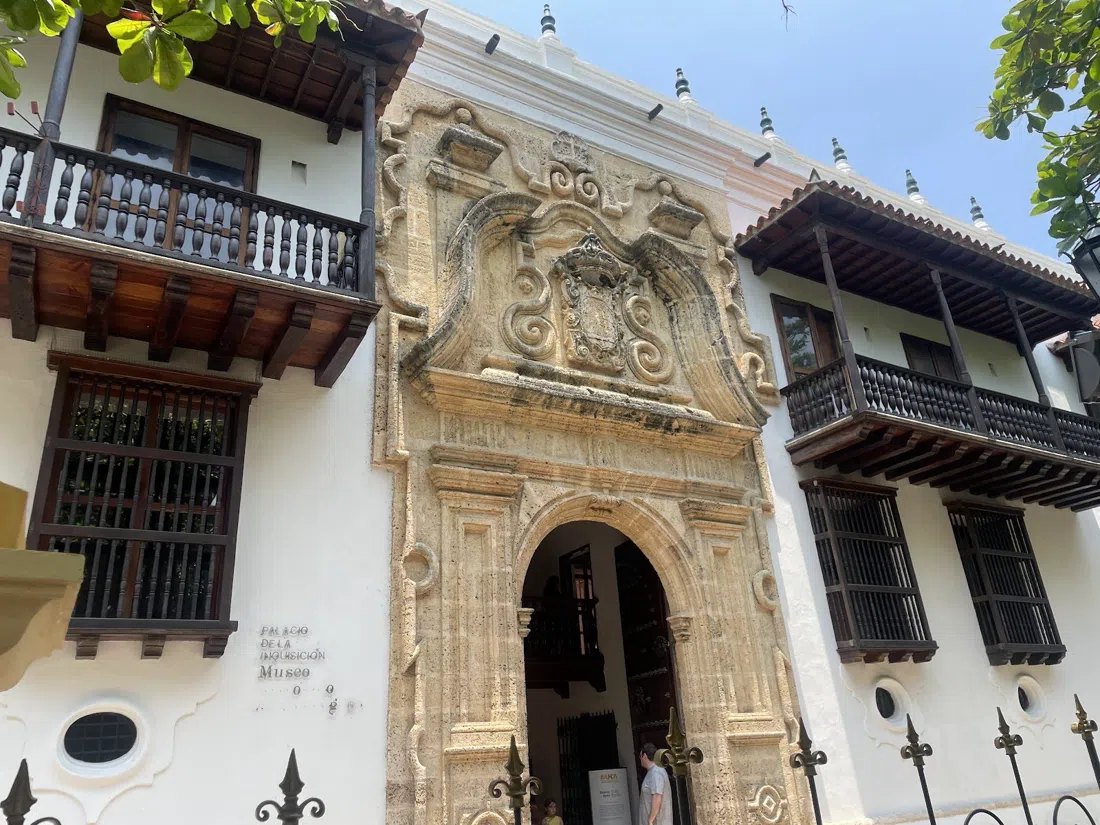
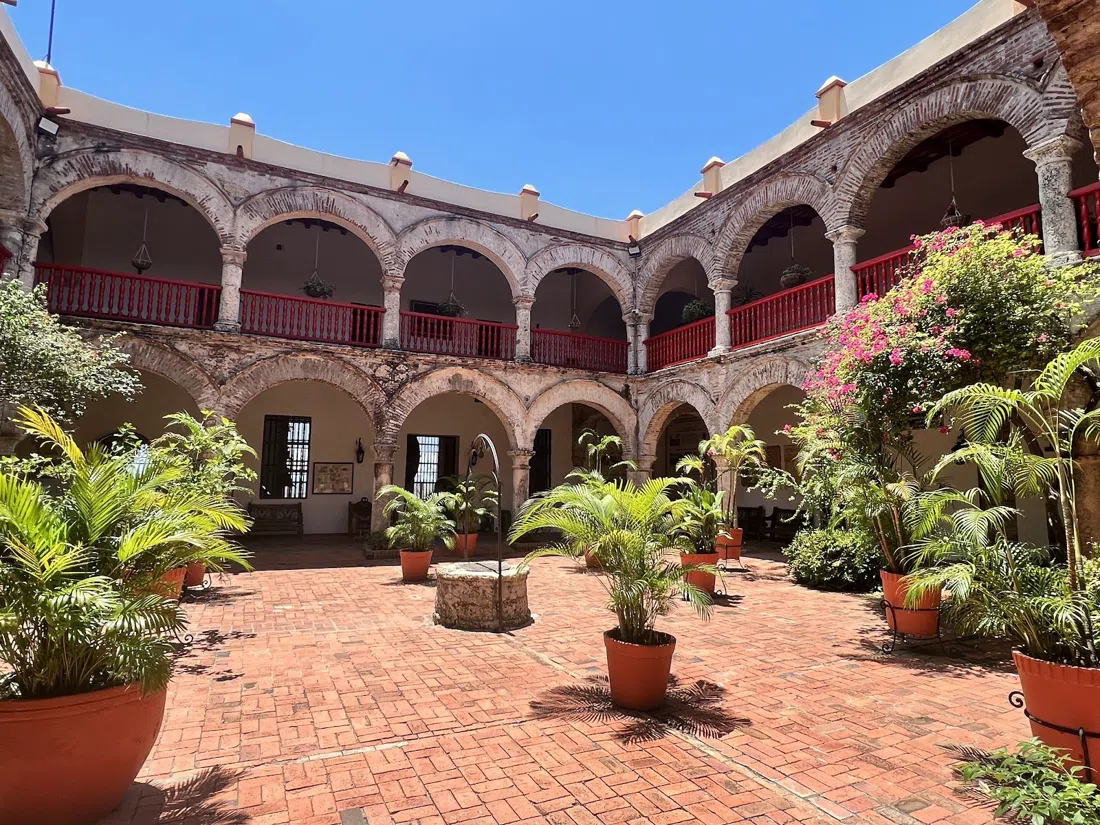
A short walk from the gold museum, on the edge of Plaza de Bolívar, is the building that gives this piece its colonial spine: the Palacio de la Inquisición, now the Museo Histórico de Cartagena, or MUHCA. This was the seat of the Holy Office's tribunal for the whole viceroyalty of Nueva Granada — the court that could try you for heresy, but that also, functionally, watched over the same merchant class moving gold and emeralds through the port. The building itself is the exhibit as much as anything inside it: a grand stone facade, a wooden balcony, an interior courtyard, instruments of interrogation displayed with more restraint than you'd expect. It welcomes tour groups without friction, audio guides are available, and you should budget one to two hours if you actually want to read the panels rather than pass through them. International adult tickets run roughly $8-12. It's worth doing early, before the jewelry shops, because it reframes them: the emerald trade you're about to see wasn't conducted in a free market. It was conducted under a tribunal's eye, two blocks from where the stones changed hands.
Inside the Trade: From Rough Stone to Setting
This is the section a reader planning the trip actually wants, so let's be direct about it: two stops let you see the entire arc of an emerald, from the ground to the finger.
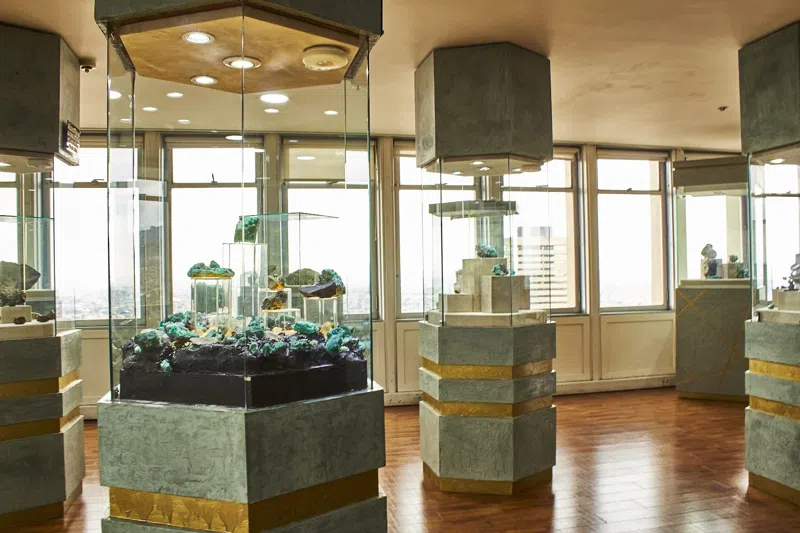
The Caribe Jewelry and Emerald Museum, in the walled city's jewelry quarter, is the best single stop for this. It runs guided tours through what amounts to a working factory and showroom — rough stone, cutting, polishing, setting — under one colonial-era roof, and it's genuinely built for the pace and scale of a group: cruise parties move through it regularly, and the tour is designed to absorb them without feeling like a cattle run. Book ahead via WhatsApp rather than walking up cold, especially on cruise-ship days. The tour itself is free; the jewelry for sale afterward ranges from around $100 pieces to several thousand dollars for serious stones. Go in expecting a sales floor at the end of an education, not a museum with no exit through the gift shop — that's the honest way to describe it, and it doesn't make the education any less real.
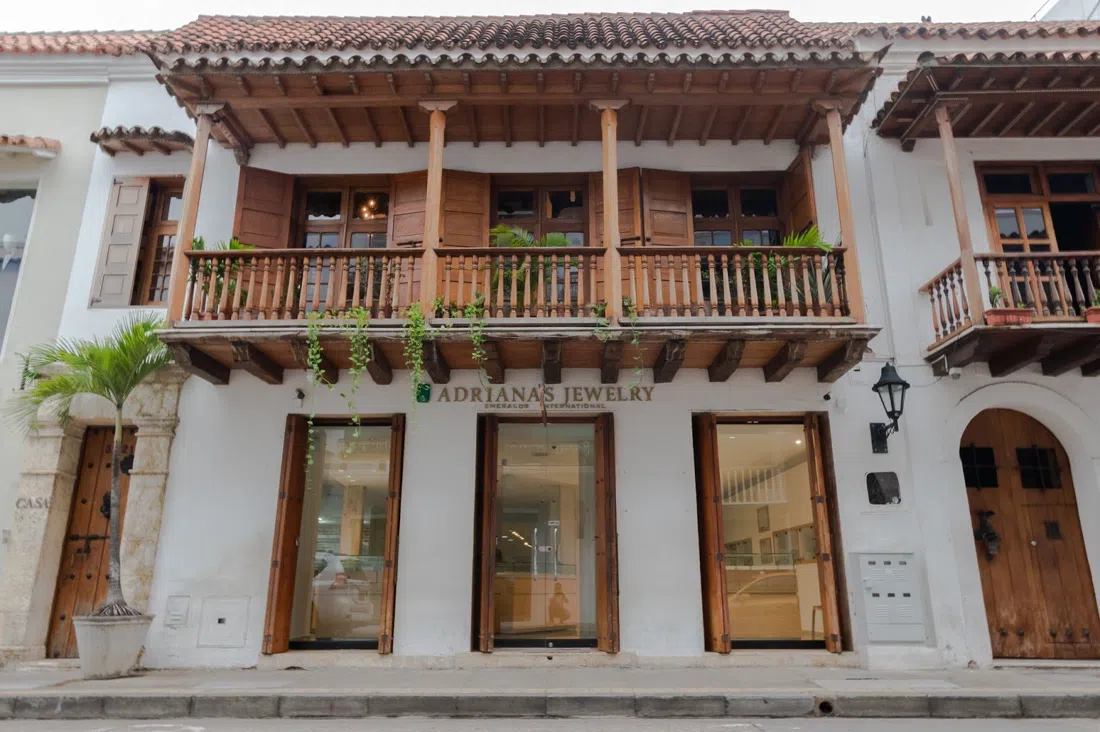
Adriana's Jewelry, also in the jewelry quarter, does something the polished showrooms don't: it stocks uncut rough emerald, still in matrix, alongside the finished pieces. For a piece about the trade itself rather than just the product, this is the visual gift — you can stand in front of a rock that doesn't look like anything yet, then two steps away see what a lapidary turned the same material into. It's cruise-line recommended and handles group visits as a matter of routine, so don't expect a private, hushed experience; expect a shop that knows how to move twenty people through without anyone feeling rushed.
The Quiet High End: Where Locals Actually Send You
Not every emerald shop in the district plays the same game, and an honest piece has to separate the hard sell from the places that don't need one.
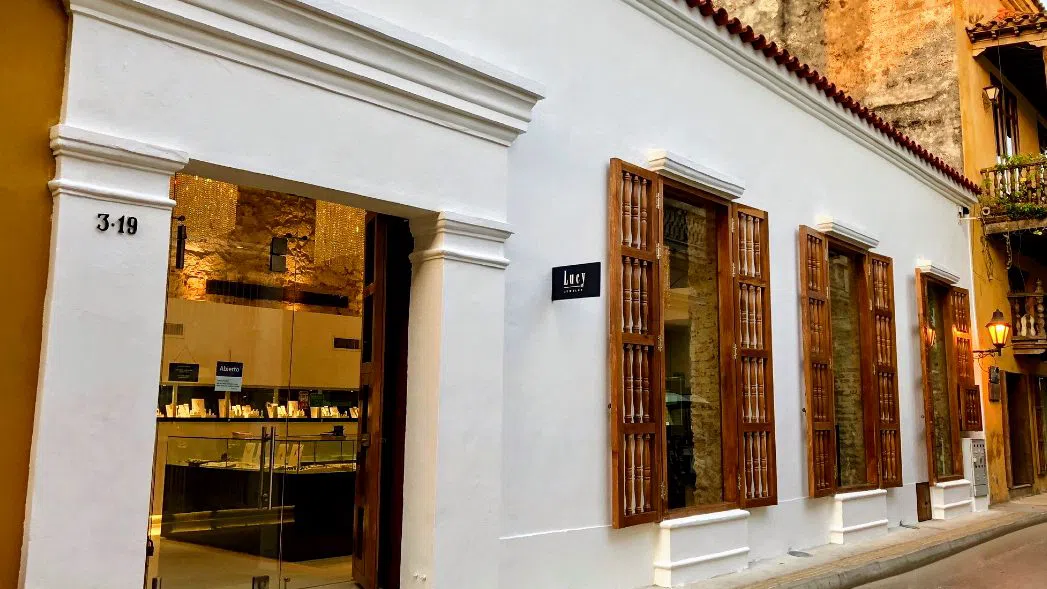
Lucy Jewelry, on the same run of jewelry-quarter streets, has been trading for three decades, and the detail that matters more than the decades is the policy: no commissions paid to the guides and drivers who bring tourists through the door. That sounds like a small administrative fact, but in a trade where kickback arrangements quietly inflate prices at the shops that do pay them, a flat no-commission policy is the single best proxy for trust the district offers — and it's why locals actually vouch for this one rather than shrugging you toward wherever the tour bus stops. Small groups are comfortable here; it isn't set up for a full coach. Expect $$$-$$$$ territory — this is the serious end of the trade, not the souvenir end.
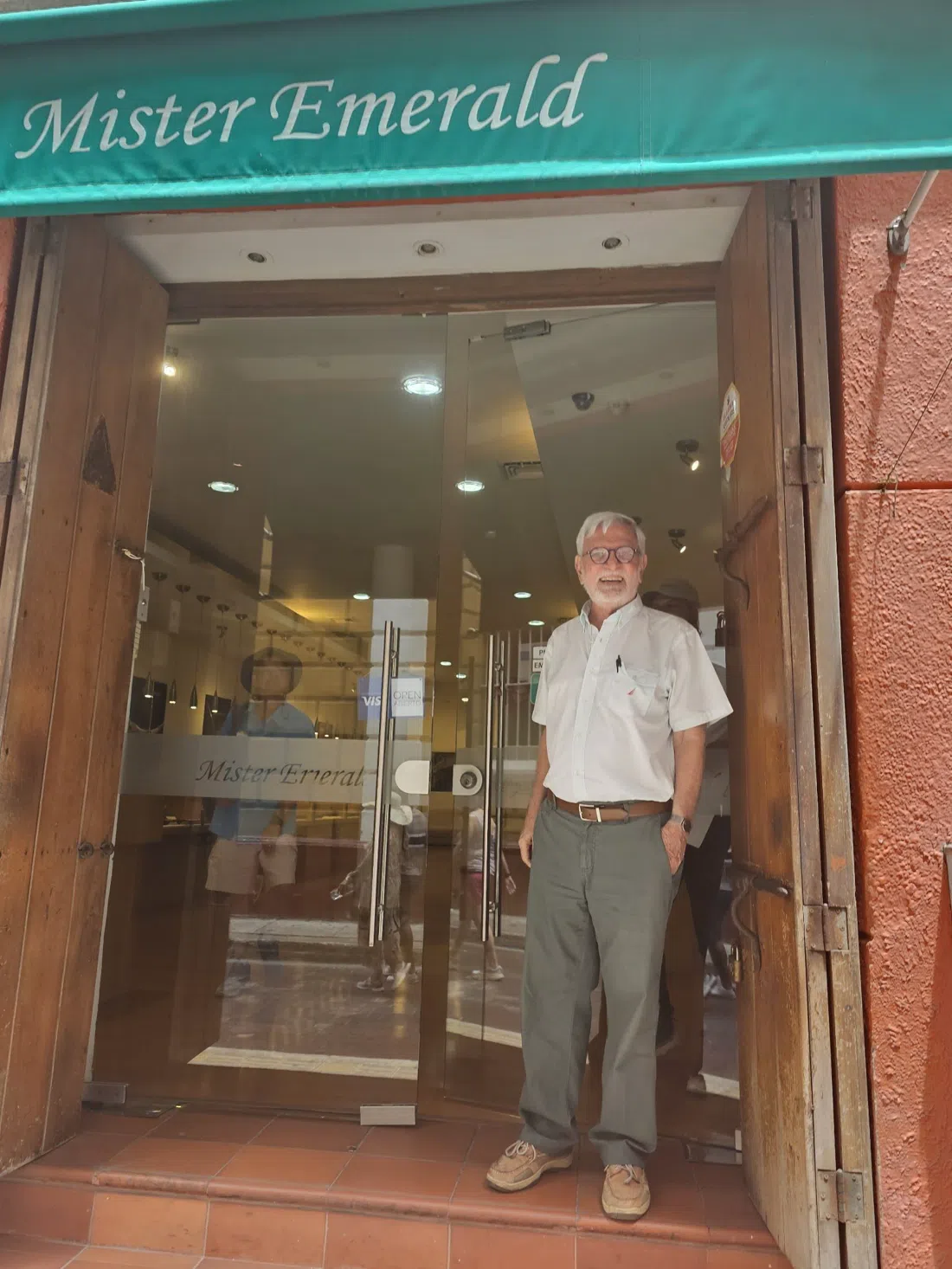
Mister Emerald sits on Cartagena's old customs-house square, which is its own small joke of history: a family jewelry business now trading emeralds on the exact spot where colonial officials once taxed goods coming through the port. It's open Monday to Friday, 10am to 5pm, and it welcomes groups without pushing anyone toward a purchase — the calmer counterpoint to the harder-sell operations nearby. Prices sit in the $$-$$$ range, and if you want to browse without a clock running, this is a better bet than the cruise-tour stops.
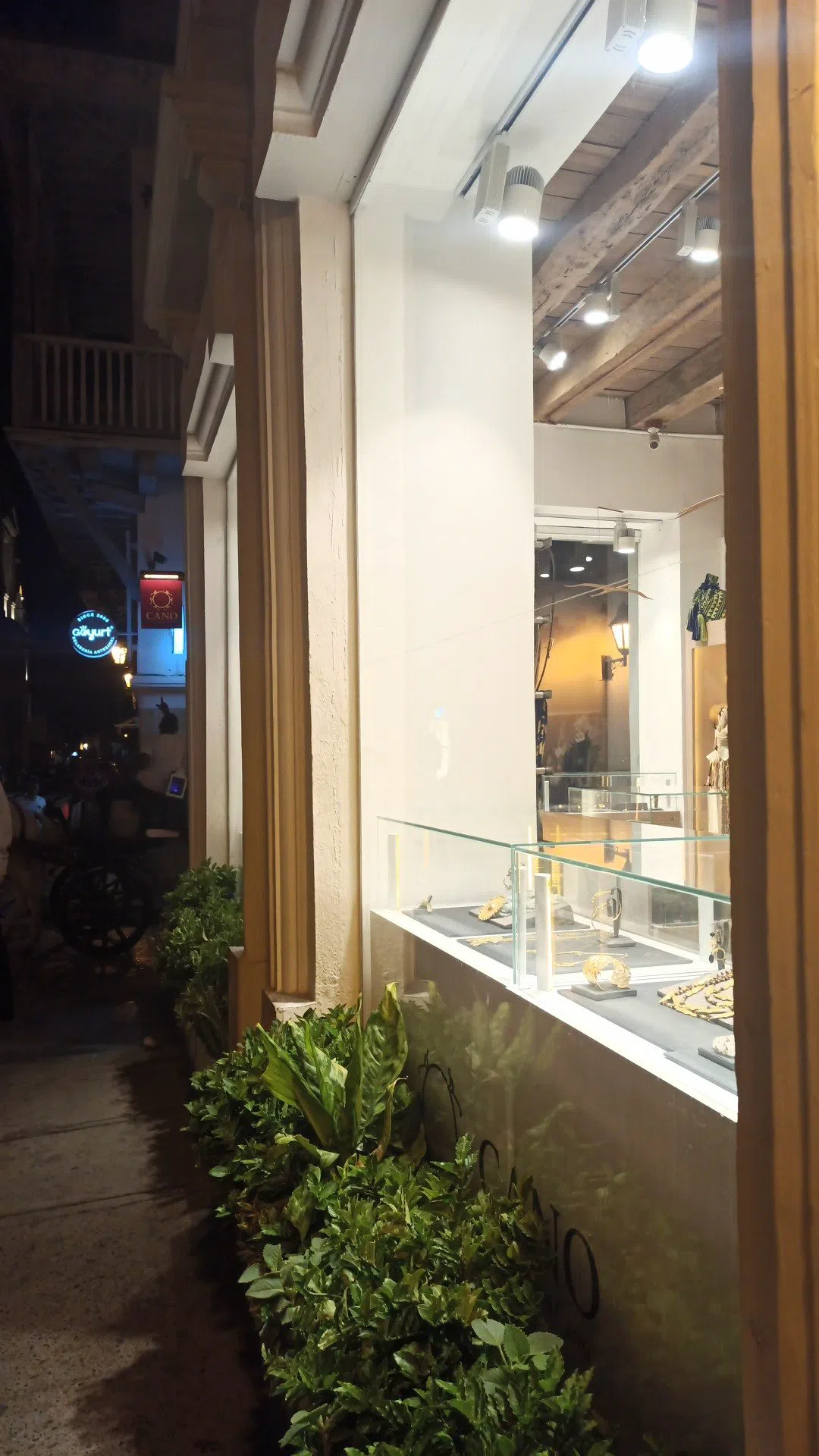
Joyería Cano, a few doors down in the jewelry quarter, is a different kind of stop entirely: it's the only jeweler licensed by the actual Museo del Oro to reproduce its pre-Columbian pieces. That license means the gold pieces on sale here aren't generic Colombian-inspired jewelry — they're documented reproductions of specific museum holdings, which ties the whole walk back to where it started. It's boutique-sized and suits small groups rather than crowds; prices run $$-$$$.
The Walls That Made the Trade Possible
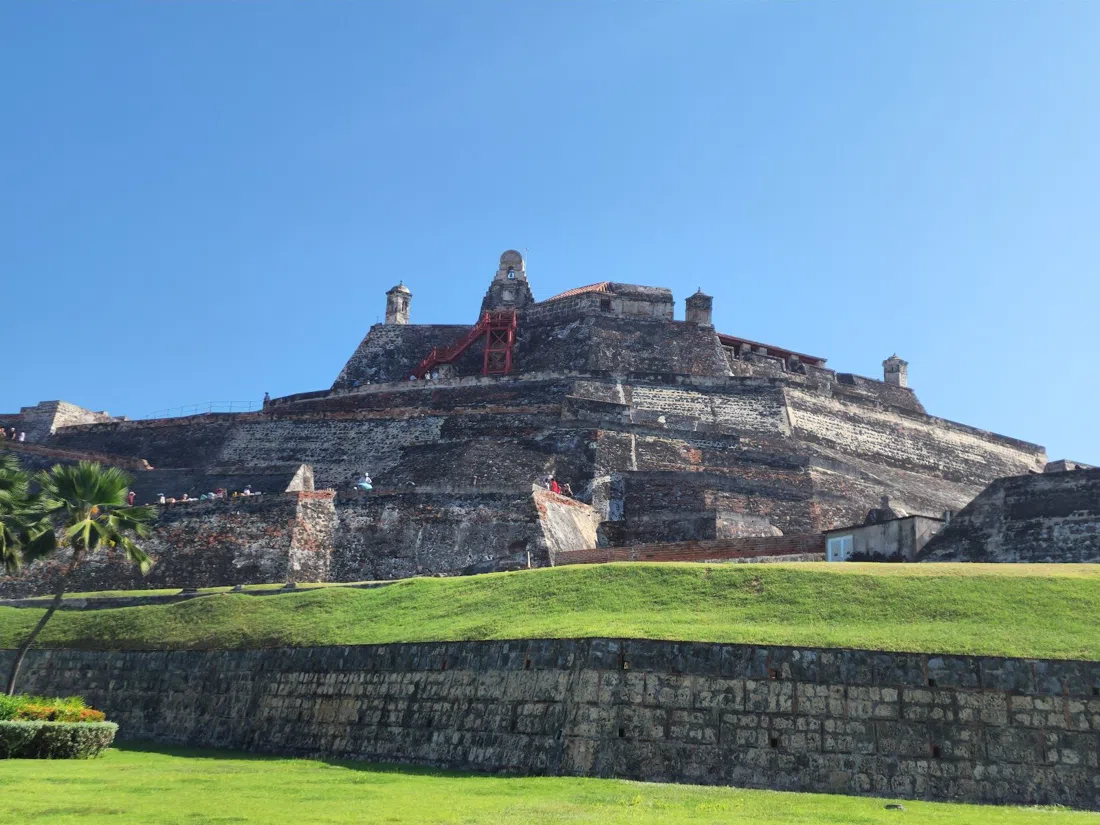
None of this — the gold, the tribunal, the emerald shops — survives without the fortifications that kept Cartagena from being sacked every time a raider heard there was treasure in the harbor. Castillo San Felipe de Barajas, on the hill above the Old City, is the reason colonial Cartagena could move that wealth at all: it's the largest Spanish fortress built in the Americas, a genuinely serious piece of military engineering with tunnels designed to amplify footsteps so no attacker could approach unheard. It's built for large groups — guided tours and audio guides are both available — and you should plan on two to three hours if you want to walk the tunnels properly rather than just admire the ramparts. International adult admission runs around COP 50,000, roughly $10.
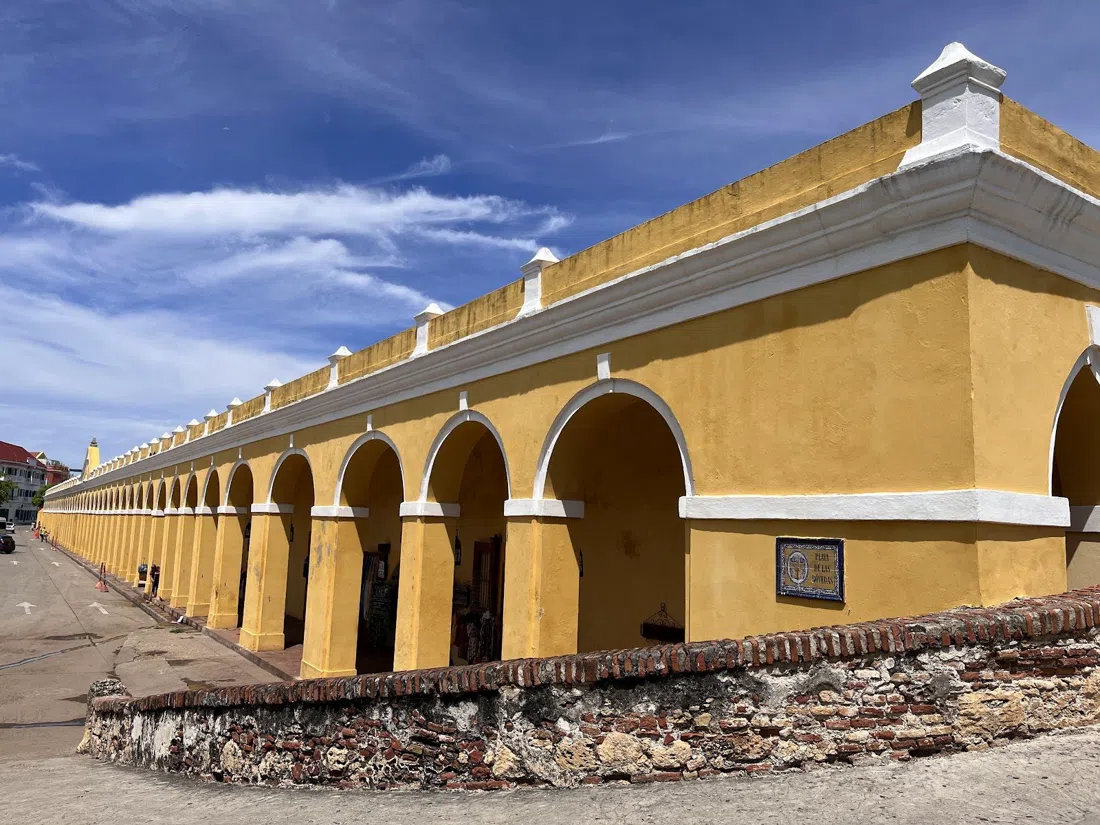
Closer to the jewelry district itself, Las Bóvedas, tucked against the old city walls right where the fortifications give way to the shopping streets, is the most photogenic pivot point in the whole walk. These vaults started as Spanish gunpowder magazines, later did time as a flooding-prone 19th-century prison, and are now an open-air arcade of craft stalls under thick, whitewashed colonial arches. It's free to browse, takes any size group without booking, and is worth ten unhurried minutes even if you buy nothing — the architecture alone earns the stop, and it sets you up geographically for the shops just beyond it.
The Human Cost Behind the Wealth
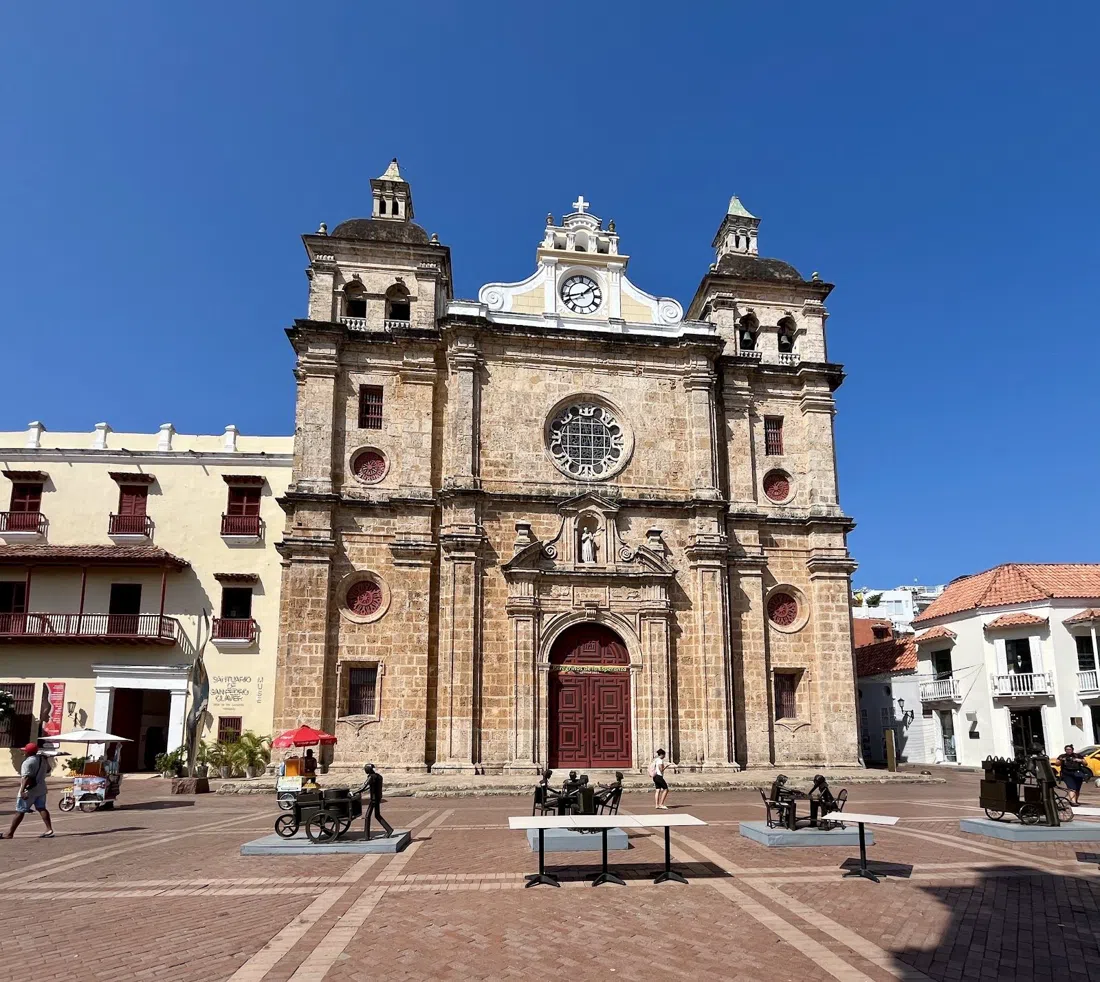
A piece about colonial wealth that never mentions what paid for it isn't an honest piece, and Cartagena has a building specifically built to make sure you don't forget: the Iglesia y Convento de San Pedro Claver, just off the plaza that carries his name in the Old City. Pedro Claver was the Jesuit priest who spent his life ministering to the enslaved people brought through Cartagena's port — one of the largest slave-trading harbors in the Americas — and the convent that bears his name is as much a reckoning as a church. It's open Monday to Friday, 9am to 4:30pm, and weekends 10am to 4pm, with ticket tiers running roughly COP 8,000 to 25,000 depending on what you see. Groups are welcome. Put this stop deliberately in the middle of the walk, not as an afterthought at the end — the gold and the emeralds you've just seen, and the ones you're about to see, moved through a port built on forced labor, and the convent is where that fact gets a name and a face rather than a footnote.
Why Cartagena Became the Export Chokepoint
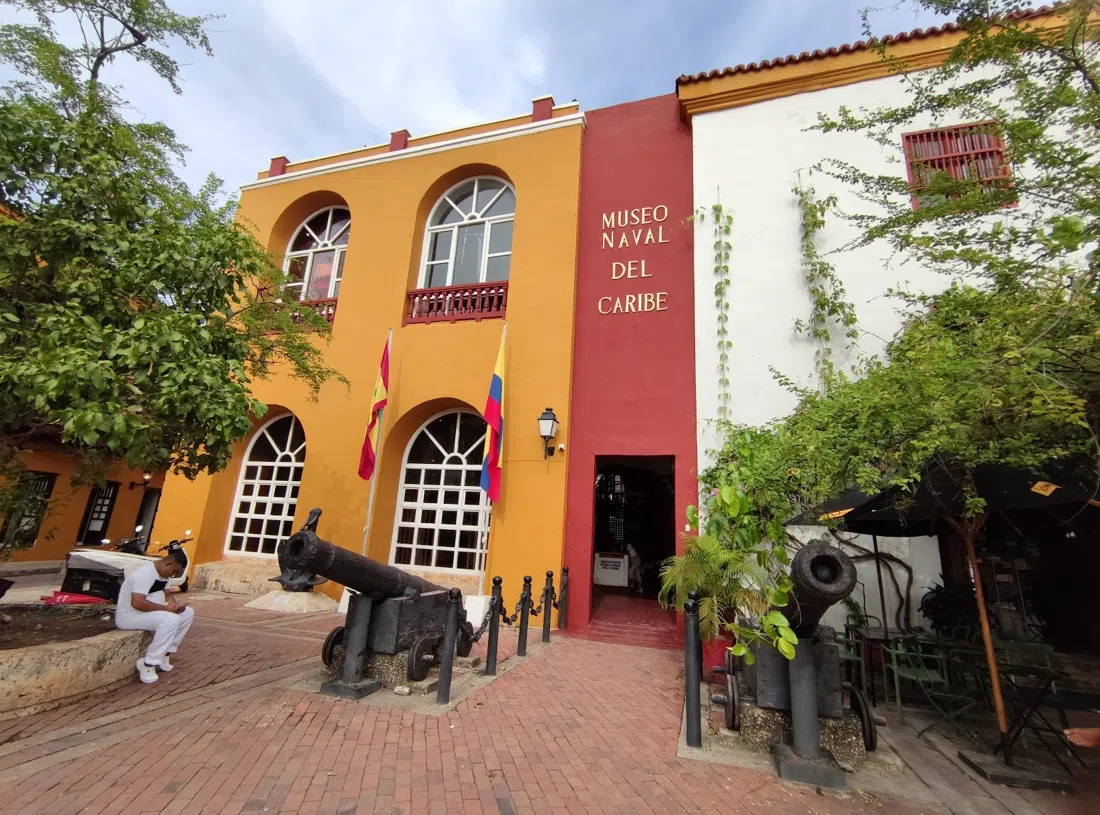
One question this walk answers without anyone having to ask it directly: why did a coastal city become Colombia's gem capital rather than the inland capital where the mines and the government both sat? The Museo Naval del Caribe, on the waterfront edge of the walled city, has the answer, and it's a shipping answer, not a romantic one. Cartagena's fortified, defensible harbor made it the export chokepoint for New Granada's gold and emeralds — everything mined or cut inland eventually had to leave through a port, and this was the port that could be protected. The museum is open daily, 10am to 6pm, admission around $6.50, and it welcomes groups readily. It's a quieter, more technical stop than the others on this list, and it rewards the kind of traveler who wants the logistics behind the legend, not just the legend.
A Skyline Close
Finish the day, if you have the light for it, at Convento de la Popa, on La Popa hill, the highest colonial vantage point over Cartagena. There's no direct public transit up — arrange a taxi or driver in advance rather than trying to walk it or flag one down at the base — but the view from the top puts the whole district you've just walked in a single frame: the fortress, the vaults, the church spires, the grid of streets where the emerald shops sit. Groups are fine up top; the constraint is entirely about getting there. Admission is around COP 15,000, roughly $4.
Walking It Yourself
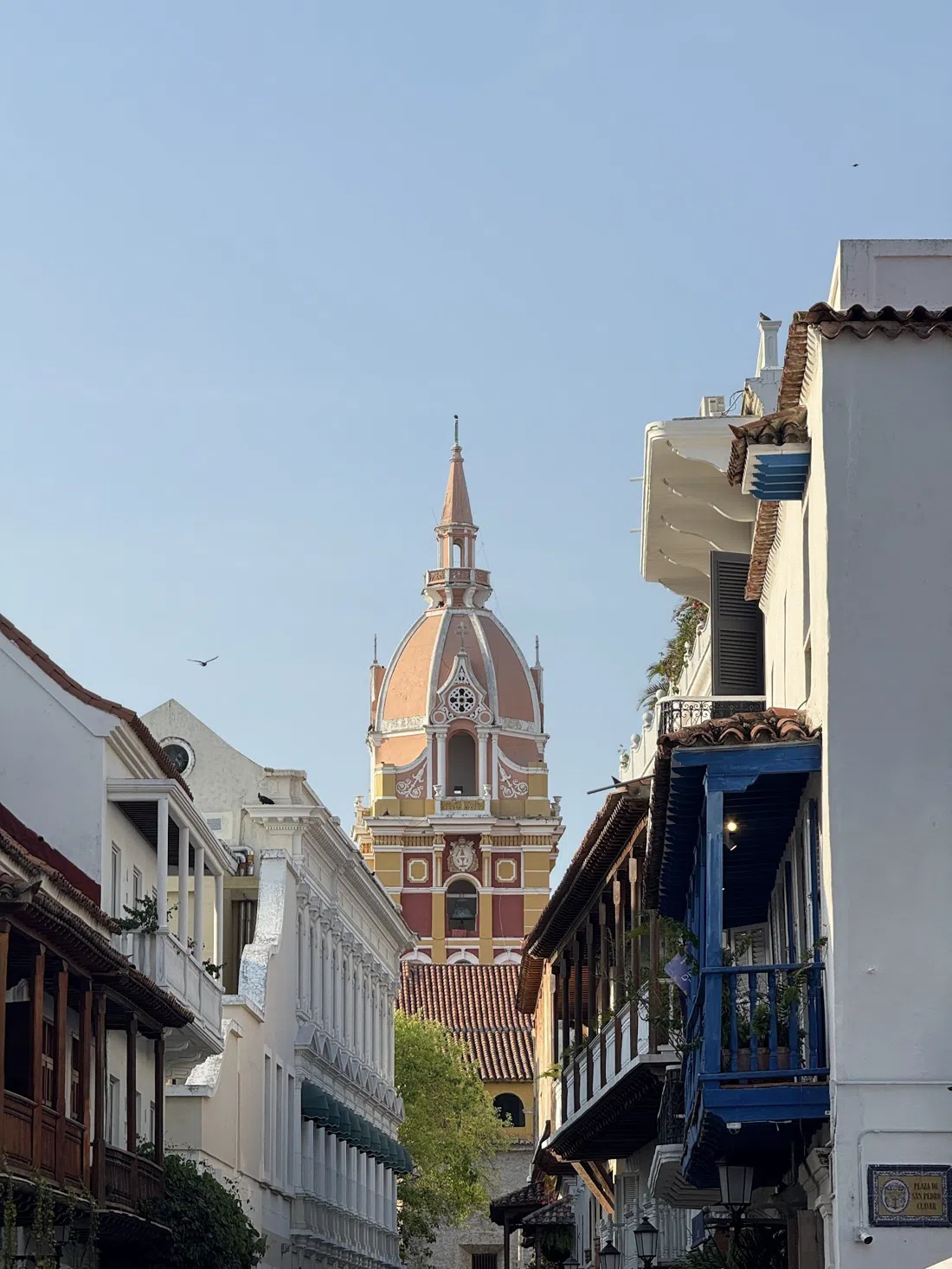
If you'd rather have someone else hold the thread of this route, the GuruWalk Free Tour: Historic Center and Getsemaní covers a version of the same ground on foot — clock tower, emerald arcades, and on into Getsemaní — with a local guide, built for groups, and paid entirely on tips at the end. It meets at a fixed public plaza with no booking required, which makes it a good low-commitment way to get oriented on day one before you go back through this list at your own pace on day two.
Getting There, Cash, and Budget
The entire route above sits inside or just outside the walled city, so once you're in the Old City you can do all of it on foot except the climb to Convento de la Popa, which needs a taxi. Wear shoes you don't mind sweating in — Cartagena's heat and humidity are constant, and the fortress tunnels in particular are not air-conditioned.
Bring cash. Colombian pesos are the default currency everywhere on this list, and while the larger museums and jewelry shops take cards, the smaller crafts stalls at Las Bóvedas and tip-based stops like the GuruWalk tour run on cash. US dollars are understood at some tourist-facing counters, but you'll get a worse effective rate than paying in pesos.
For timing, tackle the museum and church cluster in the walled city in the morning, before the heat peaks and before cruise-ship crowds fill the emerald shops around midday; save Las Bóvedas and a slower jewelry-shop browse for late afternoon once the light softens. Budget a full day for the walk as laid out here — two if you want unhurried time in both San Felipe's tunnels and a proper conversation at one of the high-end jewelers rather than a rushed showroom pass.
On cost: entry fees across the museums and fortress total well under $50 per person even doing everything, tip-based walking tours are what you make them, and the real variable is what you spend, or don't, at the jewelry stops — a rough stone at Adriana's costs nothing to look at, a serious piece at Lucy Jewelry or Caribe can run into four figures. For where to stay while you work through this list, the Cartagena hotel search covers options inside and just outside the walls; for the rest of what the city offers beyond this one thread, the Cartagena guide is the place to start.