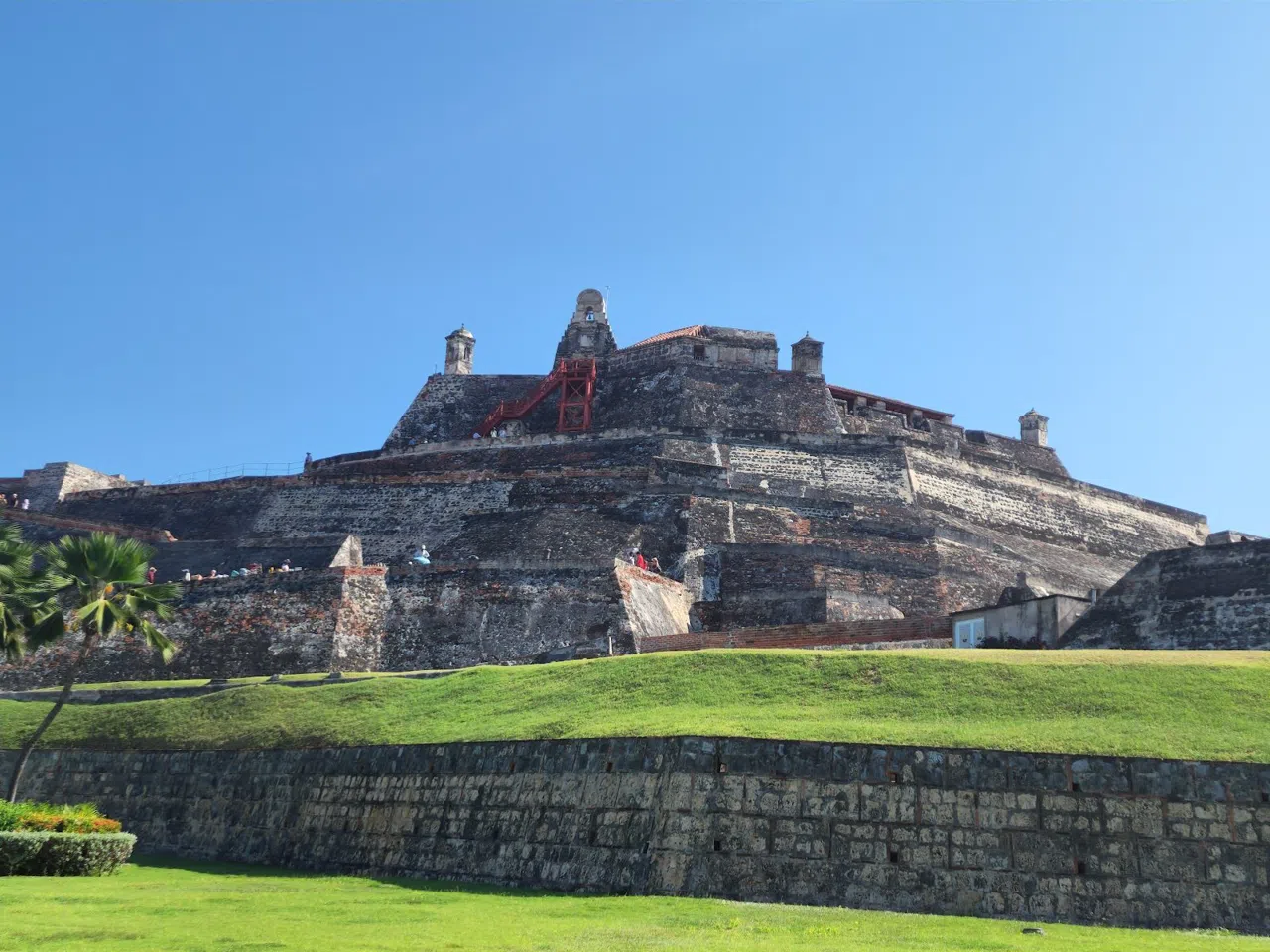

At 5:45pm the last guides in blue polo shirts start clapping visitors toward the exit gates of Castillo San Felipe de Barajas, and for a few minutes the whole hill glows the colour of a struck match before the floodlights click on and turn the stone the colour of old bone. There is no official candlelit night tour here — Fortificaciones de Cartagena, which runs the fortress, locks the gates at six sharp, no exceptions — but come in the last hour of daylight and you get something better than a staged evening product: the tour groups thin out, the tunnels go quiet and cool, and the guides who linger to close up are the ones who actually believe in the ghost.
The Fortress at Closing Time
Castillo San Felipe de Barajas [historic fortress], on the hill of San Lázaro just outside the walled city, is the reason Cartagena survived three centuries of sieges, and it is genuinely the best free-form ruin-crawl in the country — a honeycomb of tunnels, ramps and gun batteries built so a whole garrison could move under the hill without ever showing themselves above ground. A full-price ticket is COP 38,000 (roughly US$9), with reductions for under-13s and students, and there's no separate 'night' ticket to hunt for online because it doesn't exist — every ticket is a day ticket, and the fortress shuts at 6pm every day of the year.
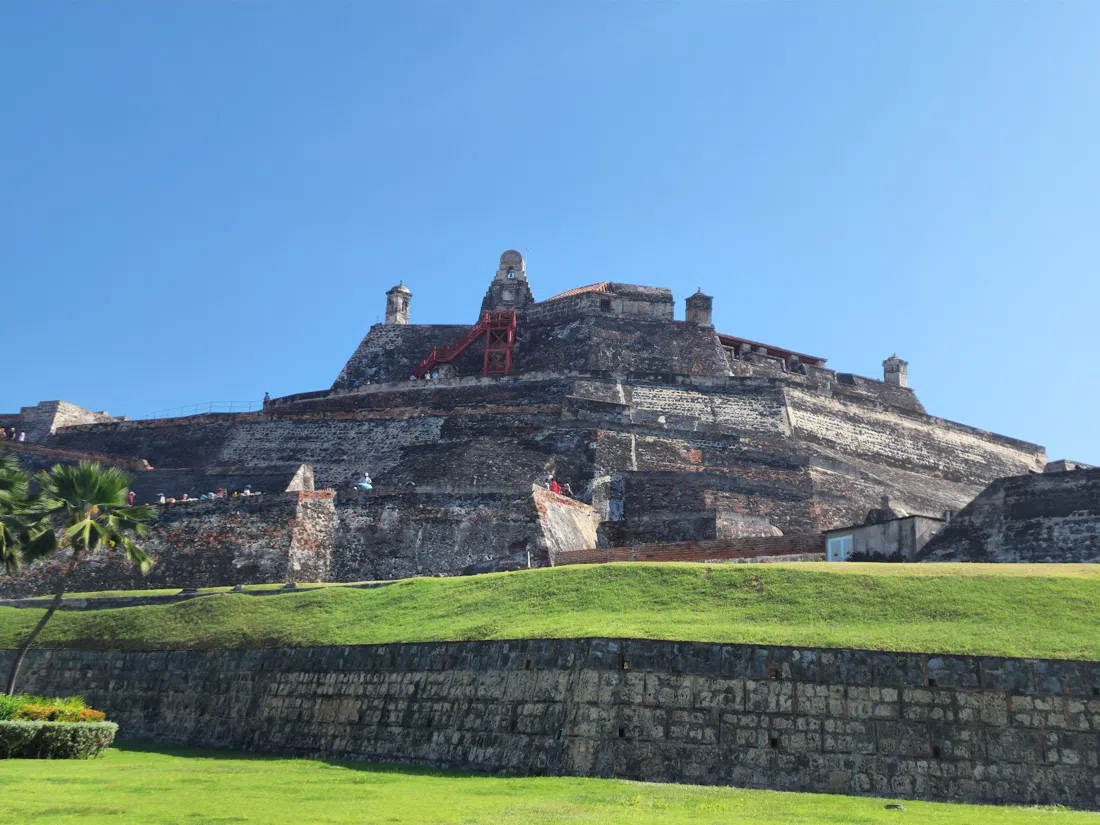
What does exist, and what's worth building an evening around, is timing your visit for the last hour before close. Arrive by 4:30pm, buy a ticket at the gate — groups of any size are taken without fuss, and it's worth the extra for one of the official licensed guides stationed at the entrance rather than going in blind — and you'll have roughly ninety minutes as the day-trip crowds thin and the light drops low and gold across the bay. That's when the tunnel network stops feeling like a museum piece: the ventilation shafts that once cleared cannon smoke start pulling in cool evening air, footsteps carry oddly in the stone corridors (the tunnels were built with the acoustics deliberately sharpened, so a whisper at one end reaches the other), and the guides who've worked the hill for years will tell you, usually unprompted, about the ghost of the sentry.
The story varies slightly depending on which guide tells it, but the shape is always the same: a soldier posted to watch one of the tunnel mouths either fell asleep or abandoned his post during a siege, and was executed for it by his own commander — condemned, the story goes, to patrol the tunnels forever rather than rest. Visitors and guides alike report cold drafts and the sound of boots in passages where no one is walking. It's folklore, not a verified haunting, and the fortress makes no official claim about it — but told in a near-empty tunnel at dusk, with the last light dying in the gun ports above, it does its job.
One honest note: this is a dusk climb, not a night climb. Don't plan around getting inside after dark — plan around being the last people out.
Sunset From the Walls
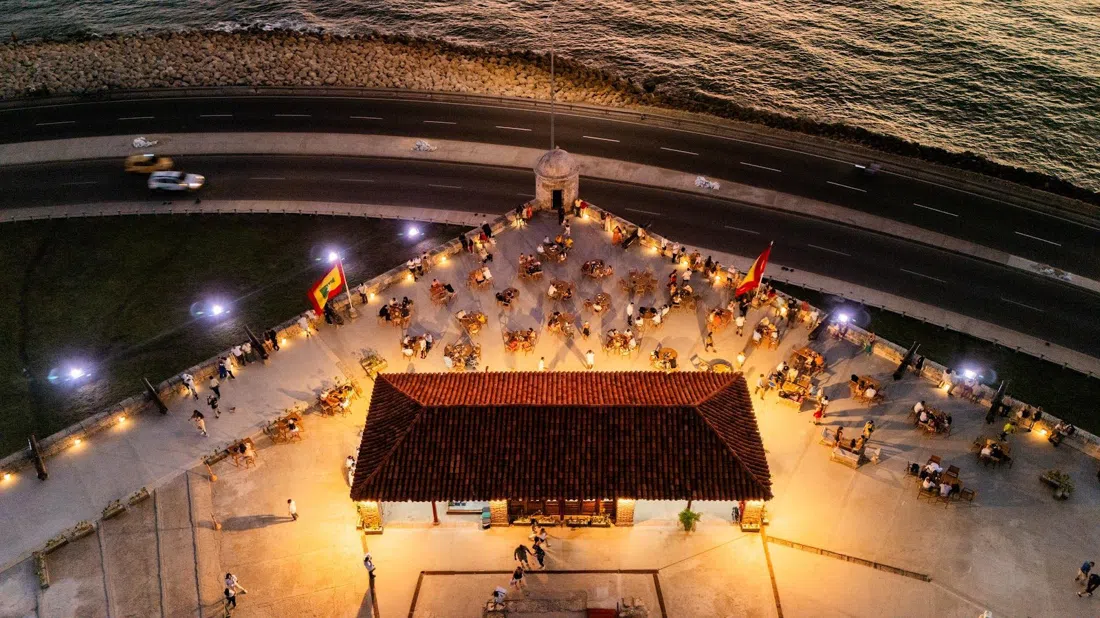
Once the gates close behind you, the walled city is a short taxi ride away, and the natural next stop is Baluarte de Santo Domingo [viewpoint], also known as the Mirador del Mar, on the old ramparts of the walled city. Café del Mar, the bar that used to occupy this bastion, closed in 2023 after a legal ruling over public land use, but the bastion itself reopened as a free public viewpoint and remains the best unbroken sunset spot inside the walls — free to enter, no booking, any group size welcome. Buy a beer from one of the stalls nearby (around COP 10,000) and watch the sky do the second half of what the fortress started an hour earlier.
Dinner Inside the Walls
Plaza Santo Domingo [dining square], in the heart of the old city, is the classic staging point for a group dinner as the walled city lights up for the evening — book the specific restaurant ringing the square rather than expecting to just turn up, since the plaza itself isn't a single venue. Expect tourist-level pricing, roughly COP 50,000–100,000 for a main, for the trade-off of eating outdoors with a Baroque church façade lit up in front of you.
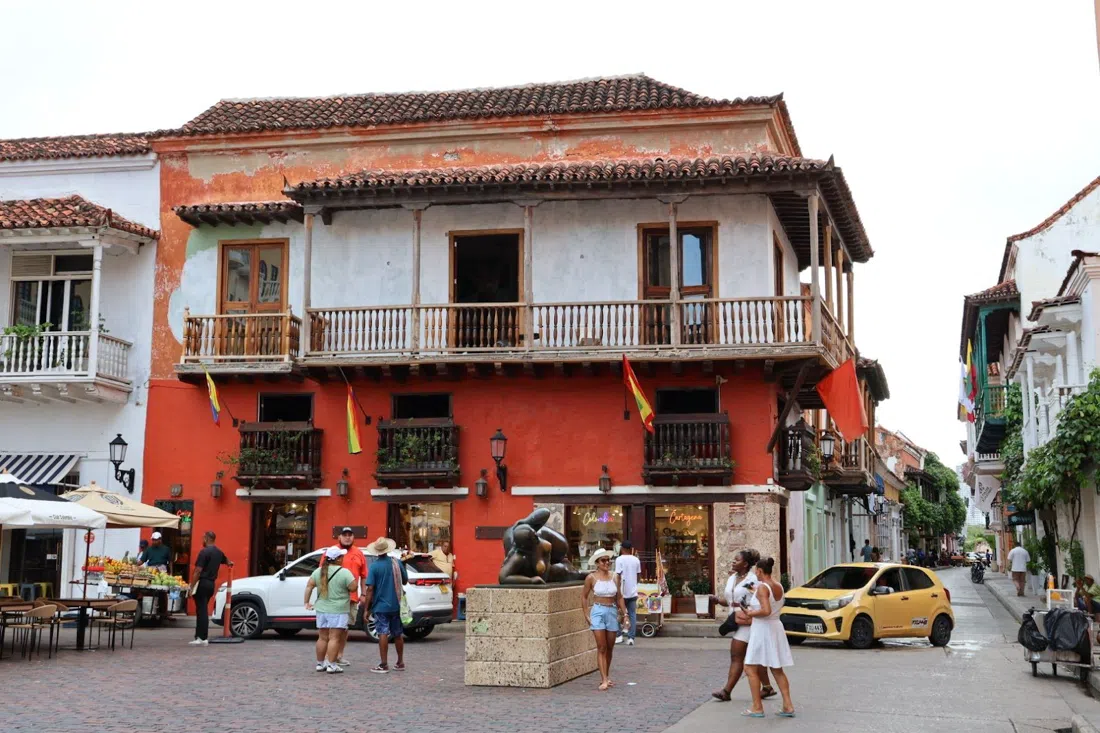
For something more composed, Demente Bar Tapas [tapas bar], just off the plaza, does relaxed Spanish tapas — plates run COP 30,000–50,000 — and takes groups comfortably, though it's worth reserving on weekends. It's also well timed for the evening's arc: by the time you're finishing plates, the free street party that gathers outside on weekend nights is usually starting to build.
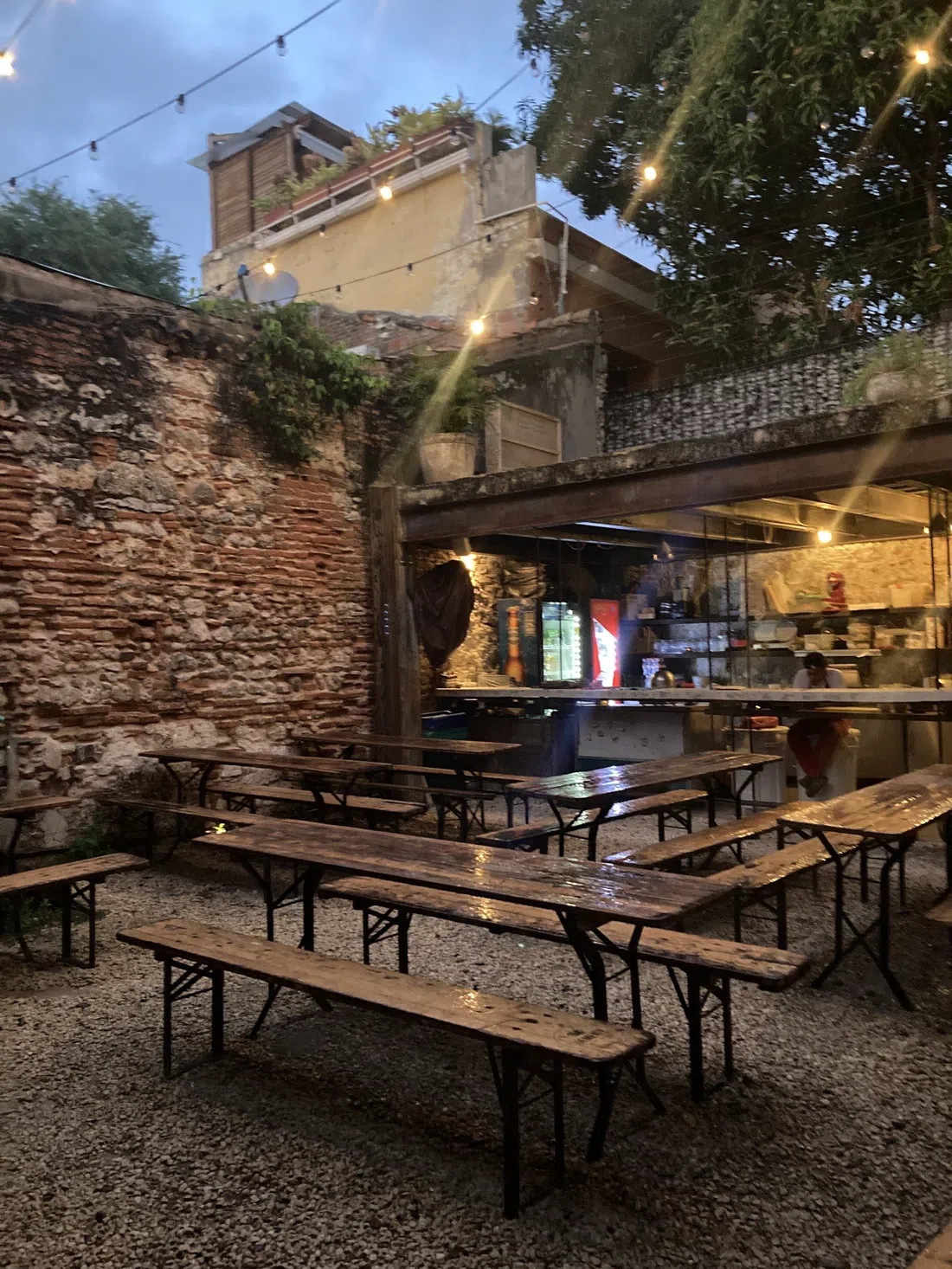
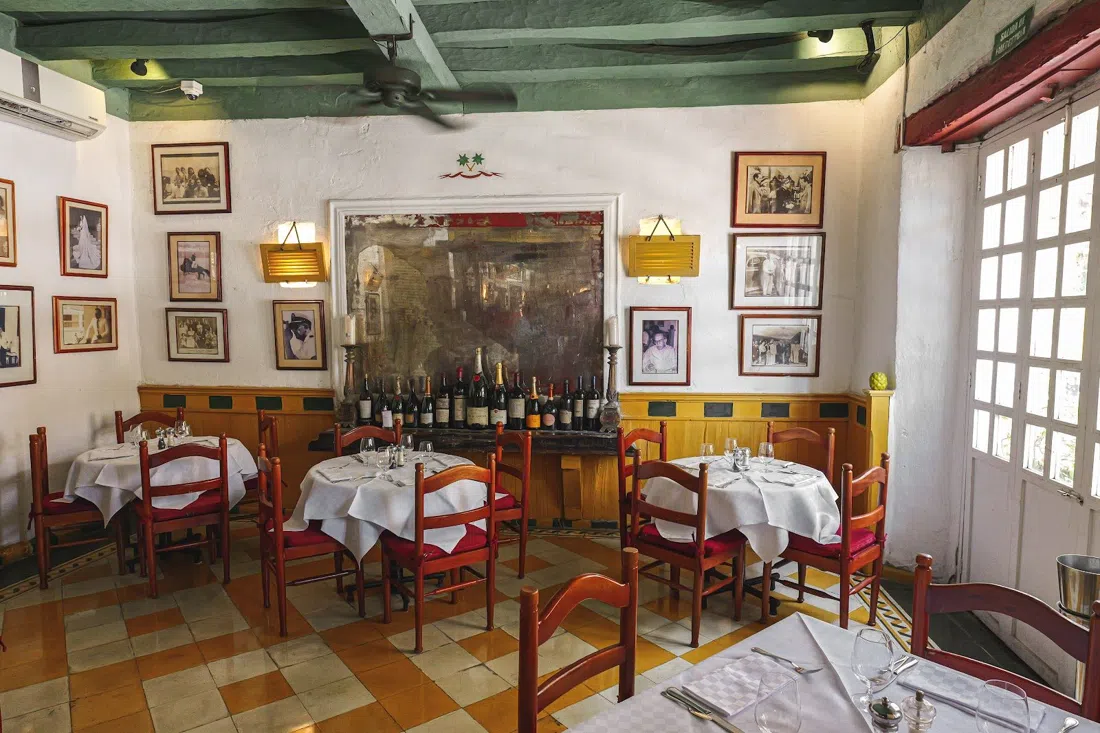
For a proper sit-down dinner that actually echoes the fortress's after-dark mood, La Vitrola [live-music restaurant], in the old city, is the pick — nightly live Cuban music in a genuinely old room, mains from COP 80,000–150,000, and a dress code strict enough that men need long trousers. Reservations are essential, not optional, and it suits a group that wants candlelight and a band rather than a club.
Rooftops With the Castle in Frame
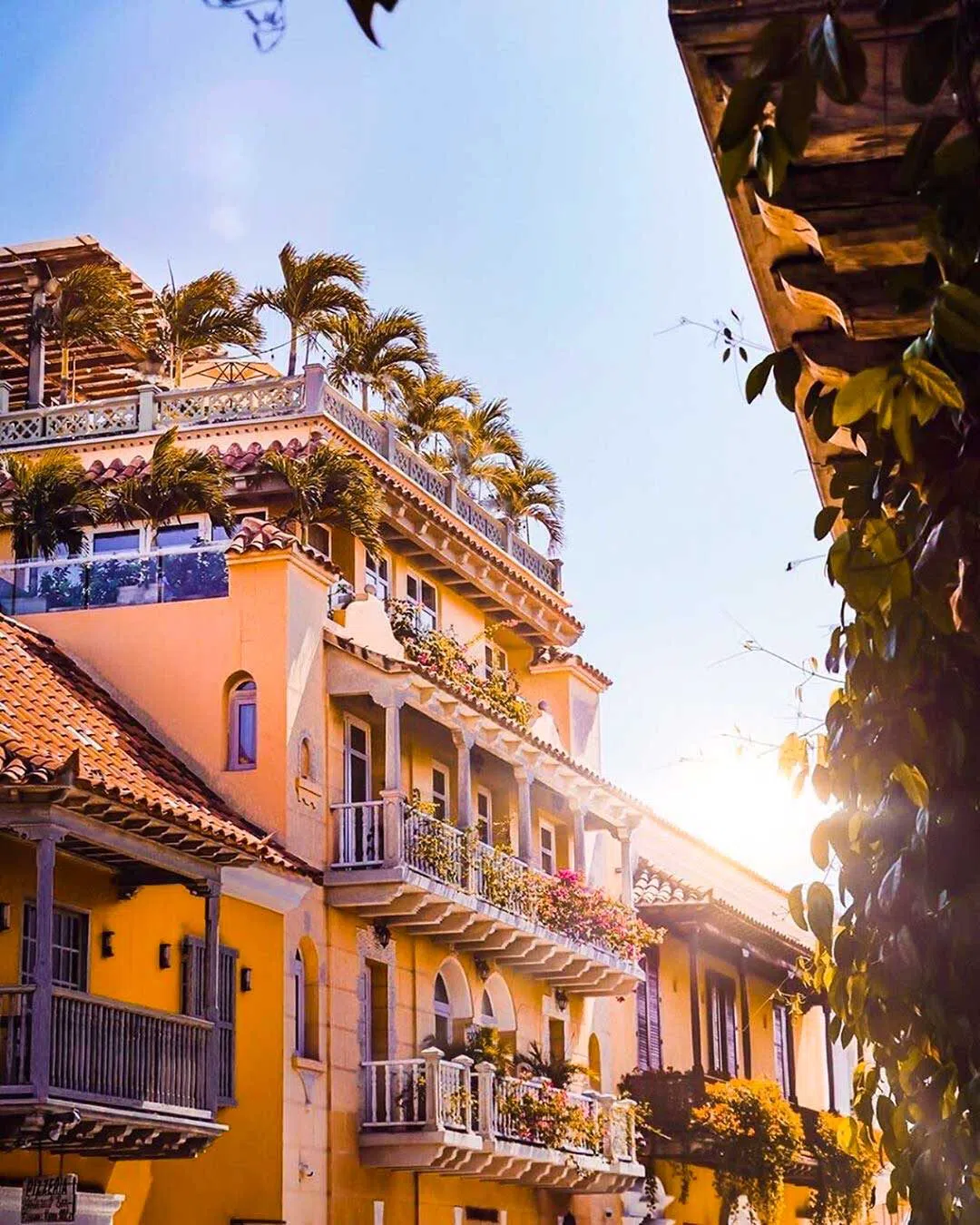
Most of Cartagena's rooftops look out at the sea or the rooftops of the old city — only one actually frames the lit-up fortress across the water. Alyzia Rooftop & Dining, at the Movich Hotel [rooftop bar/restaurant] in Bocagrande, is open to non-guests for dinner (the pool and jacuzzi are reserved for hotel guests only), and it's worth booking a table specifically for the view — you can watch the floodlit walls of the castle you walked through two hours earlier, from across the bay, over a plate that runs COP 60,000–120,000. It's a genuine 'came full circle' moment for the evening, and one worth planning the seating around rather than treating as an afterthought.
Back inside the walled city, Townhouse Rooftop [rooftop bar] welcomes non-guests and groups without friction, with reservations recommended on weekends. It doesn't have the direct castle sightline Alyzia does, but between the rooftop pool and a genuine live jazz set most nights, it's the better choice for a mixed group that wants a civilised evening view without a club crowd building around them. Cocktails run COP 35,000–60,000.
Cocktail Hour, Candlelit Rooms
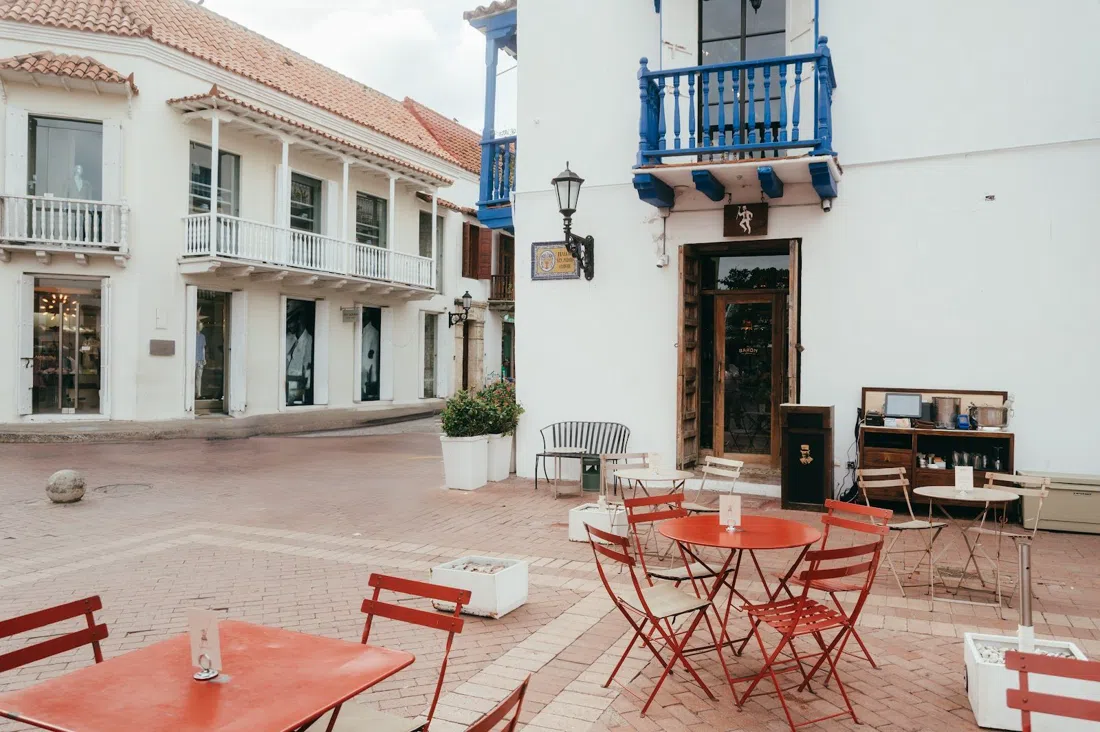
If the tunnels were the evening's atmosphere, the closest thing the bar scene offers to matching it is El Barón [cocktail bar], tucked into the old city on Calle Baloco. It's a genuinely 400-year-old room, World's 50 Best-listed, doing serious cocktail craft (COP 45,000–75,000) in candlelit surroundings — but it's built for small groups of two to six, not a big party, so if your group has grown past six, split up or pick somewhere else for the whole crew.
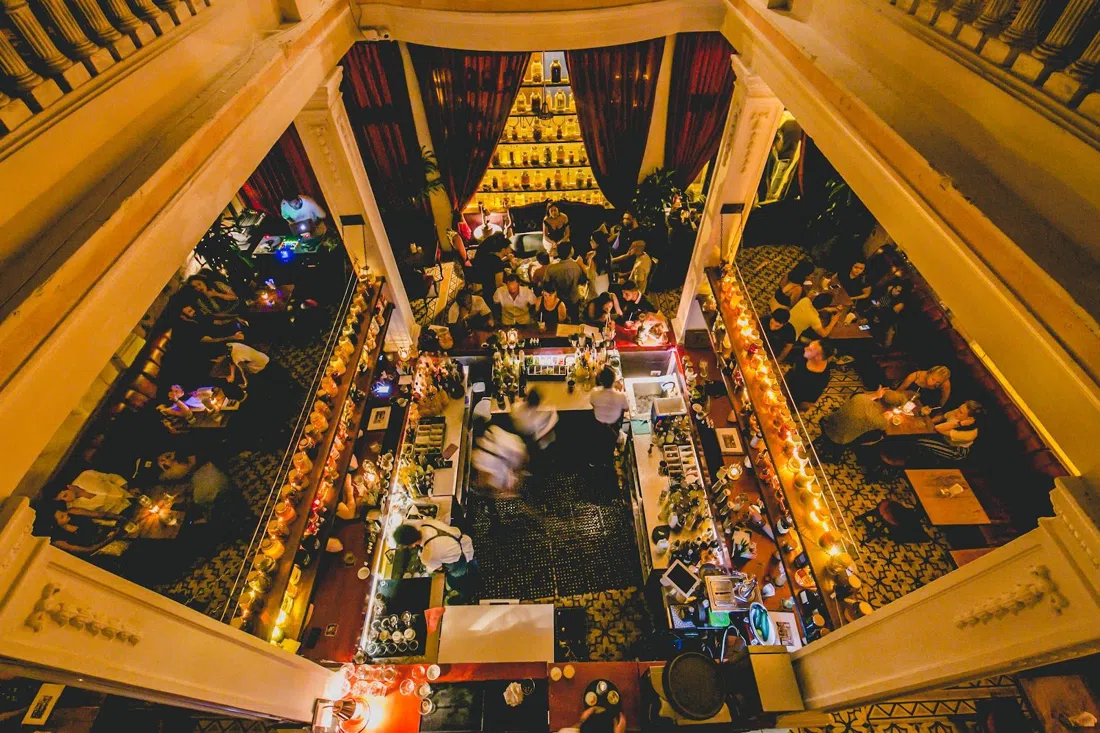
For the opposite energy, Alquímico [cocktail bar/rooftop] in Getsemaní is Cartagena's most decorated bar — No. 11 on the World's 50 Best Bars list for 2025 — and it runs on a walk-in-only policy with no reservations taken at all. Arrive with your group by 7–8pm or you'll be queuing, because it fills fast and doesn't thin out. What makes it worth the wait is the build across the night: it opens as a quiet, low-lit cocktail room on the lower floors and climbs, floor by floor, into a rooftop DJ set by midnight. Cocktails run COP 40,000–70,000.
Dancing Past Midnight
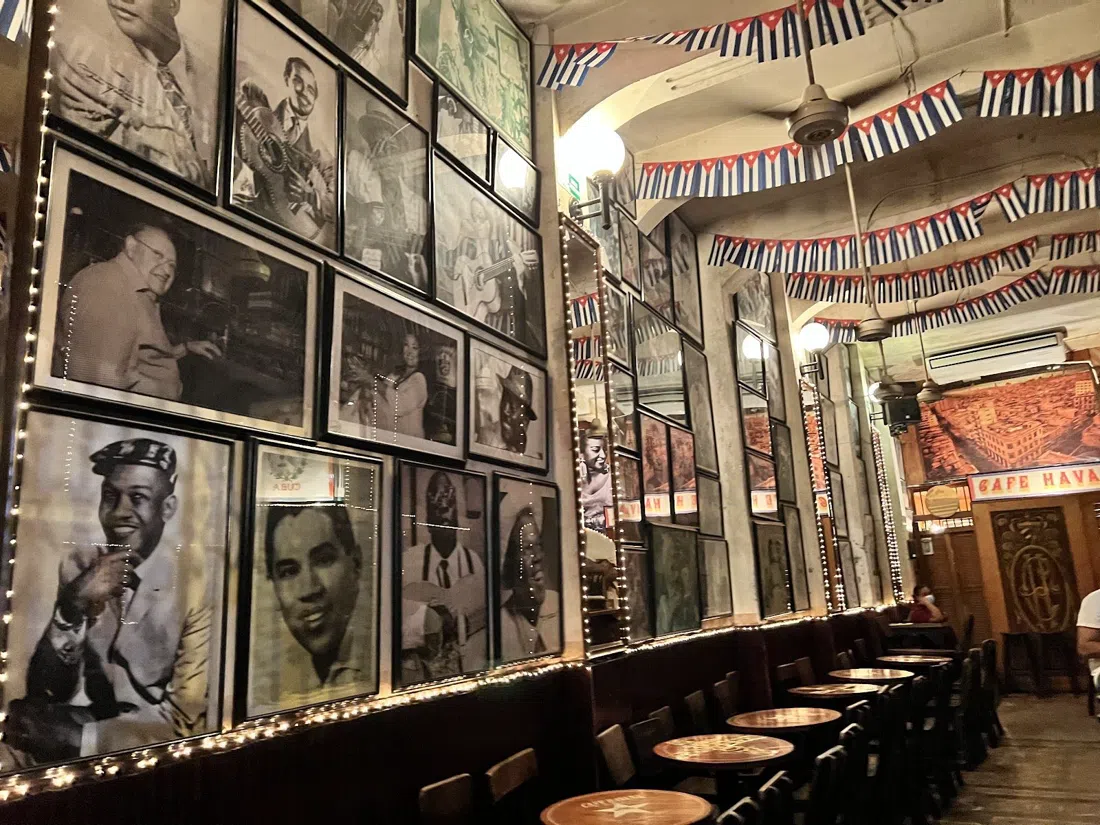
Getsemaní is where the night finishes for most groups, and Café Havana [salsa club] is the real reference point, not a tourist re-enactment of one — a live band every single night, and a line that forms after 10pm, so arrive early or book ahead. Cover is COP 40,000–70,000 including one drink, and groups are welcome without issue.
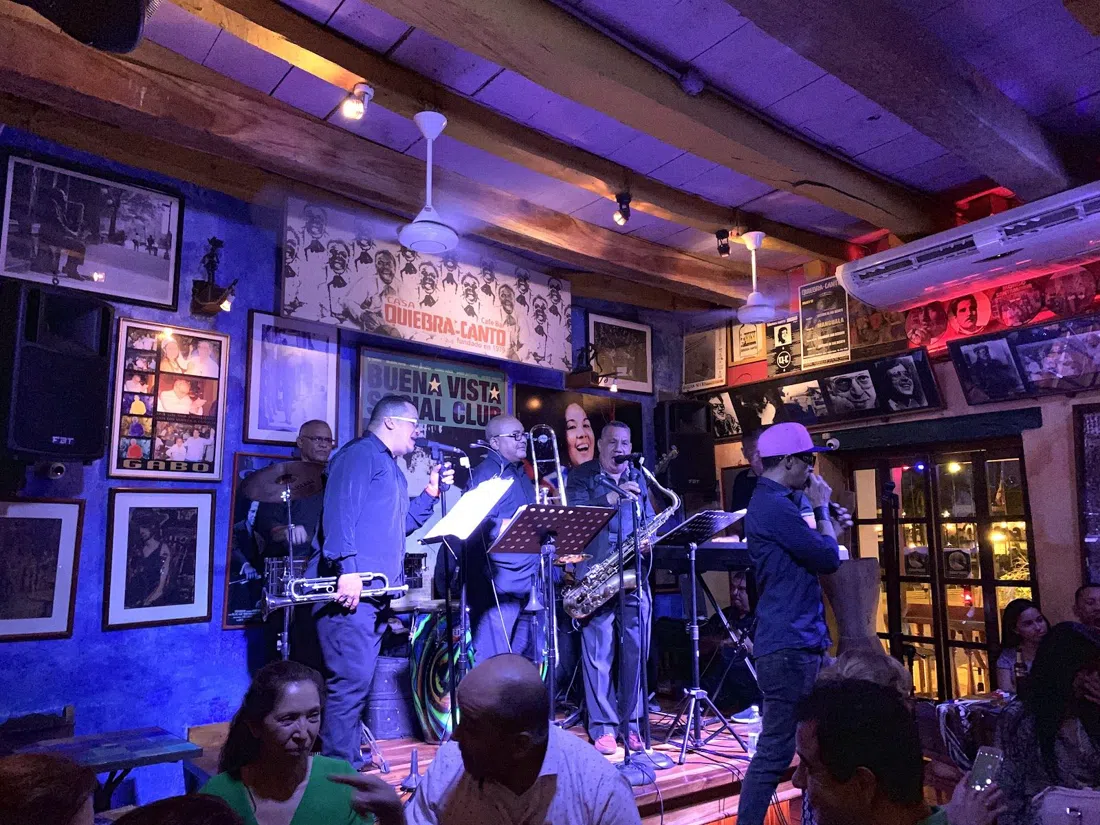
Casa Quiebracanto [salsa bar], running since 1993, is the other Getsemaní institution — order food before the dancing starts, because once the floor fills around 10pm, service slows to a crawl. Drinks run COP 30,000–60,000, and it takes groups easily.
For a different register entirely, La Movida [nightclub] is Cartagena's upscale club end, with bottle service from around COP 400,000 and a door policy that skews accordingly — book ahead if your group wants a proper late night rather than a casual one.
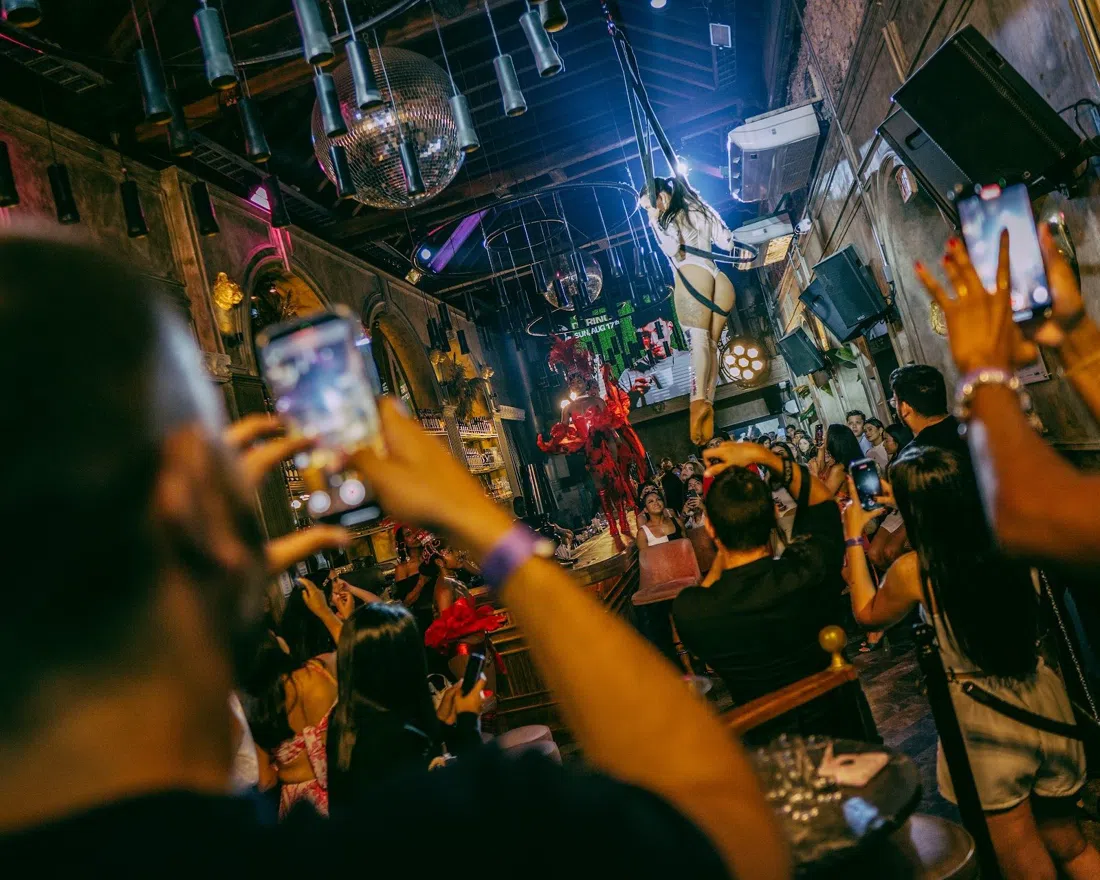
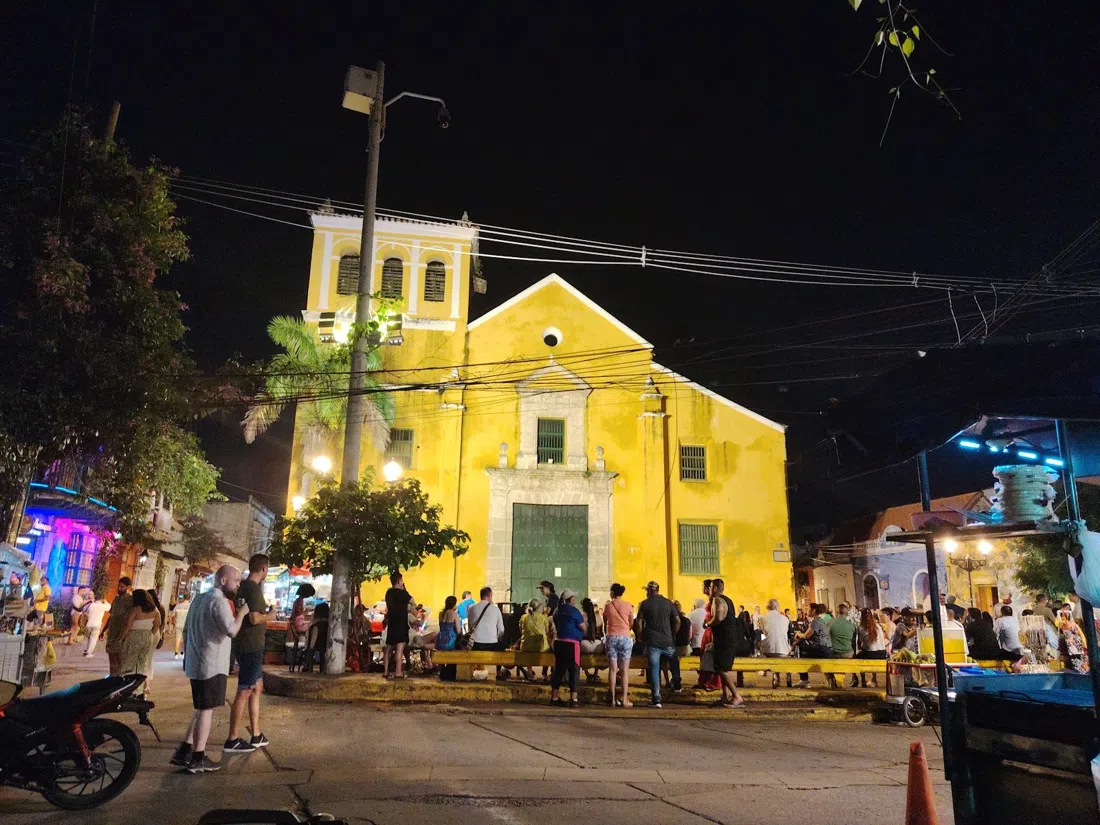
And if the budget or the mood calls for something unstaged, Plaza de la Trinidad [free plaza] in Getsemaní is the honest, unfiltered version of the same night energy: free, informal, cash-only corner-store beers around COP 5,000, no booking, any group size. It's a good closer after a paid dinner and a paid bar — the night winding down the way Getsemaní actually winds down, not the way a venue stages it.
The Practical Bit: Transport, Cash, Timing, Budget
Getting there. The castle sits on its own hill outside the walled city — walkable in theory, but with a group at dusk, a taxi or ride-hailing app there and back is worth the small fare. Getsemaní, the walled city and Bocagrande (home to Alyzia and La Movida) are each a short taxi ride apart; expect to move by car at least twice in an evening that spans the castle, dinner and the bars.
Cash. Colombian pesos are king for almost everything on this list — plaza vendors, cover charges, and several of the smaller bars are cash-only. ATMs are easy to find inside the walled city; carry small notes, since street stalls rarely break large bills.
Timing. The fortress opens at 8am and closes at 6pm, every day — build the evening around a 4:30–5:30pm visit rather than expecting anything after dark. From there, sunset at the bastion, dinner around 7–8pm, and bars from 9pm onward is the natural rhythm most groups fall into.
Budget. A comfortable evening — castle ticket, one rooftop cocktail, a plate at a mid-range dinner spot — runs roughly COP 150,000–250,000 per person. Add a night that ends at La Movida with bottle service, or a full sit-down at La Vitrola, and that figure climbs considerably. Either way, base yourself somewhere central enough to walk or taxi easily between the old city and Getsemaní — start with a Cartagena hotel search — and see the rest of what the city offers via the Cartagena guide.