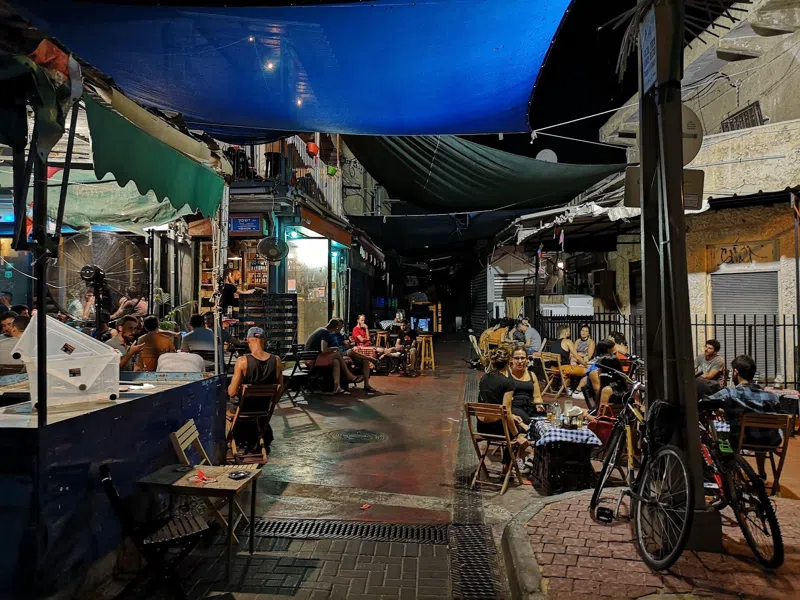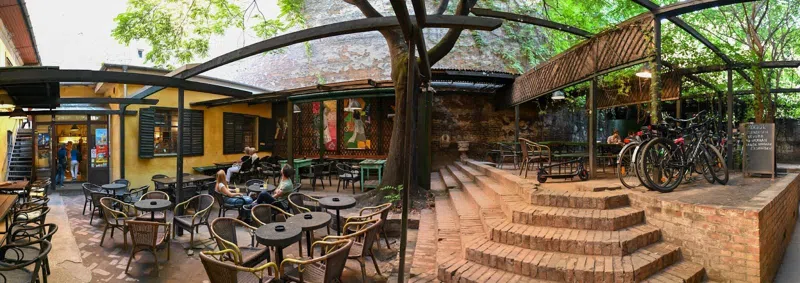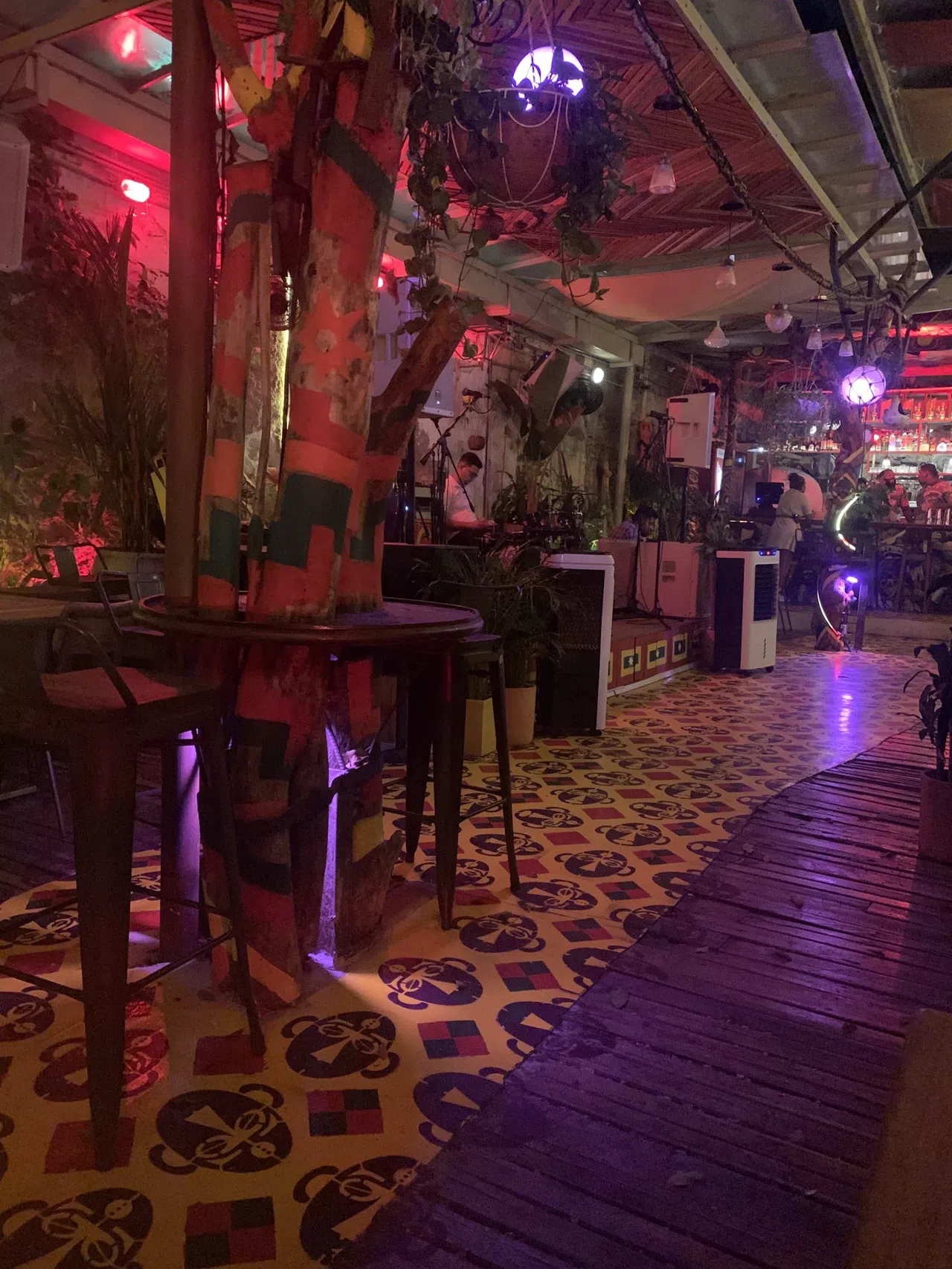
By midnight, the fluorescent-lit stalls of Bazurto market have gone quiet and the fish blood has been hosed off the concrete — but a short taxi ride away, in Getsemaní's narrow streets, the market's real spirit is just getting started. This is the after-dark Cartagena the cruise ships never see: picó speaker stacks the size of refrigerators, salsa clubs where the regulars have been dancing since before the walled city had a single boutique hotel, and vendor carts selling the same fried snacks Bazurto's own stallholders eat on their break. None of it happens inside the market itself once the sun goes down — the barrio around Bazurto isn't set up for visitors wandering blind at night — but its DNA runs through every venue below.
The Picó Circuit: Champeta's Home Turf, Relocated
Champeta didn't start in a studio. It started on flatbed trucks and cinderblock walls around Bazurto, where picó sound systems turned Afro-Colombian and West African rhythms into the loudest, proudest music in the city — a genre that was mocked as low-class for decades before Cartagena claimed it as a point of pride. You won't find that scene inside the market after dark. What you will find, ten minutes away in Getsemaní, are the rooms that carry it forward honestly.
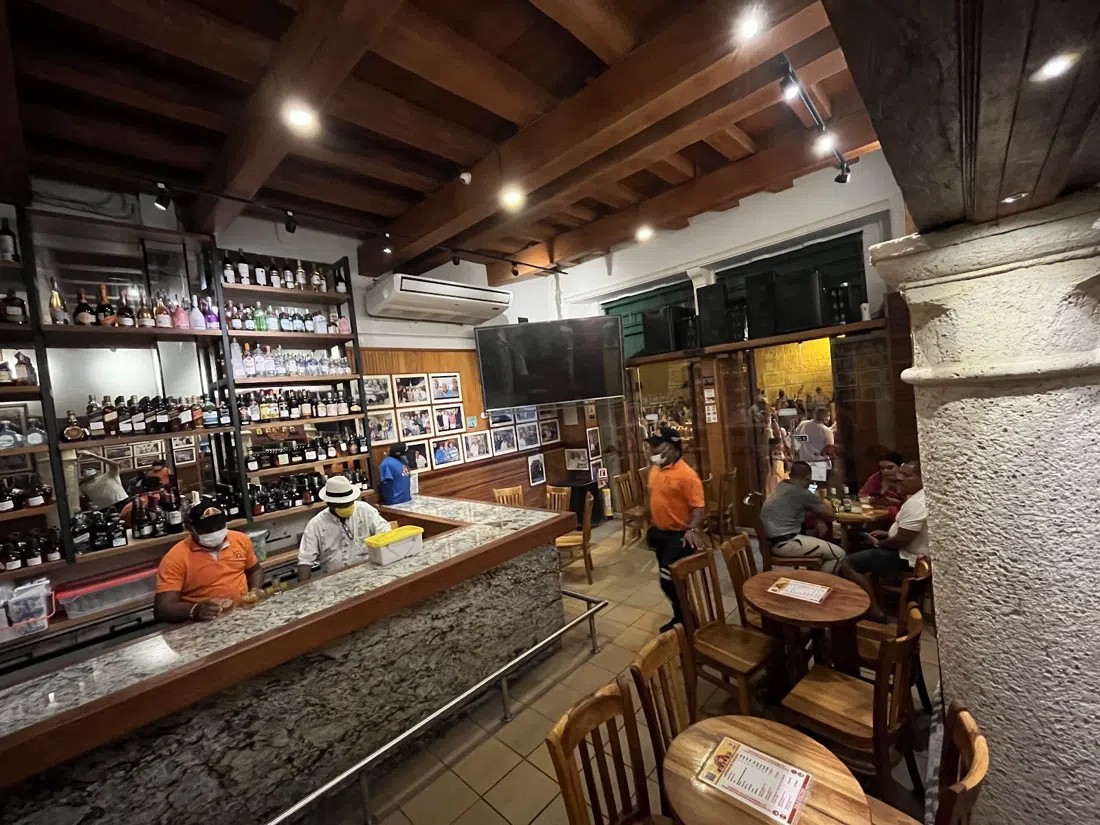
Bazurto Social Club (Getsemaní) is the direct descendant, reopened after the pandemic and still the closest a visitor gets to real picó culture without the risk of the actual barrio at night. It's built for mixed crowds — there are tables, and staff run free dance and champeta lessons early in the evening before the floor gets serious. Go Friday or Saturday after 11pm, when it's busiest and best; anything earlier and you're watching an empty room warm up. Cover runs about 30,000 COP (roughly $8 USD), free if you're through the door before 10pm — drinks and food are billed separately, so don't assume the cover covers anything but the room. Large groups do well here thanks to the table layout, but on weekends it's worth getting there before the 11pm rush rather than trying to talk your way in later.
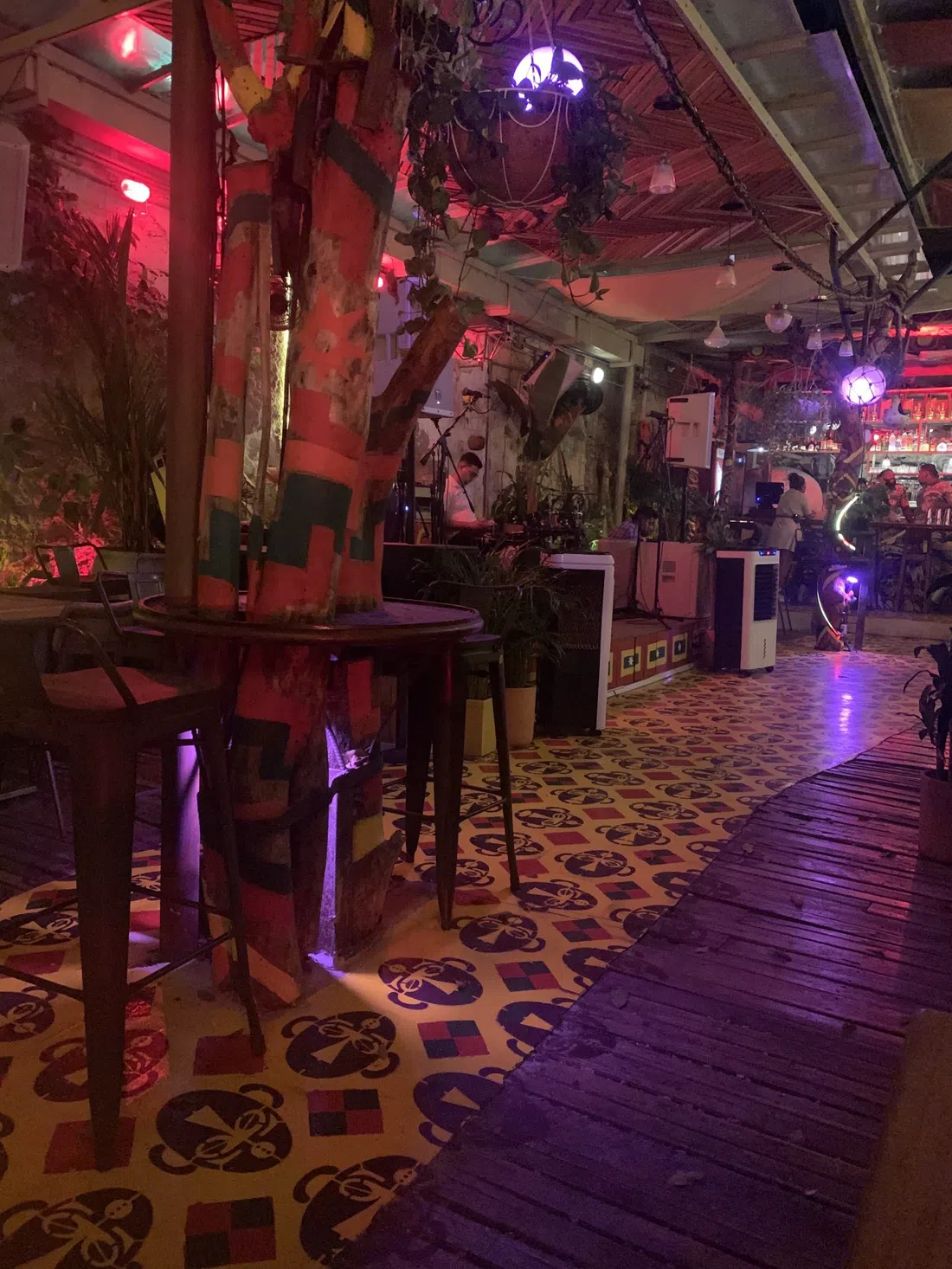
Calle Adentro Music (Getsemaní) is the honest second stop, and the grittier one. It opened post-Covid and feels more local than the bigger Getsemaní rooms — no cover, no dress-up required, walk-ins genuinely welcome. The weekly Thursday meetup night is the single best evening to catch a real mix of locals and travelers dancing side by side rather than at each other. Budget for beer and cocktails only; nobody here is trying to upsell a table package.
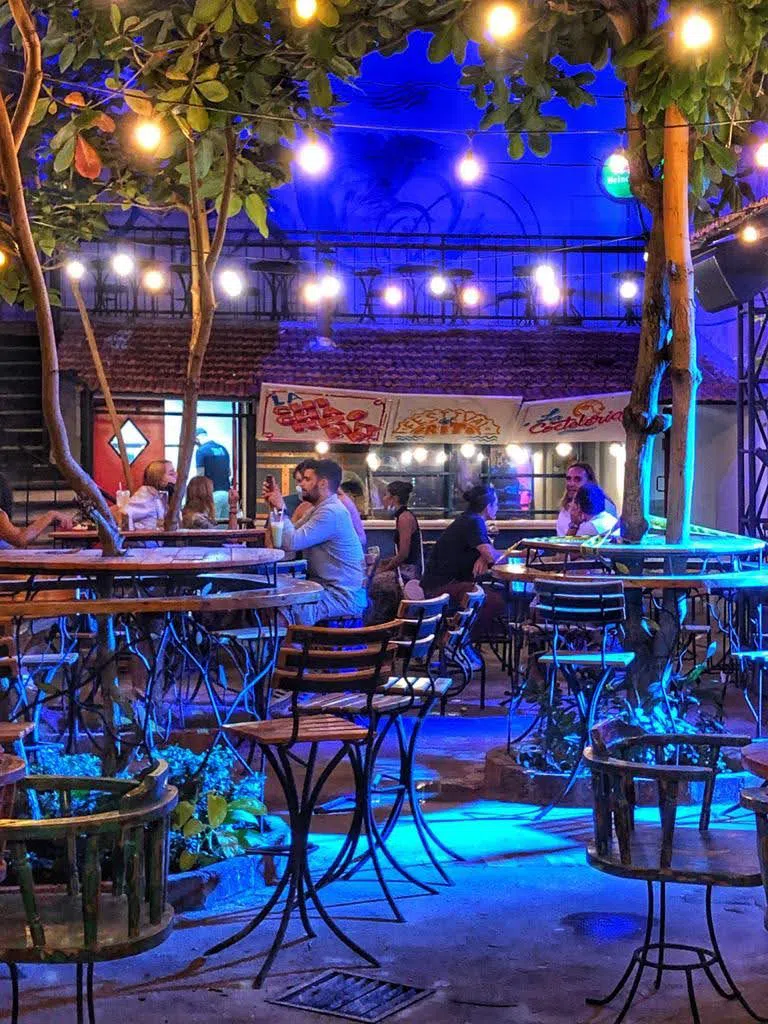
Salsa Rooms Where the Regulars Outdance the Tourists
Cartagena's other after-dark thread is salsa, and the venues split cleanly between rooms built for serious dancers and rooms built for groups who mostly want to be in the room and order another round.
Quiebra-Canto (Getsemaní) is the anti-polish original — open since 1993, Cartagena's first salsa club, still full of locals who've been dancing there for twenty-plus years. DJ nights alternate with a live band twice a week, and the cover only shows up on those live-band nights; drinks run moderate. This suits a group with at least a passing interest in salsa rather than one hoping to be entertained from a corner table — the regulars notice who's actually dancing.
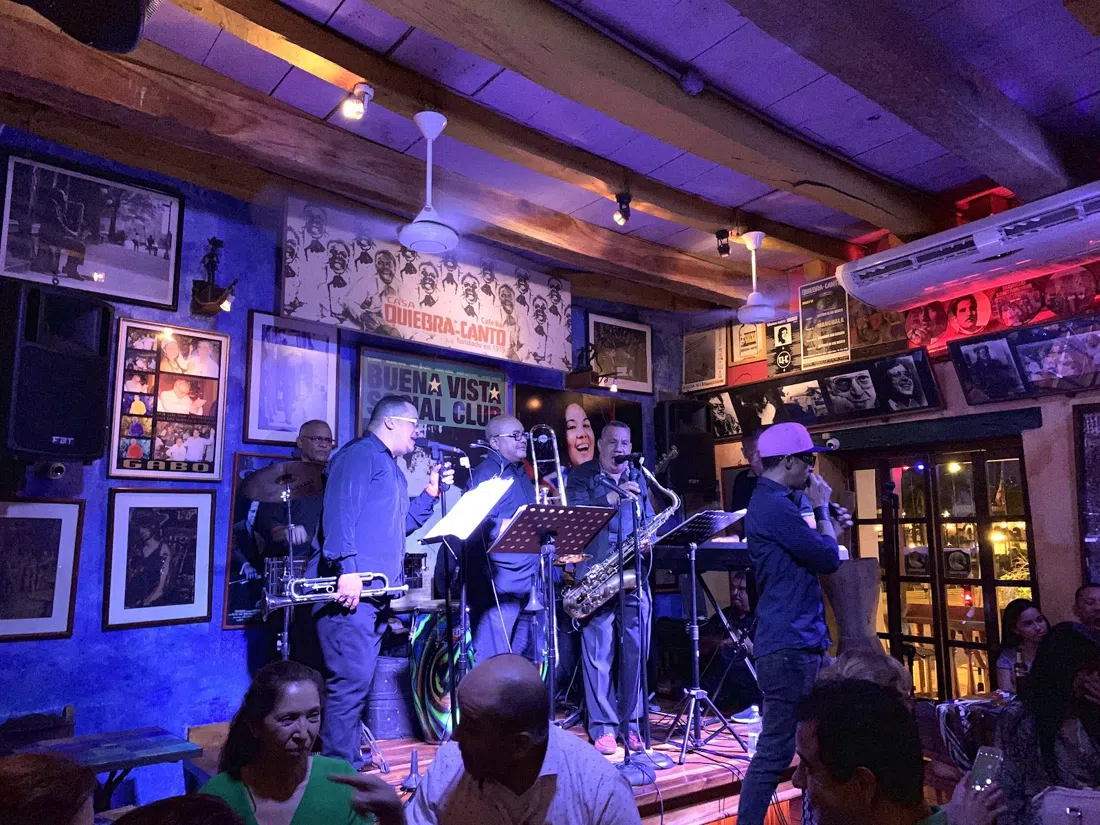
Café Havana (Getsemaní) is the famous one, and the reason lines form outside after a certain hour. It's loud, packed, and genuinely local-run despite the fame — that's the trade-off. Groups get in fine if they arrive early; the room is small, fills fast, and a cover kicks in once it does. Prices run higher than the grittier spots on this list, which buys you the best live band in town but also the biggest crowd to fight for a spot near it.
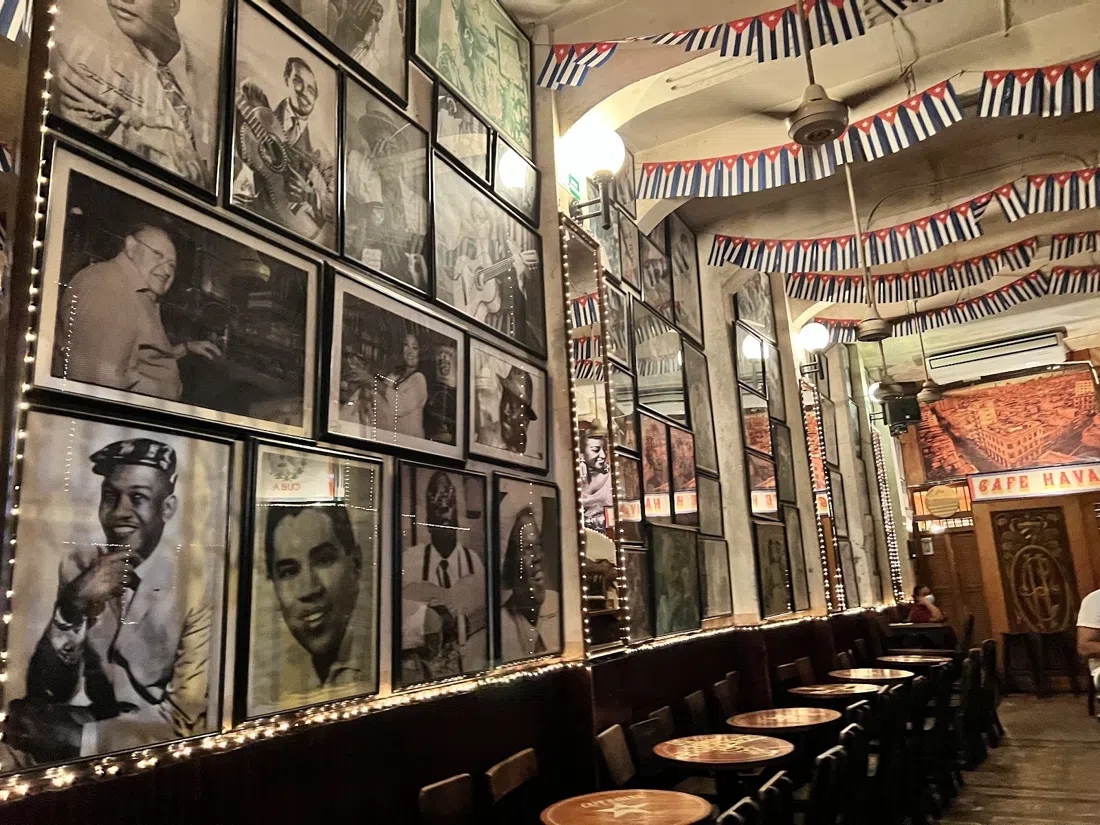
Donde Fidel (Plaza de los Coches, walled city) has been open since 1984, still owned by the same founder, and it's the least intimidating door on this whole list — no reservation, no cover, cheap beer and rum, roughly 30 outdoor tables spilling onto the square. It's less a club than a people-watching institution, and it's the best place to ease a hesitant group in before committing to somewhere with an actual dance floor and door policy.
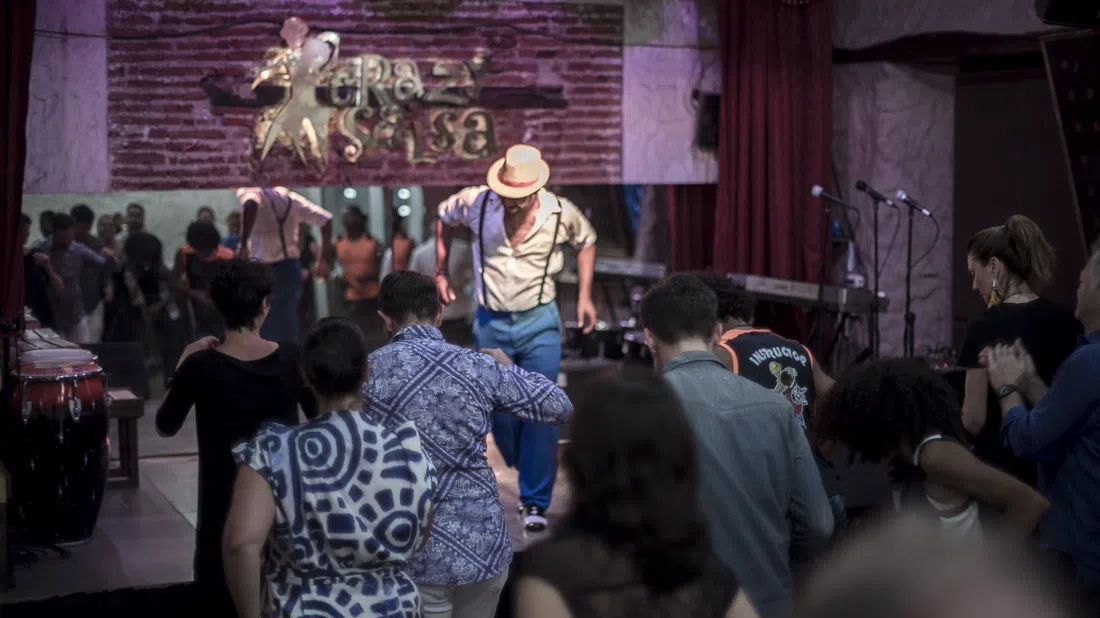
Crazy Salsa (Getsemaní) is the friendliest starting point for a group that's never salsa danced in its life — a dance school by day, a club by night, with daytime classes available for groups who'd rather learn the steps before the music starts. No cover before 11pm, about 10,000 COP after, with table or bottle service optional rather than pushed. The crowd skews younger and considerably more forgiving of two left feet than the old-school rooms above.
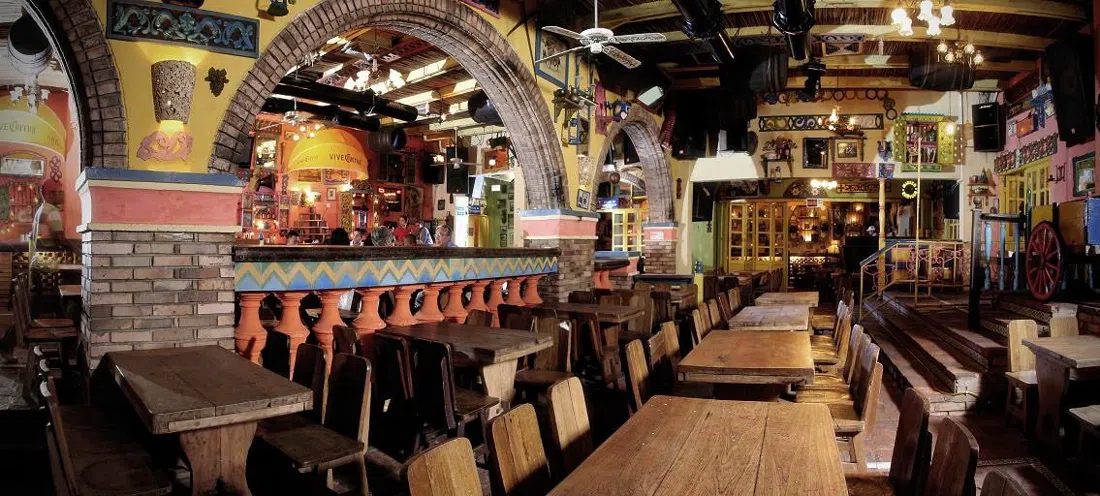
Mister Babilla (Getsemaní) is the wildcard: multiple rooms mean a mixed-taste group can split up between salsa, champeta, reggaeton and hip hop under one roof, open until 4am Wednesday through Saturday. Cover varies by night, and reviews have gone mixed since a change of ownership — go for the sprawl and the late hours, not expecting the polish of Café Havana.
1968 Salsa Show is the counterweight to everything above — a dinner cabaret built for tour parties and table seating, with timed shows running through the night. It's ticketed and priced above a plain bar, but it's the one venue on this list where you actually watch salsa performed at a professional level rather than just hear it from a barstool. Good for a group that wants one polished night among several rough ones.
Skip the Guesswork: Guided Ways Into the Scene
For a first-timer, the champeta scene especially can feel opaque — the history is real and heavy, and it helps to have it explained before you're standing in a club at midnight guessing at the etiquette.
Champeta With Us: It's a Vibe is built explicitly for groups, up to about 30 people, combining a history walk, a genuine dance lesson and a rooftop party finale, with part of the proceeds going to local artists. It's priced per person, with the welcome drink, class and rooftop finale included, and it's the most structured, safest way to understand where champeta actually comes from before hitting the clubs above with some context instead of none.
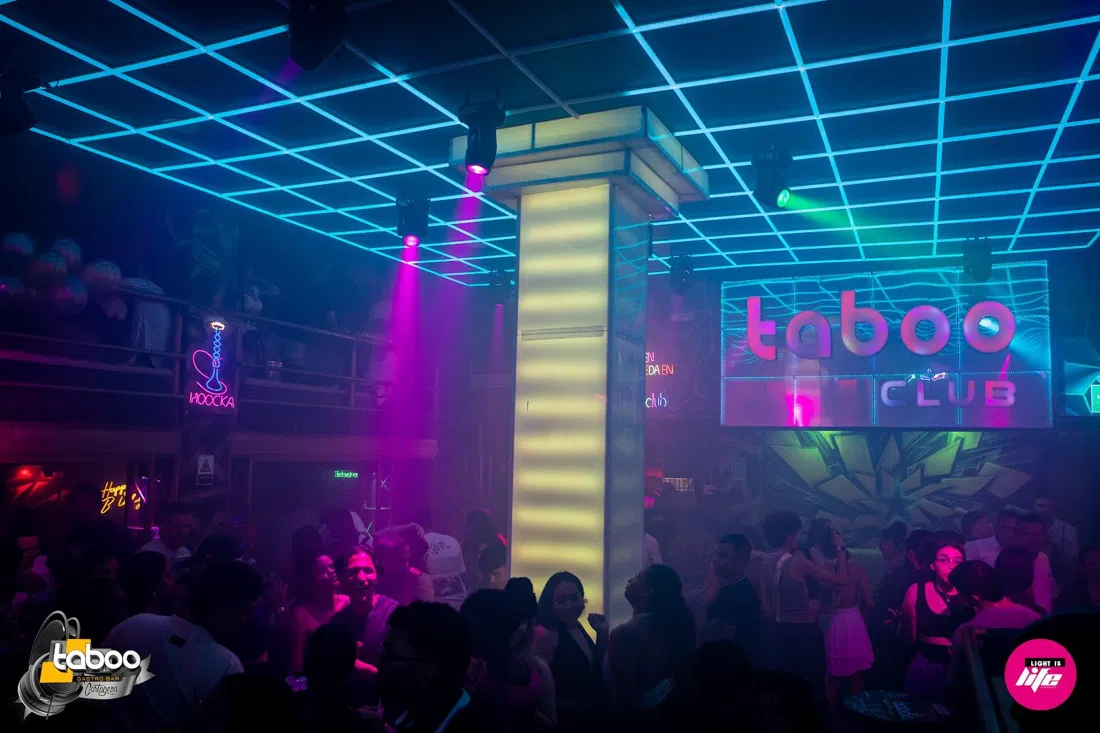
Tour de la Música Champeta, run through Civitatis, is the smaller-group guided version — designed for travelers who want the picó scene without navigating the neighborhoods around Bazurto alone. It covers the same stigmatized-then-celebrated history of sound-system culture and gets you as close as a visitor reasonably gets to the market's actual after-dark scene, with a guide as the safety net.
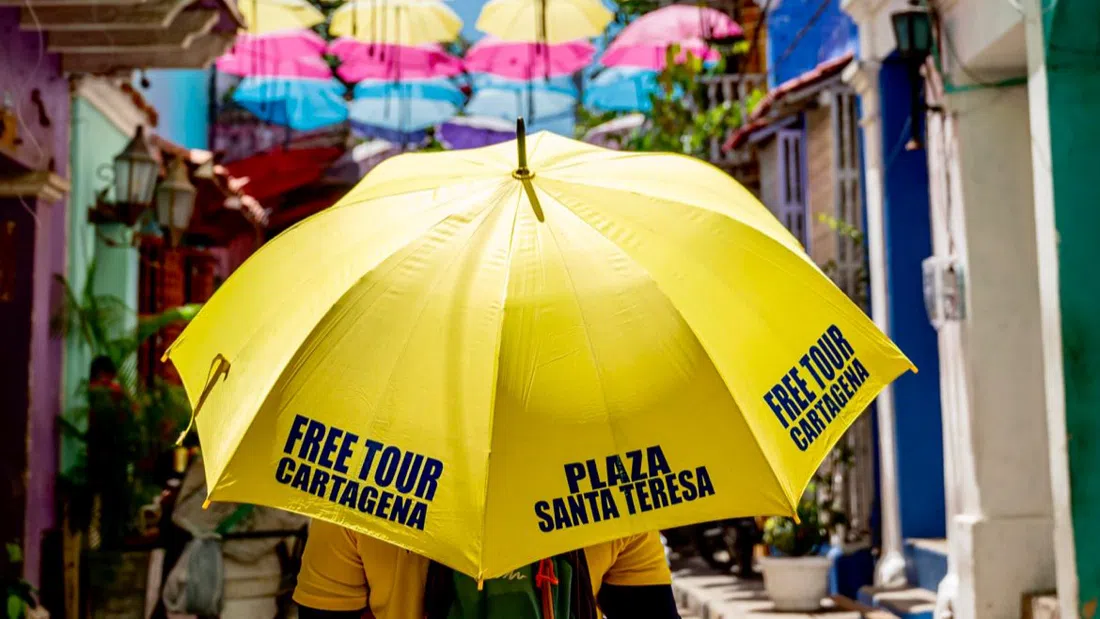
Eating the Way the Market Does, After Dark
Bazurto by day is a food market as much as anything — fish, fruit and fritters sold off carts and folding tables. That culture doesn't vanish once the stalls close; it moves.
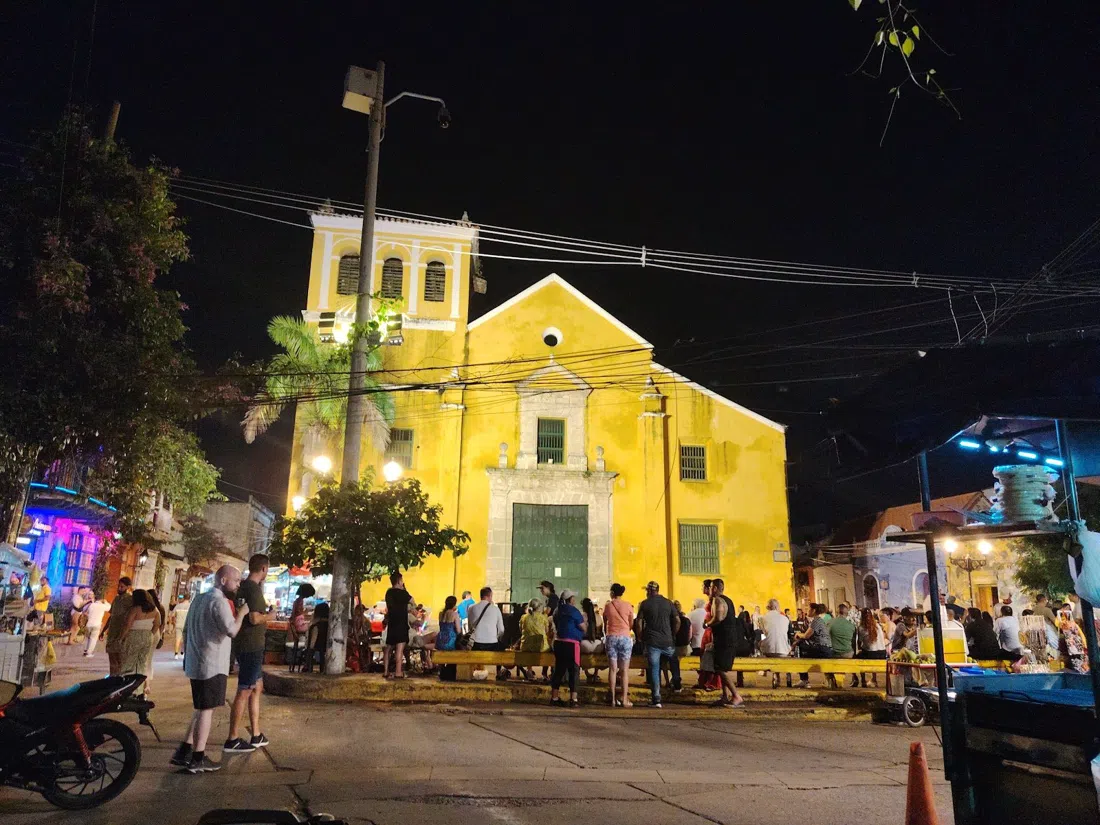
Plaza de la Trinidad Night Food Circle (Getsemaní) is the closest thing to it after dark: not a single business but an open public square ringed with vendor carts, completely doorless, ideal for a group that wants to graze, split up and regroup without any door policy to navigate. Most snacks run under $6 USD. It's the informal, fried-food heart of this list and the easiest single stop to do solo, as a couple, or with a group of any size.
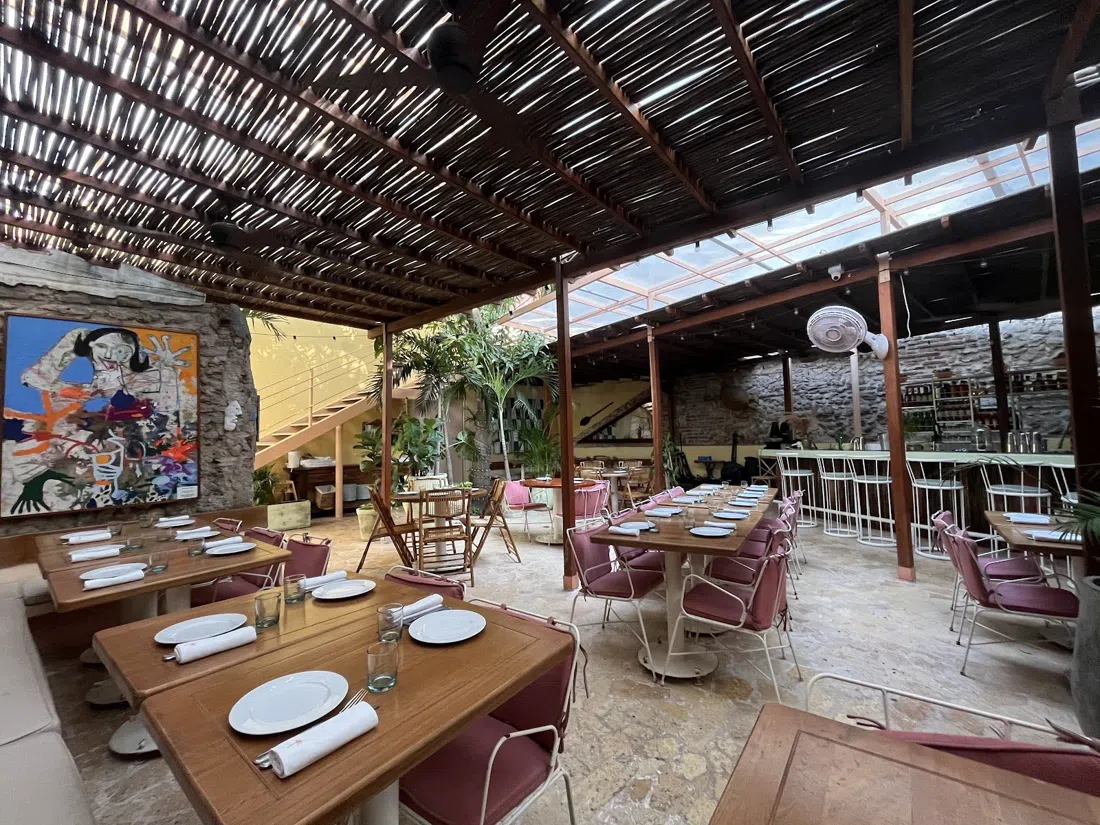
Salón Tropical is the polished bookend — a seafood restaurant with live music and a garden layout that spreads groups comfortably across several tables (book ahead for anything over four people). The seafood is sourced the way Bazurto's own fishmongers sell it, just plated to a fine-dining standard, with a live band standing in for a picó stack. Pricing sits at the fine-dining end of everything on this list; it's a stop to build an evening around rather than fold into a bar crawl.
Getting There, Cash, Timing, Budget
Move between venues by taxi or a ride-hailing app rather than walking after dark, especially crossing between Getsemaní and the walled city — and don't walk toward the Bazurto market barrio itself at night; nothing on this list requires it. Carry Colombian pesos in small bills: covers and street food are cash-friendly, and the vendor carts at Plaza de la Trinidad won't run cards. On timing, several venues waive or reduce their cover if you're through the door before 10 or 11pm, but the real energy at Bazurto Social Club and Café Havana doesn't start until after 11 — arrive early to save money, stay late for the actual scene. For budget, a night mixing a no-cover salsa bar like Donde Fidel with a modest champeta cover at Bazurto Social Club can run under $20 USD before drinks; add Café Havana or 1968 Salsa Show and expect closer to $40–60 per person with cocktails. If you're building a trip around this scene, a Cartagena hotel search in or near Getsemaní puts most of this list within walking or short-taxi distance, and the Cartagena guide covers what's worth doing the rest of the day, before any of this starts.