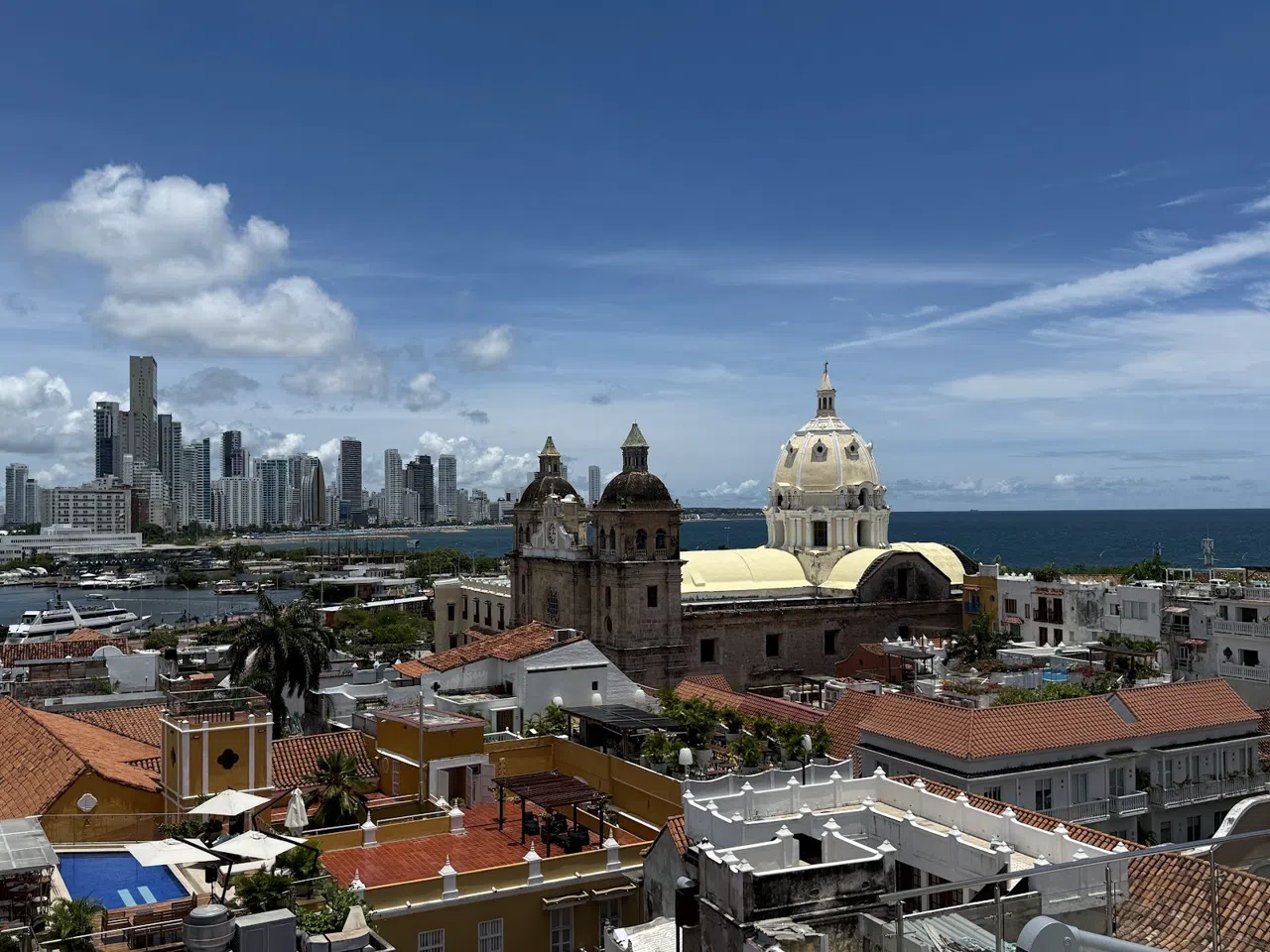

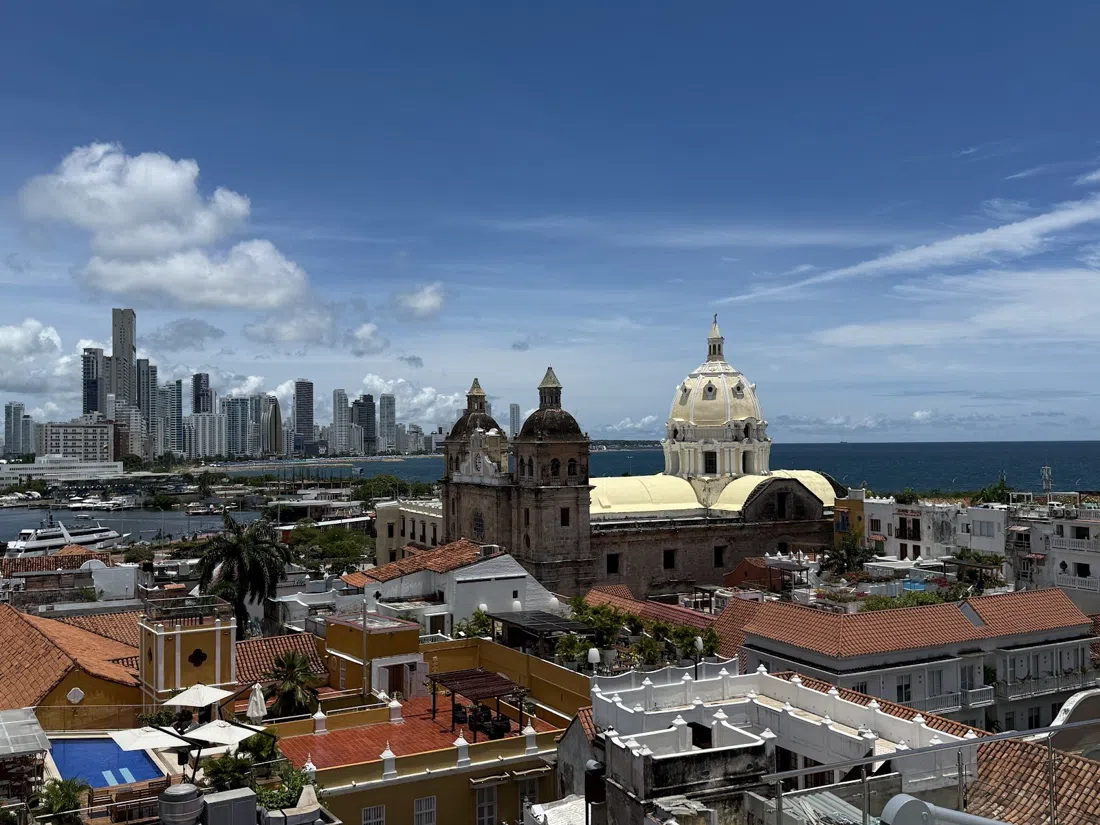
Cartagena de Indias does not so much inspire Gabriel García Márquez's fiction as leak into it — a plaza here, a convent bell there, a bookseller's back room that could double, on the page, for the parlour of a jilted suitor. Walk the walled city with his novels half-remembered and the geography stops being background: Fermina Daza's balconies, Sierva María's convent, Florentino Ariza's letter-writing arcade all sit within a twenty-minute stroll of each other, mostly unchanged. This is that walk, told through the real addresses — not a shrine, just a city that happens to still look like the one he wrote.
See the full Cartagena guide for where to eat and stay beyond this route.
Where He Began: A Young Reporter in the Walled City
Casa de Gabriel García Márquez (Centro) is the quietest stop on the route and, for that reason, the most honest one. Designed by Rogelio Salmona and now a private residence donated to García Márquez's own journalism foundation, it offers nothing beyond a street-viewable facade — there is no interior access, no plaque tour, no gift shop. That is precisely the point: it is where the man actually lived, not a museum built to explain him, and a group of any size can pause here for a photo without disturbing anyone.
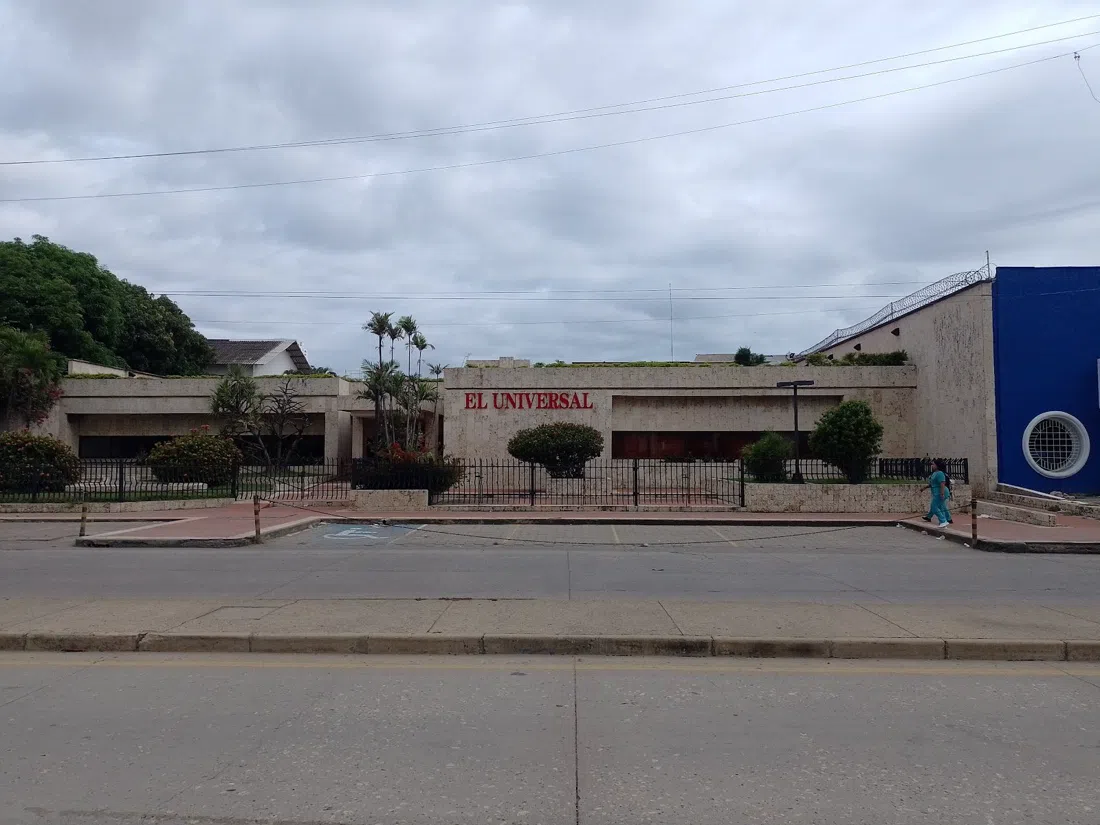
A short walk away, the El Universal newspaper offices (Centro/San Diego) are still a working newsroom — no public tours, exterior view only — but the paper has been printing continuously since 1948, the same year a 21-year-old García Márquez talked his way into his first reporting job on its staff. It is worth remembering, standing outside, that everything on this route was first walked by him as a jobbing journalist filing copy on deadline, not as a future Nobel laureate.
That same year he had briefly tried a different path: the Claustro de San Agustín (Universidad de Cartagena, Centro) is where García Márquez enrolled in law in June 1948, before abandoning it for journalism within a year. It is a functioning university building today, home to the university's Law and Literature faculties, and small groups can view the courtyard respectfully during weekday hours — this isn't a formal tour site, so keep visits brief and low-key.
The Plazas That Became His Fiction
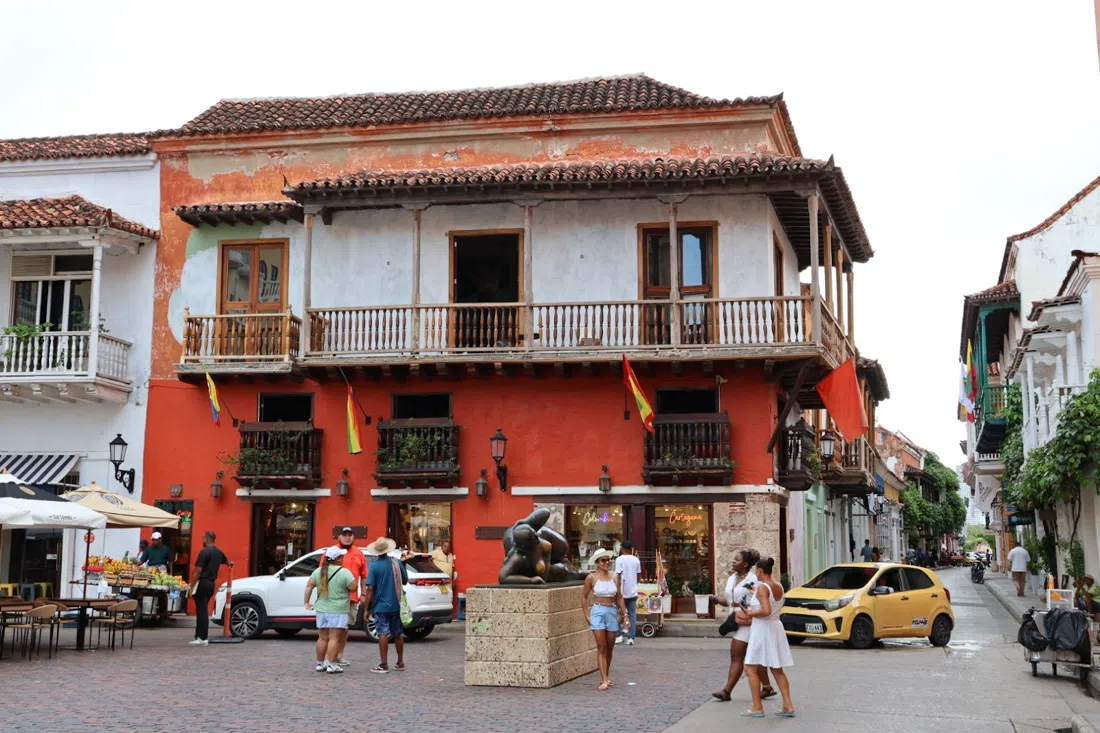
Plaza de Santo Domingo (Centro) is the literal centre of nearly every Gabo walking route in the city, and with good reason — his statue and this square anchor the geography of both his fiction and his real life here. It's a genuinely public space with no capacity limit, though it gets busy at sunset when the surrounding restaurants fill their outdoor tables; arrive a little earlier if you want the plaza itself rather than the crowd around it.
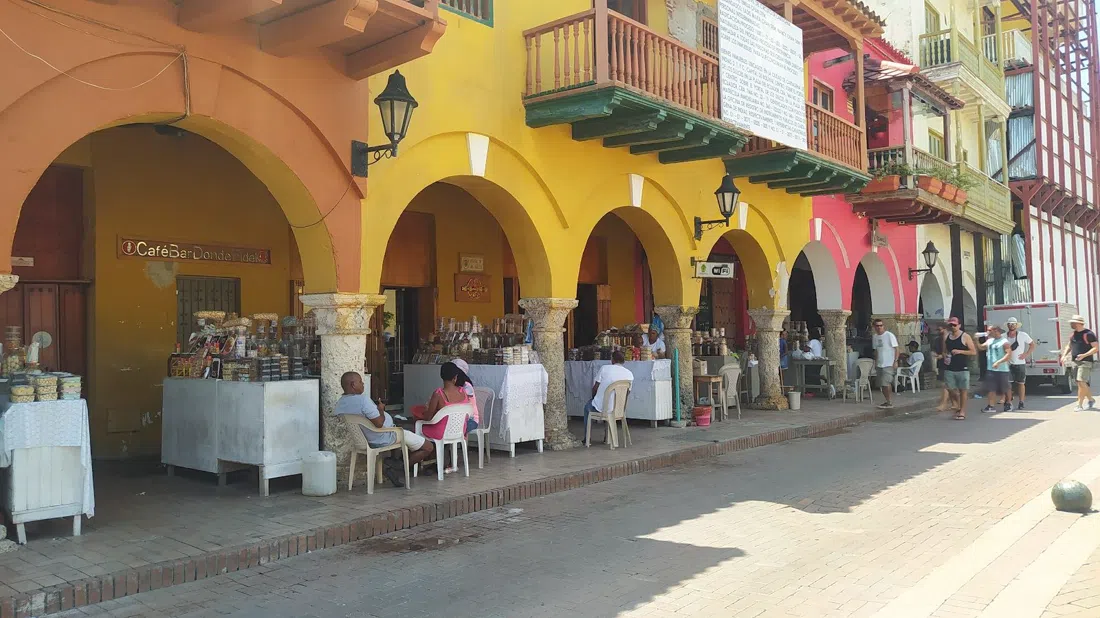
From there, the Portal de los Dulces at Plaza de los Coches (Centro) does double duty as both a real sweets arcade — you can buy a few thousand pesos' worth of coconut sweets today exactly as visitors have for generations — and a fictionalised setting: in Love in the Time of Cholera, García Márquez reimagined it as the 'Portal de los Escribanos', where Florentino Ariza writes love letters for other people while he waits, decade after decade, for Fermina Daza. It's open, free to browse, and fine for groups, though midday crowds can make it feel more like a market than a literary stop — late afternoon is kinder.
Nearby, the Statue of Gabriel García Márquez in Plaza de la Aduana (Centro) is the most literal image on the entire route: Cuban sculptor José Villa Soberón's bronze, unveiled in September 2023, depicts Gabo mid-gesture at his 1982 Nobel ceremony. It's an easy, free, unhurried stop, and a natural place to explain to a group why the rest of the walk matters before diving into the convents and crypts that follow.
Convents, Crypts and the Inquisition: Of Love and Other Demons
If Love in the Time of Cholera is the novel of the plazas, Of Love and Other Demons is the novel of the walled city's religious architecture, and three stops carry it almost entirely.
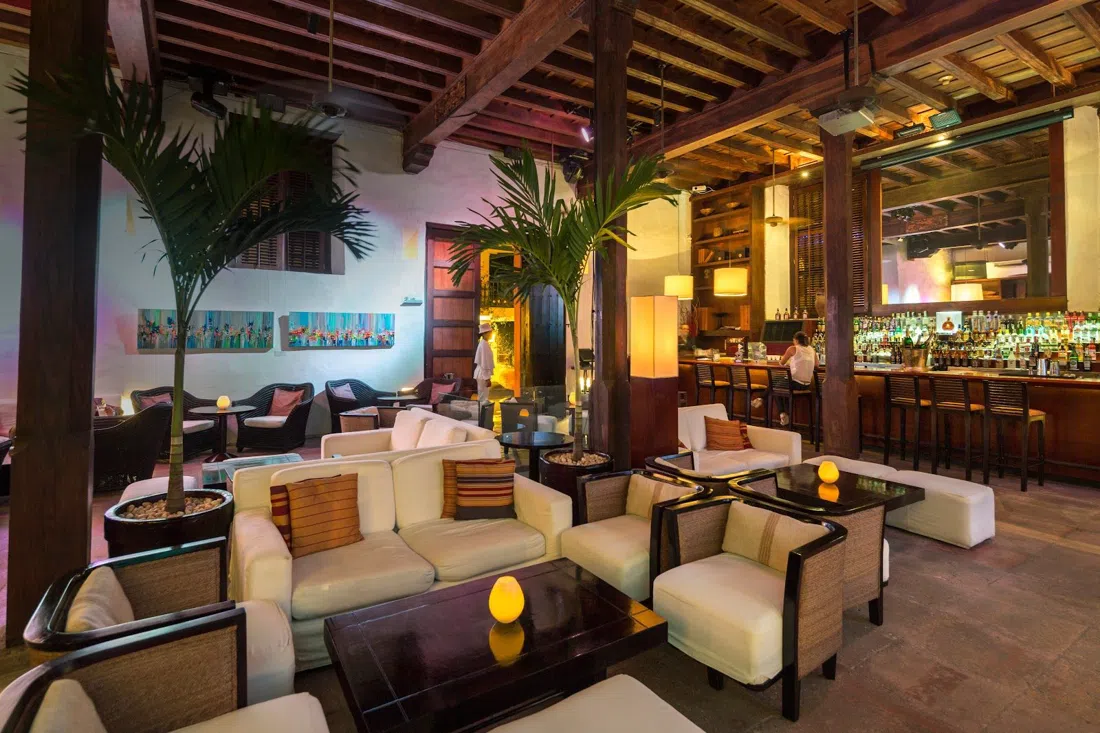
The Sofitel Legend Santa Clara Cartagena — and specifically its El Coro Lounge Bar (San Diego) — occupies a former convent of the Poor Clares, the same building where, in 1949, a young reporter named García Márquez watched the nuns' crypts opened and found the skeleton of a girl with hair still growing, copper-coloured, after death. That image became the entire premise of Of Love and Other Demons. The hotel is open to non-guests, and there's a free daily storytelling tour at 4:30pm — check in with the concierge about fifteen minutes early, and if you're bringing a larger group, call ahead specifically about the crypt viewing, since space there is limited. Cocktails and tapas afterwards run roughly $15-25 USD, reasonable for what is, functionally, a private history lesson.
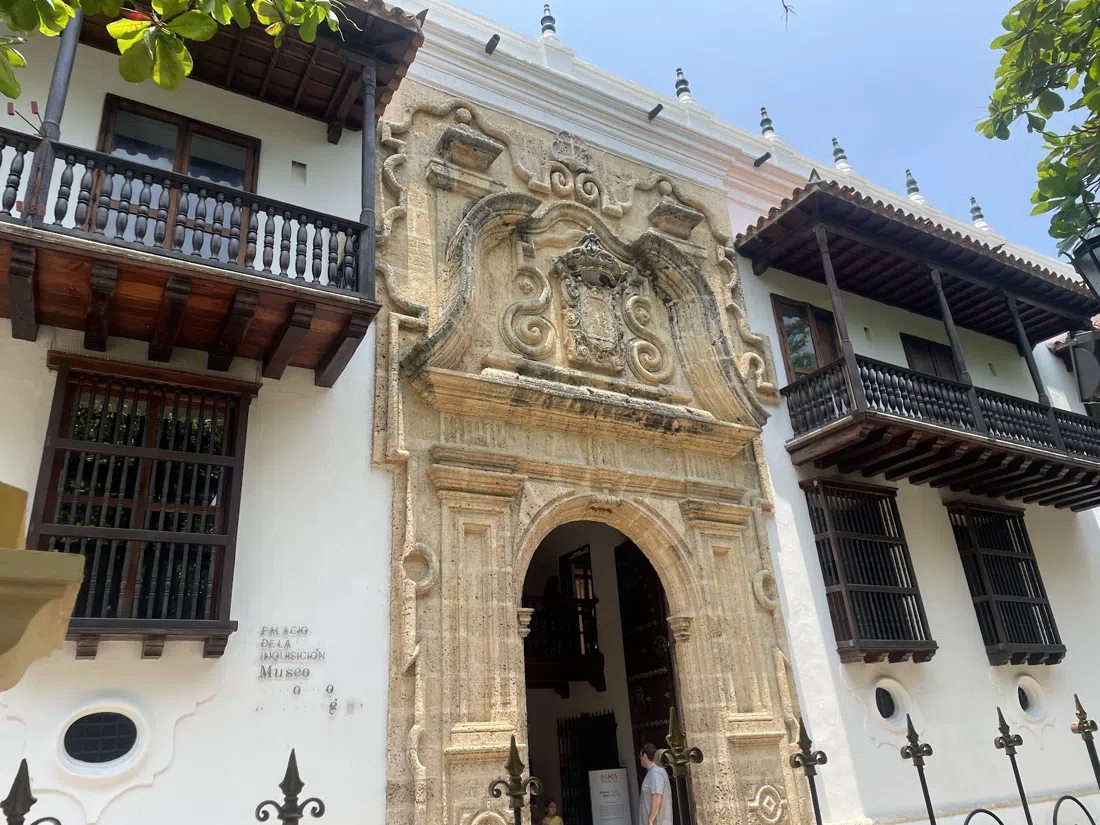
A short walk away, the Museo Histórico de Cartagena — Palacio de la Inquisición (MUHCA, Centro) is where the novel's darker machinery comes from directly: the real seat of the Cartagena Inquisition tribunal, whose colonial bureaucracy of accusation and punishment is what condemns the fictional Sierva María. It's a proper museum with group and student tickets, currently around 22,000 COP (roughly $5-6 USD) for adults, with discounts for students and seniors — comfortably the best value stop on the route for what it explains.
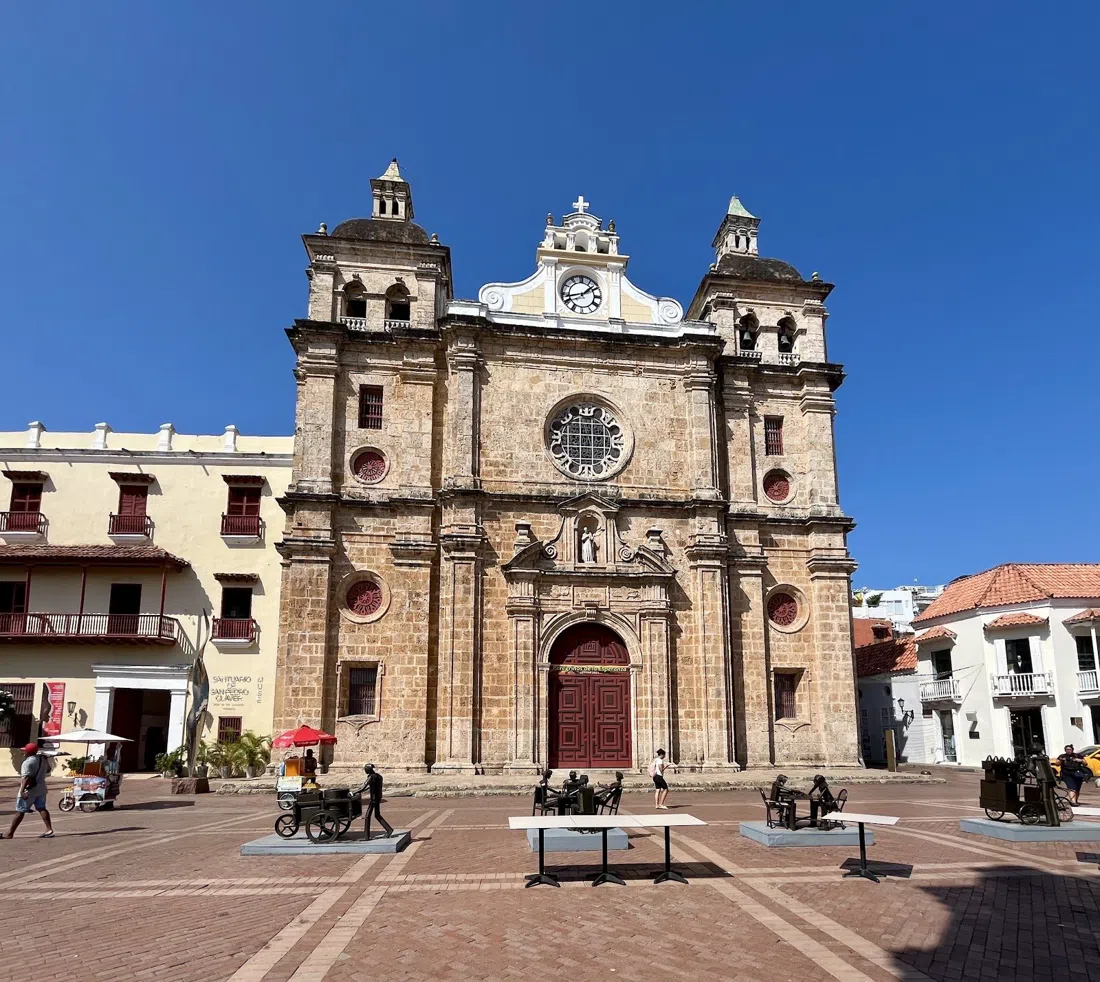
The Iglesia y Convento de San Pedro Claver (Centro) rounds this section out. It's ticketed at around 30,000 COP (about $7-8 USD) for foreign adults, with a separate, lower tier for locals, and takes groups without issue. As the walled city's most prominent surviving religious complex, it's less a single plot source for either novel than the physical world both books assume as given — the church, the cloister, the missionary history the Inquisition was, at least officially, meant to protect.
Green Thresholds and Where He Rests
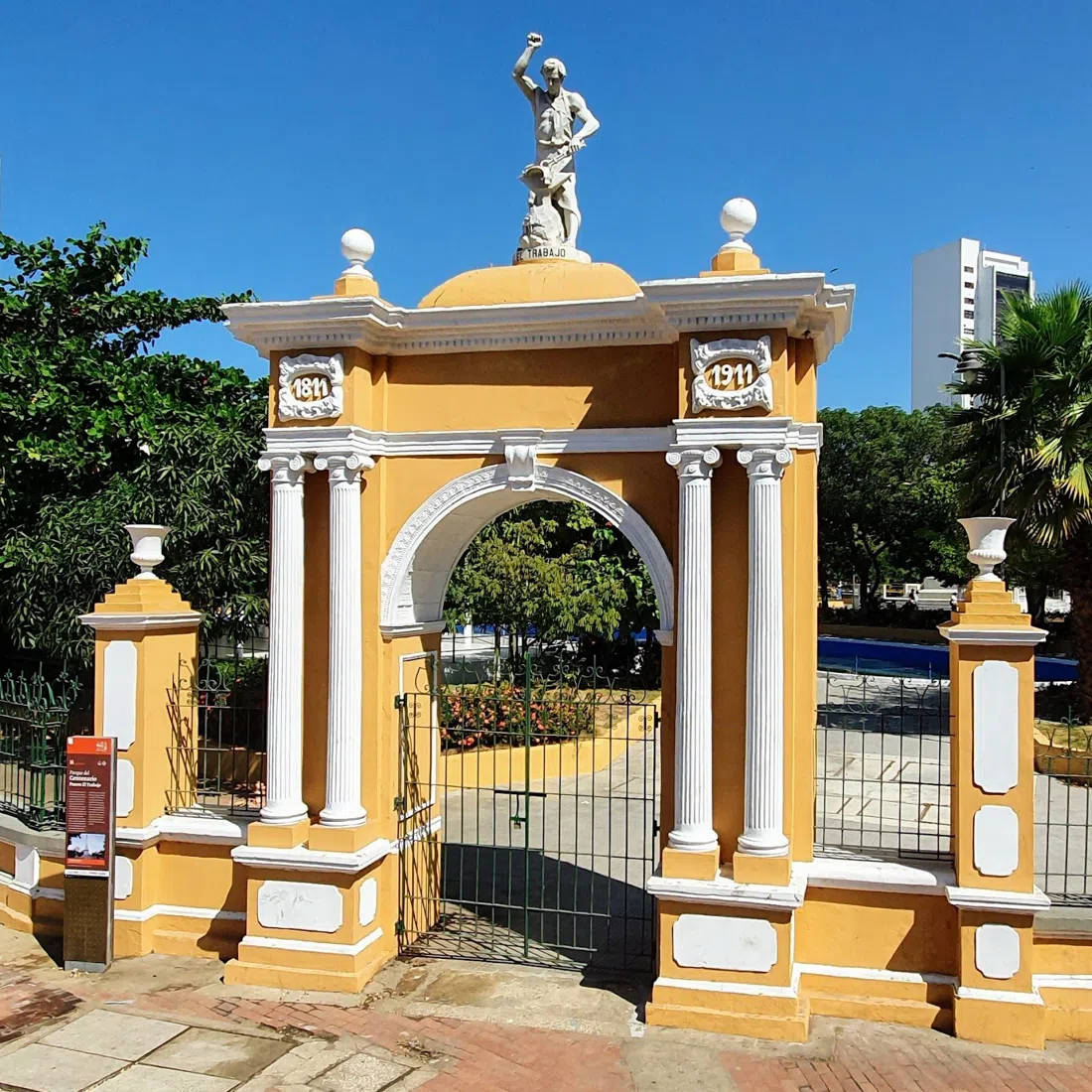
Parque del Centenario, the green threshold between the walled city and Getsemaní, is where García Márquez walked daily as a young journalist commuting between assignments, and it still functions exactly that way — as a shaded, unhurried transition rather than a destination in itself. It's the kind of plaza life, sloths and all, that opens Love in the Time of Cholera; go around 10am or after 2pm if you want to actually see the local wildlife the park is known for rather than just the shade.
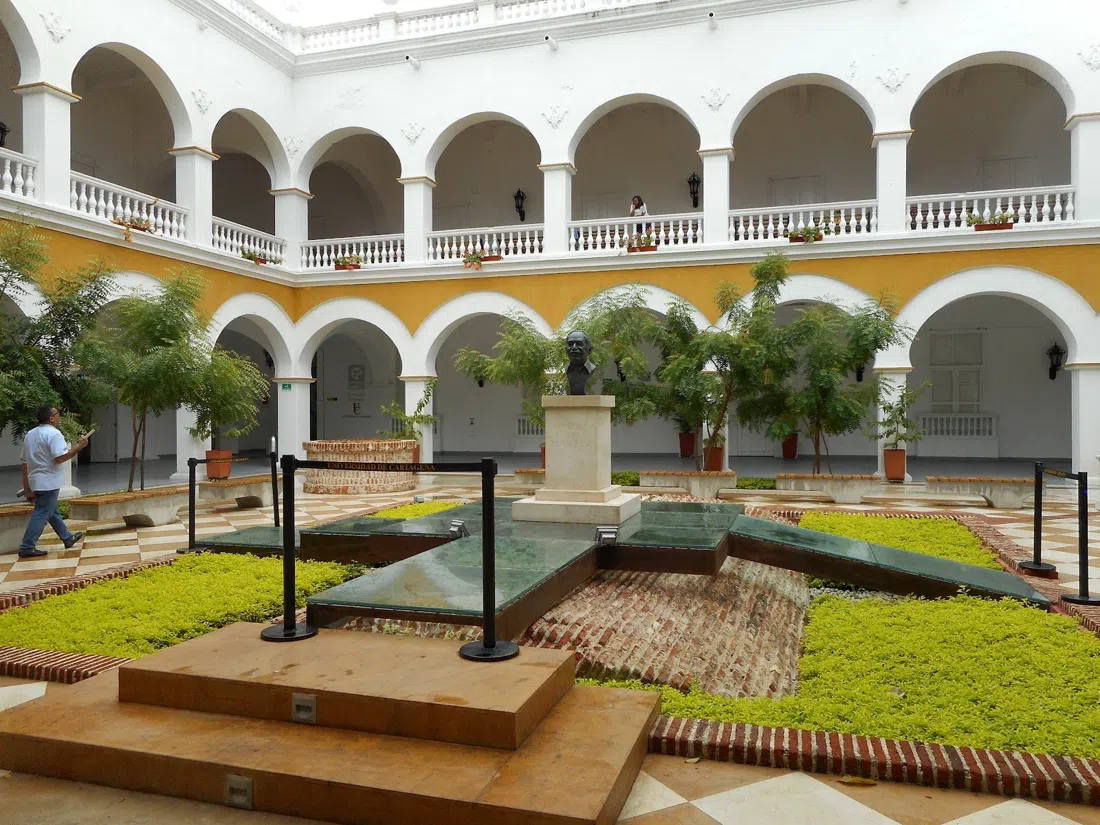
The most concrete stop on the entire walk, though, is the Claustro de la Merced — Mausoleo de García Márquez at the Universidad de Cartagena (Centro). This is not a symbolic or fictionalised site — it's where García Márquez's ashes have rested since 2016, joined by his wife Mercedes Barcha's since 2022. It's free, open to groups on weekdays, and closed entirely on weekends, so plan this one deliberately rather than folding it into a Saturday afternoon. For readers who want one unambiguous, verifiable place to stand and think about the man rather than the myth, this is it.
Books, Walls and a Caribbean Night
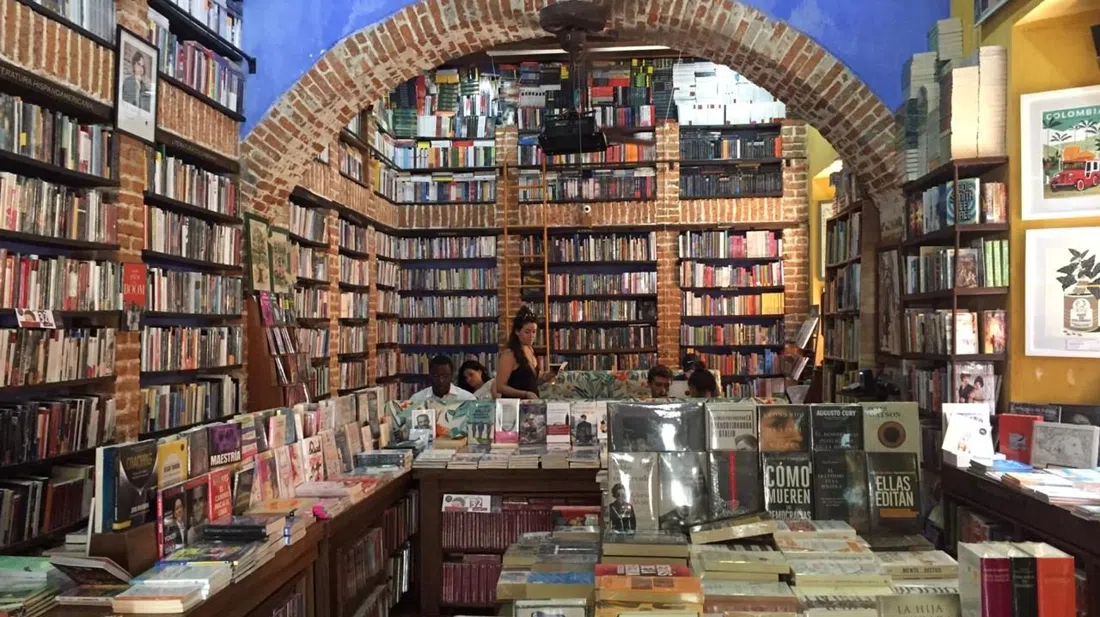
Close the literary portion of the day at Ábaco Libros y Café (Centro), the walled city's last independent bookstore, open since 2002. It's small — comfortable for up to eight or ten people, so call ahead if your group is bigger — but it's the one place on the route where you can actually buy García Márquez's own books, in Spanish or English translation, and sit with a coffee or a glass of wine (roughly $3-8 USD) before the walls close in for the evening.
From there, walk to Las Bóvedas and the city walls at the Baluarte de Santo Domingo (Centro), the classic finale for any walled-city literary walk. The ramparts and the vaulted former munitions store, now craft stalls, are free, open, and best walked between 4pm and 7pm, once the worst of the heat has broken. This is the frame Gabo actually wrote inside of: the walls that separated the city he loved from the sea that both threatened and defined it.
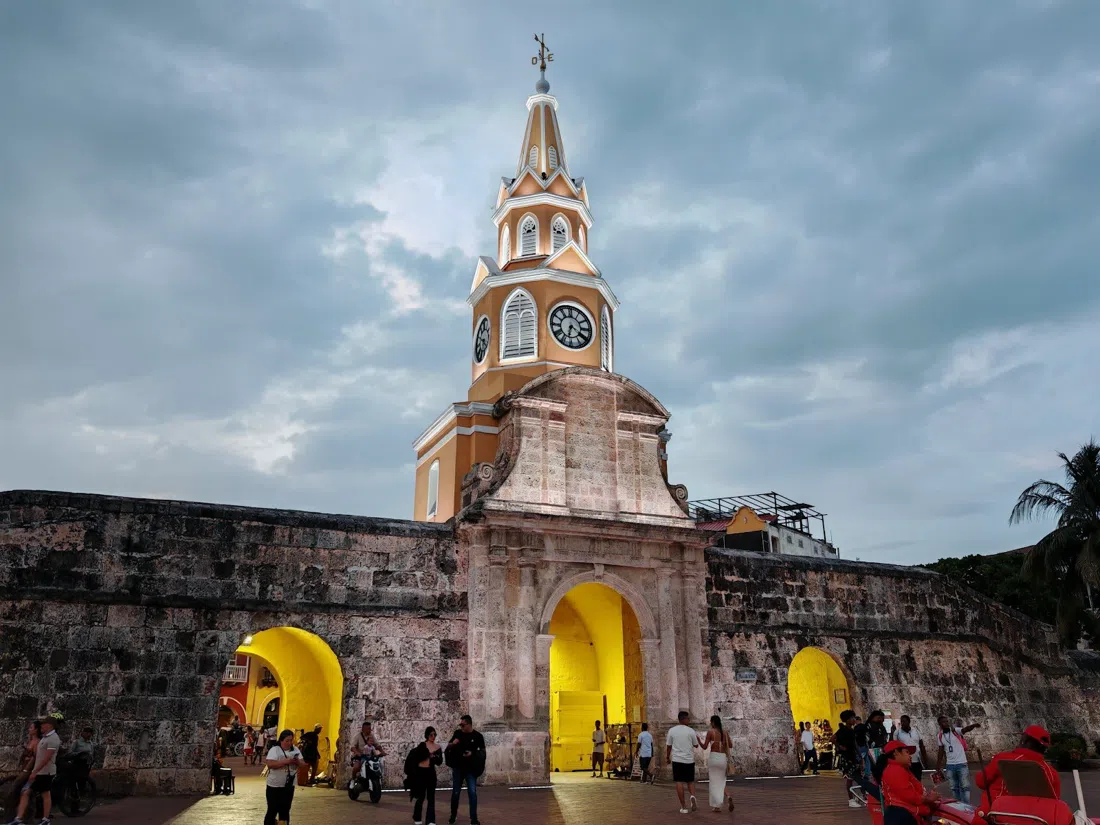
Pass through the Torre del Reloj (Puerta del Reloj) on your way out or in — it's the natural hinge of the whole route, the gate every version of this walk, and arguably every García Márquez character, passes through between the old town and Getsemaní. It's free and always busy, so treat it as a landmark to move through rather than linger at.
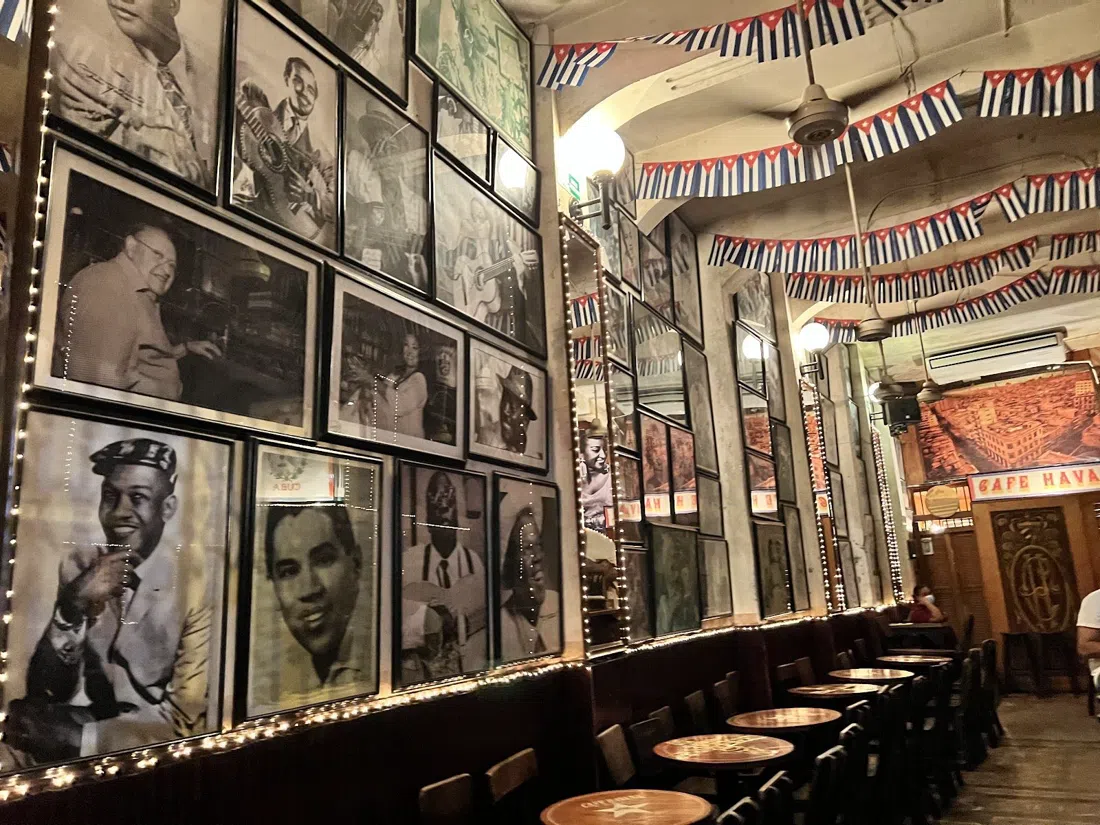
If you want a non-literary but tonally honest close to the day, Café Havana in Getsemaní isn't a Gabo site directly, but it's been putting live salsa on since 2006, in the same Getsemaní streets García Márquez worked as a young reporter, and the Caribbean musical culture soaking through his prose is genuinely alive there most nights. It takes reservations, gets packed by 10pm, and charges a cover of roughly $8-10 USD with drinks extra — book ahead if your group is more than a couple of people.
Transport, Cash, Timing and Budget
Transport: The entire route sits inside or just outside the walled city and Getsemaní, an area small enough to walk end to end in under thirty minutes without a single stop. Skip taxis and rideshares for this one — they won't save you meaningful time and you'll miss the texture that makes the walk worth doing. Wear shoes you can handle cobblestones in.
Cash: Colombian pesos (COP) are the default everywhere; card is accepted at the museums and the Sofitel, but the sweets arcade, most churches' donation boxes, and Café Havana's door charge are cash-friendlier. Small bills help — nobody on this route can break a large note easily.
Timing: Start early at the Casa de Gabriel García Márquez and El Universal before the heat sets in, work through the museums and convents in the cooler mid-morning hours, and save Las Bóvedas and the city walls for the 4-7pm golden light. The Claustro de la Merced mausoleo is weekdays-only, 8am-5pm — build your itinerary around that constraint first, since it's the one stop you genuinely cannot shift to a weekend.
Budget: A full day covering every stop, including museum tickets, the Sofitel's tour, a bookstore coffee, and Café Havana in the evening, runs comfortably under $60 USD per person — most of the route is free. If you're planning multiple days around this walk, start your Cartagena hotel search in San Diego or the walled city itself, both walkable to every stop above.