The Cartagena issue
Where to eat, swim and walk in Castillogrande, Cartagena
Cartagena's peninsula ends quietly, with a rebuilt park on the tip and a bay beach that new stone groynes hold in place. The 1600s fort there is locked inside a naval club.

By Sanne VermeerWalls, courtyards and the slower Cartagena
The bay side of Castillogrande has 10 new stone groynes running out into flat water, and the sand they hold has come back where loose rubble sat a year ago. At the very tip of the peninsula, Parque Punta Castillo reopened on 17 July 2025 after a full rebuild, with a skating loop and a small football pitch. A paved malecón runs between the two, free and open, the Bocagrande high-rises standing across the water.
The walk round the bay edge
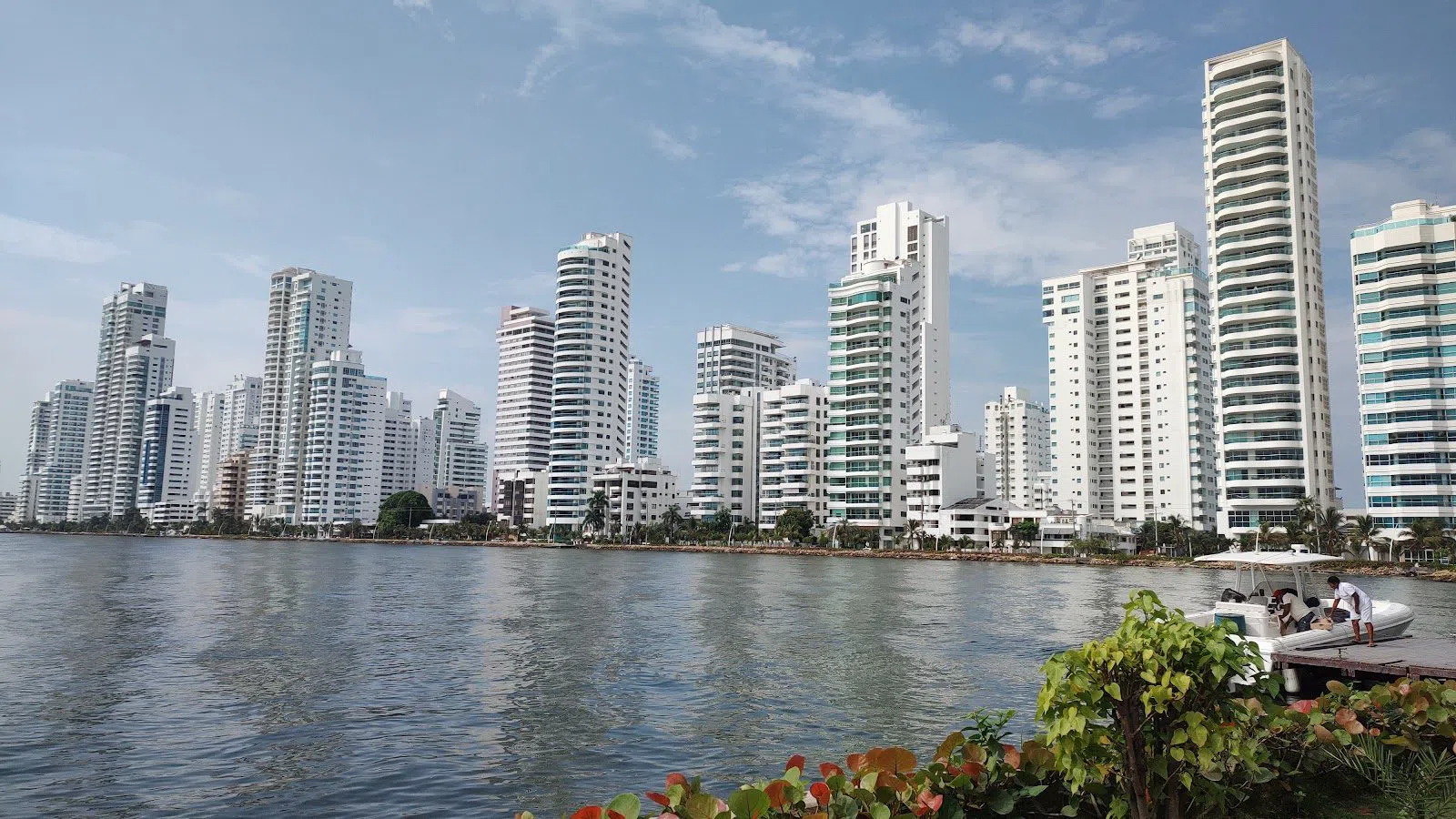
The Malecón de Castillogrande is a paved seafront walkway above a low sea wall and rock armour, curling round the bay edge of the peninsula. Come at dusk, when joggers and dog-walkers have it and the Bocagrande skyline across the water turns gold. Cargo ships and sailboats track in and out of Cartagena bay in front of you, and 1.5 km off, in the water towards Manga, the white marble Virgen del Carmen statue stands clear of everything around it.
Of everything on the peninsula, this flat, safe sunset walk is the reason to come. Nothing here is gated or ticketed, and the walkway is wide enough for a dozen people moving slowly. No beach vendors work it.
Plan your Cartagena trip
Live prices from our booking partners.
Free cancellation on many rooms. We may earn a commission when you book.
Parque Punta Castillo at the point
Parque Punta Castillo is where Castillogrande ends, 7,600 sq m on the very tip with sea on one hand and the bay opening out on the other, apartment towers standing behind. The rebuild put in a blue acrylic-backboard multi-court and a small synthetic Futbol-5 pitch, a 200 m skating loop and a permeable-paver running circuit, a calisthenics rig on red rubber flooring, a fenced dog run and slim LED lamp posts. It is the one piece of new public building on the peninsula.
Entry is free, and there is no gate, ticket or cap on numbers. The court and the pitch are shared with neighbourhood kids, so turn up early if you want a game.
The beach and its new groynes
Playa de Castillogrande is 1.2 km of grey-gold sand along the bay side, between the Club Naval and the Hospital Naval. The chunky espolones are part of the city's Defensa Costera 2050 scheme, and the water inside them is green-grey, calm and wave-free. Local families swim off the sand while rows of hired umbrellas and cabanas stand behind them, high-rise apartment blocks right at their backs.
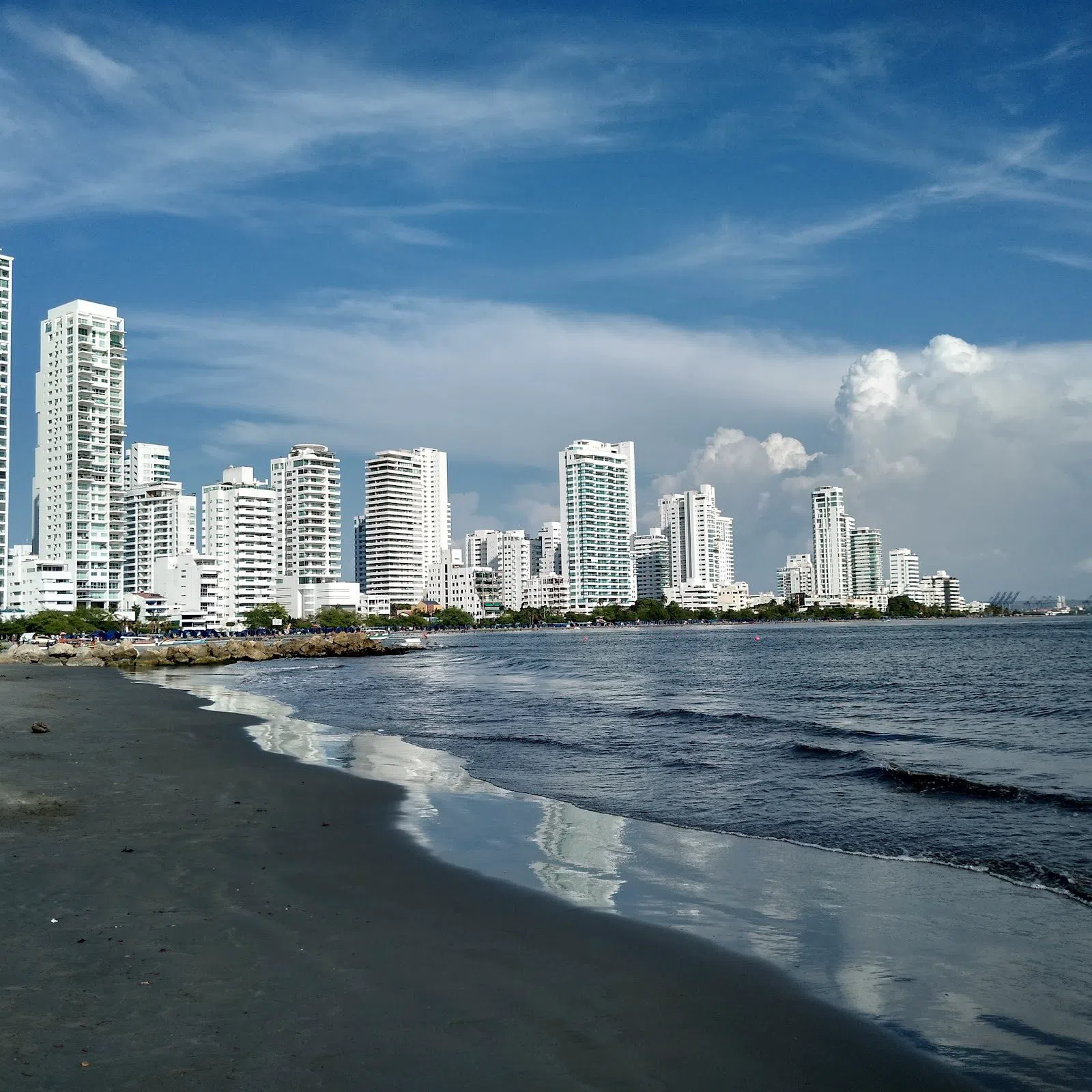
The beach is free and has no door policy. Umbrella or cabana hire runs $30,000 to $60,000 COP, and vendors will string several loungers together for a party. Lifeguard cover is thin. Watch your own children in the water.
Paddling at 4:30 p.m.
Karib Kayak & Paddle Center runs off the Castillogrande sand at Calle 5, where bright plastic sit-in kayaks and paddleboards sit stacked and guides fit orange life jackets at a briefing table. Shared and private departures go daily at 4:30 p.m., and the sunset paddle covers 2 to 3 km of sheltered bay water in an hour, the line of paddlers strung out across mirror-flat water with the city skyline behind. This is the one proper activity operator based on this beach, and the calm side of the peninsula suits it.
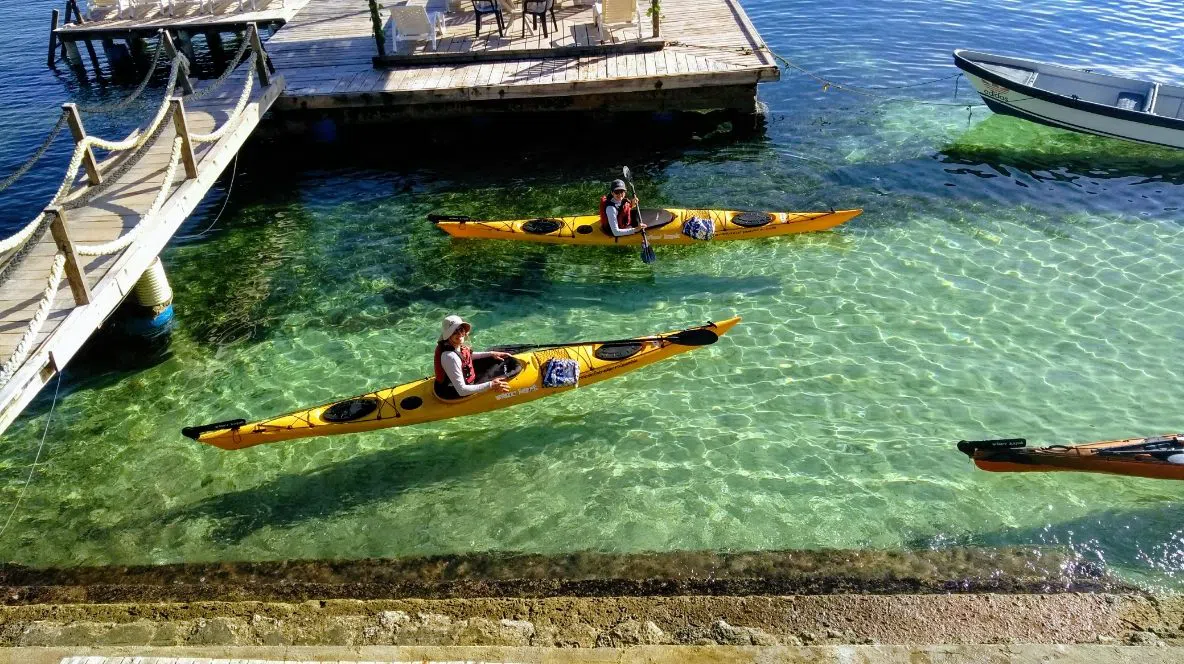
Beginners need no experience. The paddle costs $150,000 to $220,000 COP per person, and the centre handles group bookings.
The fort behind the Club Naval gate
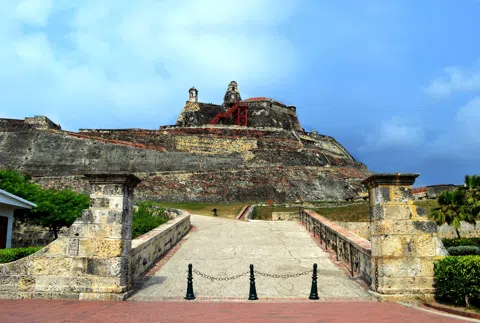
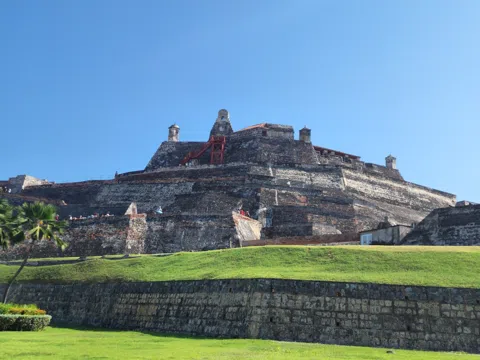
Club Naval Santa Cruz de Castillogrande, at the peninsula tip, holds the fort the neighbourhood is named after. Work on the Castillo Grande de Santa Cruz began between 1617 and 1626 under Cristóbal de Roda, the French wrecked it in 1697, and a munitions explosion in 1938 finished the job. One stretch of 1600s coral-stone rampart survives, swallowed into a mid-century naval officers' club of whitewashed terraces, poolside tables and shaded seafood dining rooms looking straight down the bay channel.
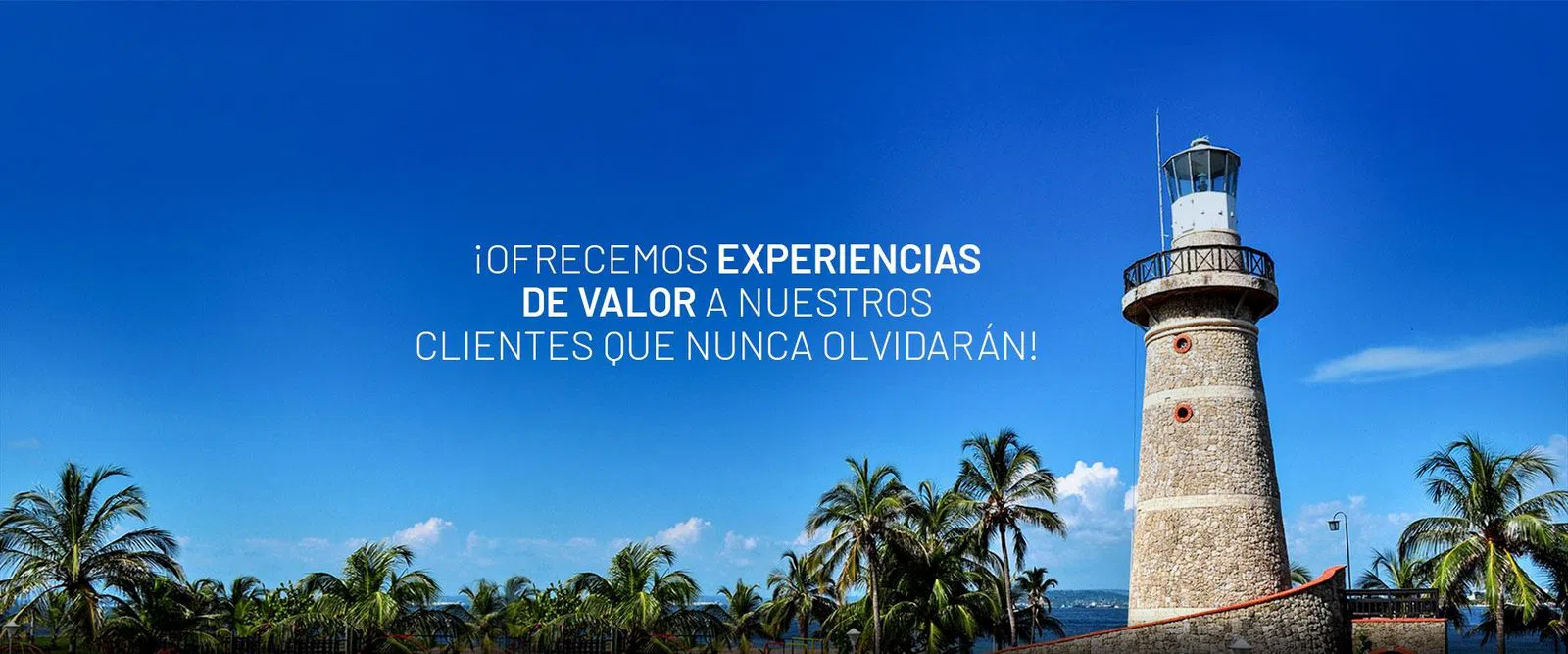
The gate admits members of the Navy officers' club and their invited guests. A group has to be signed in by a member, and nothing inside takes walk-ins. Its four dining rooms, El Cabrestante, Poniente, Levante and Piscina, are the only real restaurants on the peninsula, with mains at $45,000 to $90,000 COP. The story is worth knowing even if the gate stays shut to you.
Mass at Santa María del Mar
Parroquia Santa María del Mar is the parish that serves Castillogrande, standing at Carrera 1 #1-129 at the end of El Laguito, a 10-minute walk round the point. The church is modern and plain, pale walls and a simple cross, sea light flooding the nave, palms and apartment towers crowding the small forecourt.
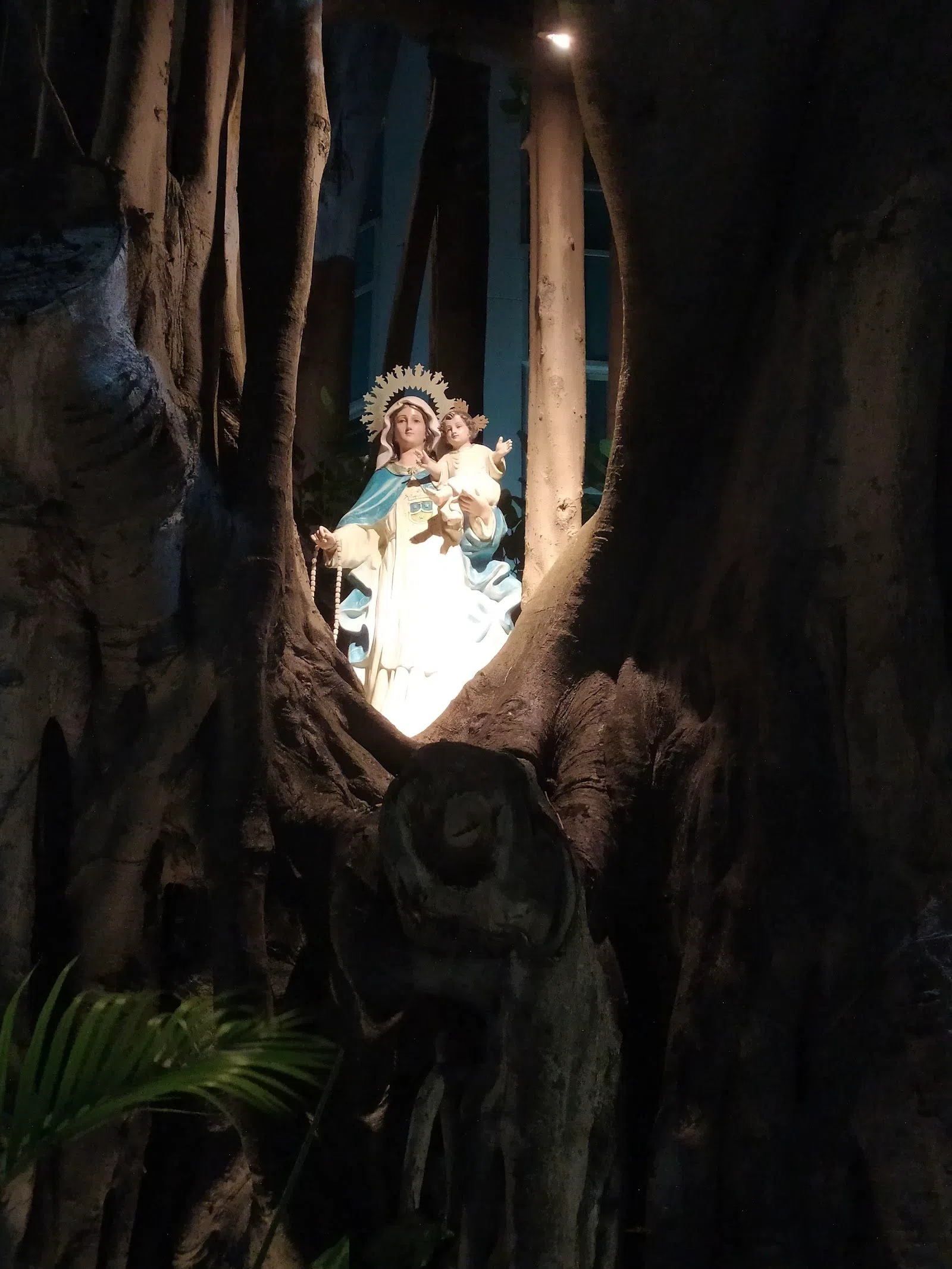
Mass is said Monday to Friday at 6:30 a.m. and 6:30 p.m., Saturday at 6 p.m., and Sunday at 9:30 a.m., noon and 7 p.m. Quiet visits are welcome at other hours and modest dress is expected. It leads the July Virgen del Carmen processions the bay is known for.
Breakfast and coffee before the beach
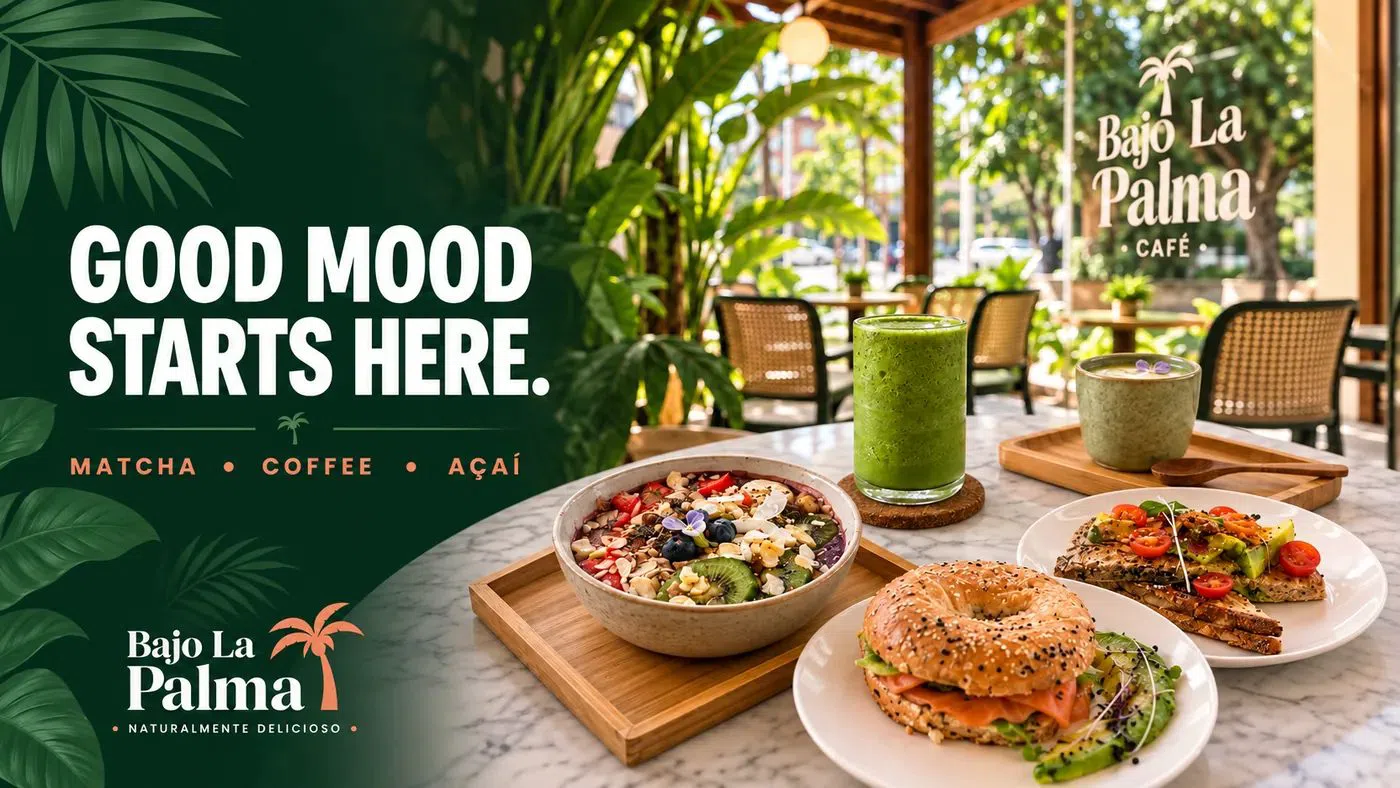
Bajo La Palma opens at 6:30 a.m. on Carrera 3 in Bocagrande, a small pale-wood corner café pouring filter coffee, boba and bright green matcha whisked into glass cups. A handful of pavement tables sit under a palm. Drinks run $15,000 to $35,000 COP, and the door shuts at 6:30 p.m., so treat it as a morning and afternoon stop.
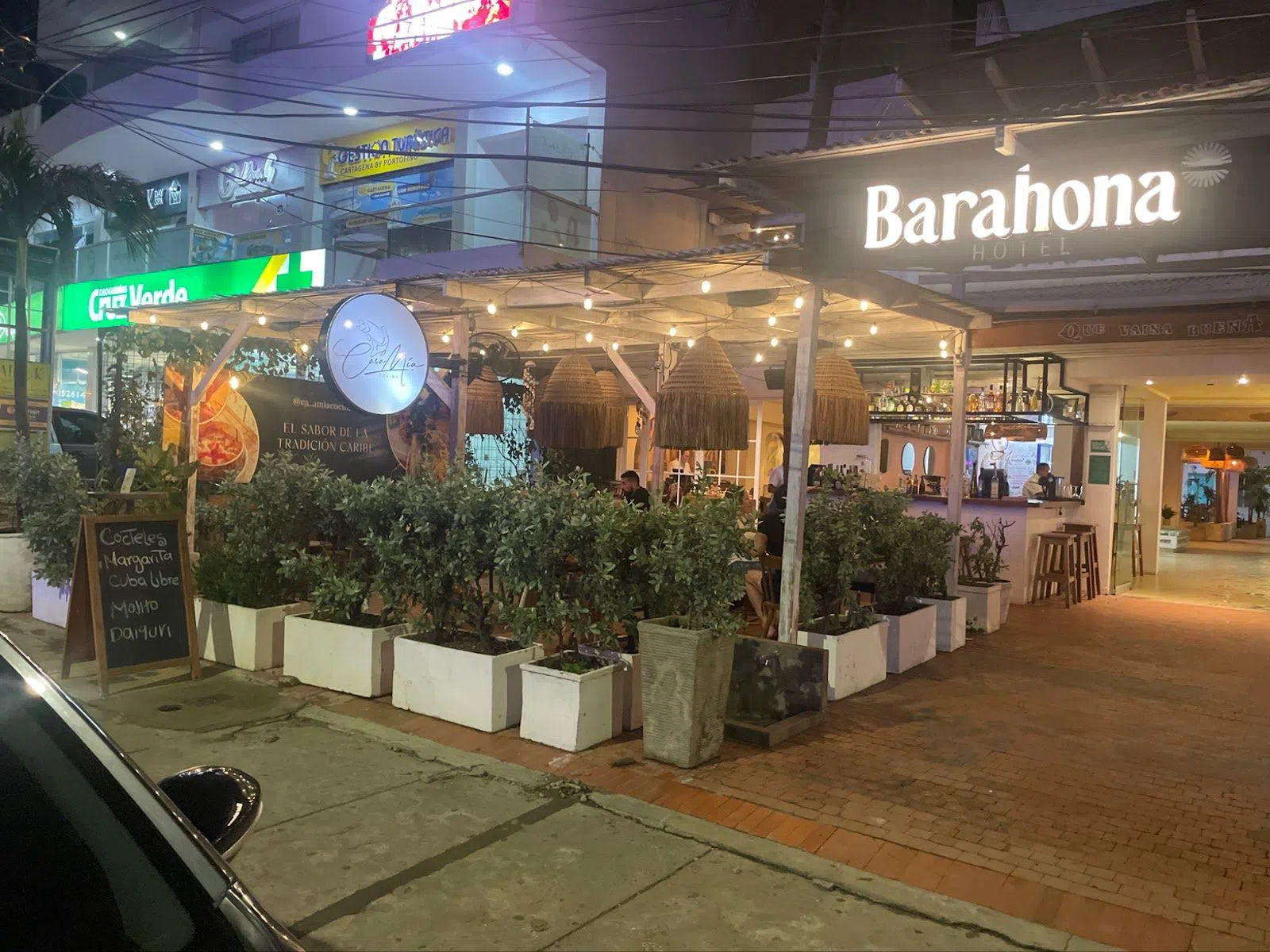
CasaMía Cocina is on the ground floor of the Hotel Barahona on Avenida San Martín in Bocagrande, open 7 a.m. to 11 p.m. daily, which makes it the breakfast answer in a corner of the city that has almost none. The dining room is bright, with tiled floors and rattan chairs, plates of coconut rice, fried snapper and ceviche, and big glasses of limonada de coco. Mains are $40,000 to $80,000 COP. Walk-ins are fine; call ahead for a table of eight or more. The air conditioning draws more complaints than the kitchen does.
Dinner in southern Bocagrande and on the lagoon
Nami sits on Carrera 2 in southern Bocagrande, three blocks from the Castillogrande turn, a small dark-wood Japanese room with an open counter under warm pendant lights. Steaming bowls of kare ebi ramen come out alongside tightly rolled Caribbean-tinged sushi, and it has a name for the best ramen on the coast. Mains are $60,000 to $120,000 COP. The room is compact and fills every evening, so book if you are more than six.

Intriga Tropical stands at the end of El Laguito on quiet lagoon water, open-sided under thatch and timber, plastic-and-wicker chairs set right at the edge and small boats moored a few metres away. Whole grilled fish arrives with patacones and coconut rice while salsa and vallenato play. The terrace is built for long lunches and big tables, walk-ins included, and the kitchen runs 10 a.m. to 1 a.m. every day. Mains are $45,000 to $90,000 COP. It is a 10-minute walk or a short ride round the point from Castillogrande beach, and it is a waterside sunset meal clear of the Bocagrande crush.

Drinks looking back at Castillogrande
7 Cielos Rooftop Gastrobar is seven floors up on Carrera 3 in Bocagrande, a five-minute ride up the peninsula. Castillogrande has no rooftop bar of its own, and this is the closest one that looks back at it, across the bay to the Castillogrande towers with the sun dropping behind the water. Low lounge seating runs round a lit bar, and a DJ or a live band sets up in the corner most nights.
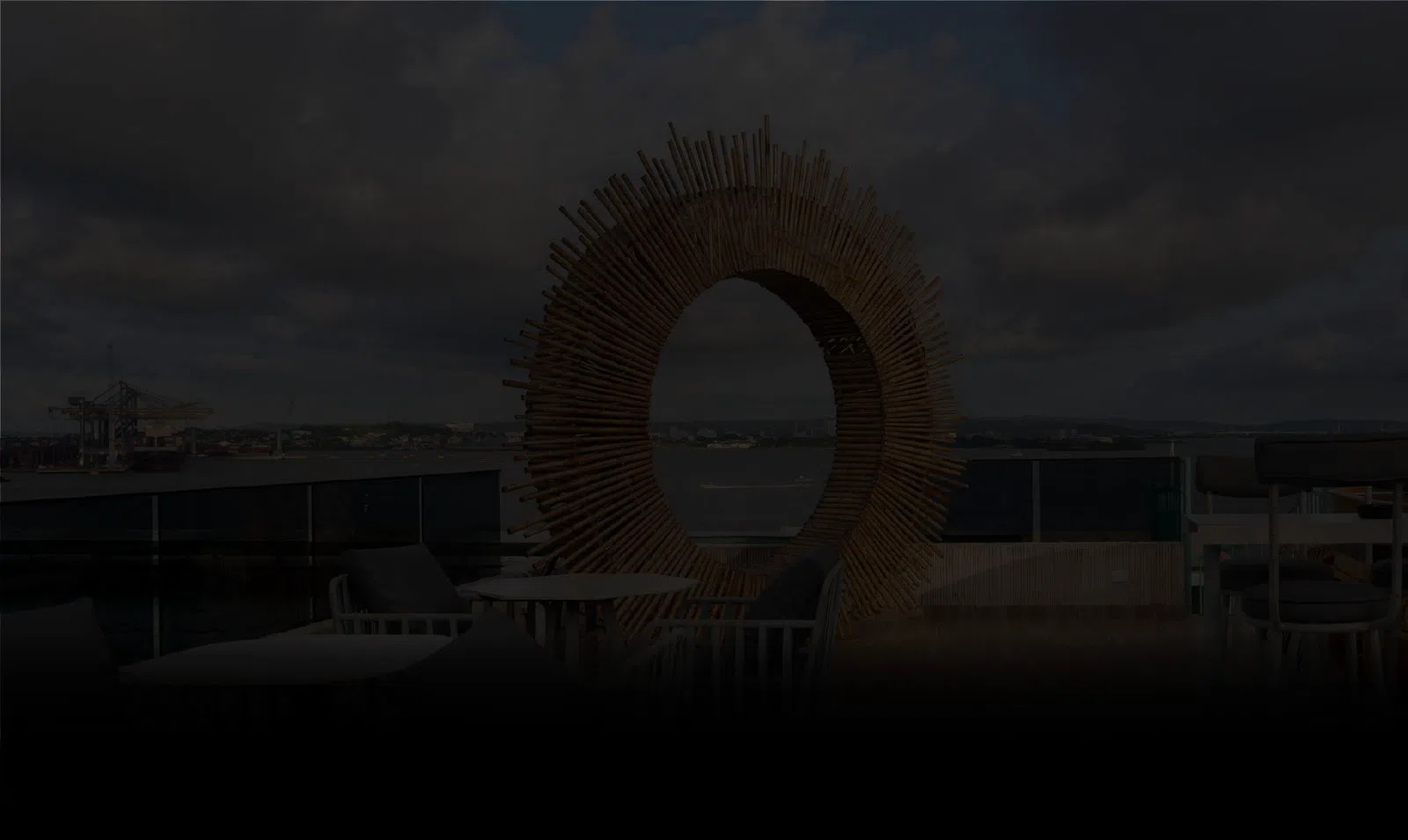
Doors are 5 p.m. to midnight, and to 1 a.m. on Friday and Saturday. Plates and cocktails run $70,000 to $150,000 COP. Book a table at weekends.
Shopping at Centro Comercial NAO
Castillogrande has little more than a supermarket, and Centro Comercial NAO is the nearest real shopping, a 10-minute walk up the peninsula to Carrera 1 on the Bocagrande beachfront. Escalators climb four glassy levels of shopfronts to a top-floor food court with open-air tables looking straight out over the sand and the Caribbean, where plates run $25,000 to $55,000 COP.

Entry is free and the mall opens 8 a.m. to 10 p.m. daily, with a cinema. The old casino and the Bogotá Beer Company unit inside have both shut.
Where to stay in Castillogrande
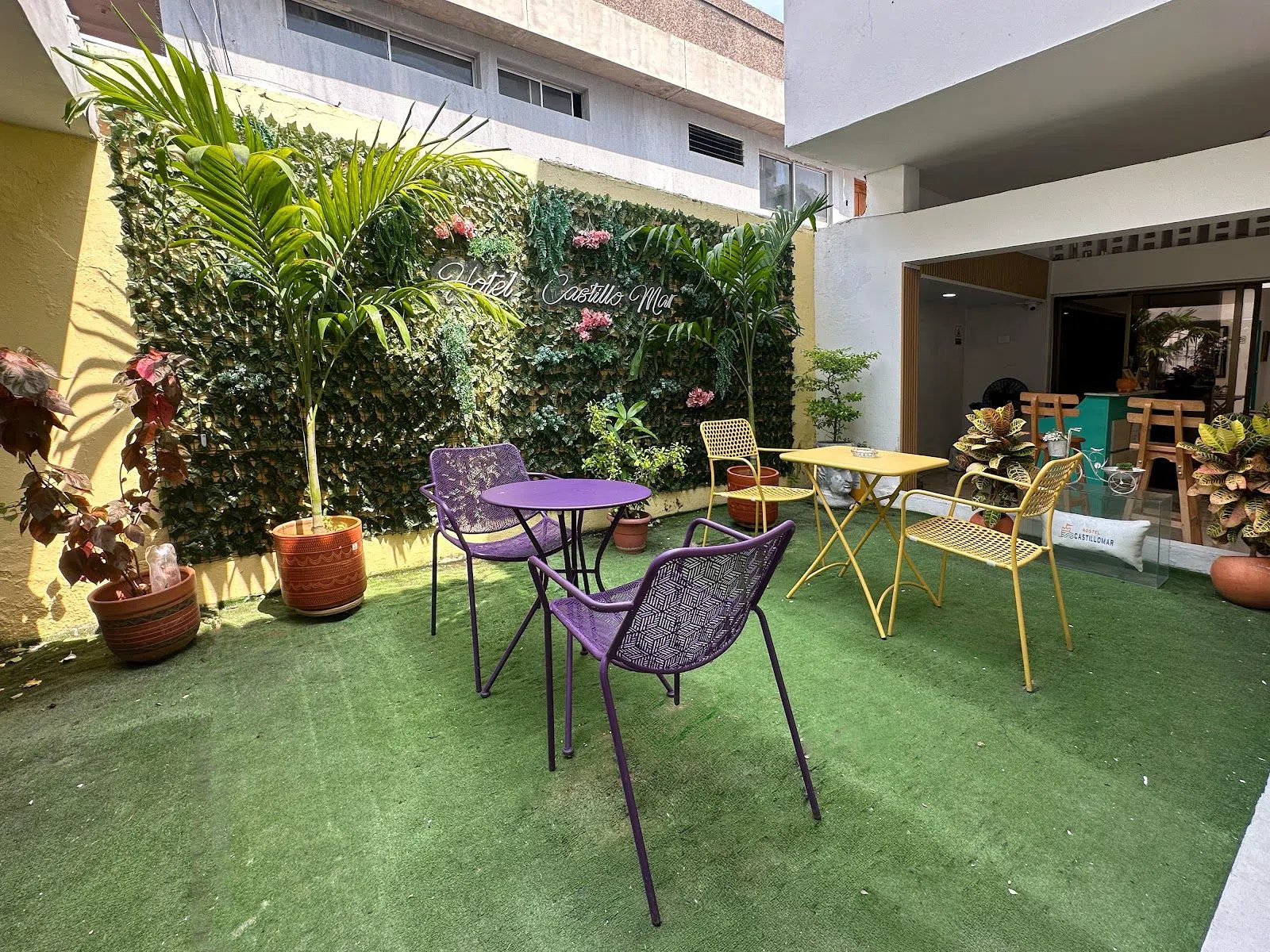
Hotel CastilloMar is a low-rise converted house on Calle 5A in Castillogrande, standing among the apartment towers with colonial-style decorative tiles, dark wood furniture, a small planted garden, a shared lounge and a roof terrace. The street outside is residential and quiet, the beach is a four-minute walk, and parking is free and private. Rooms run $200,000 to $350,000 COP a night. For value inside the neighbourhood itself, this is the bed to take, and it is a handful of rooms, no more.
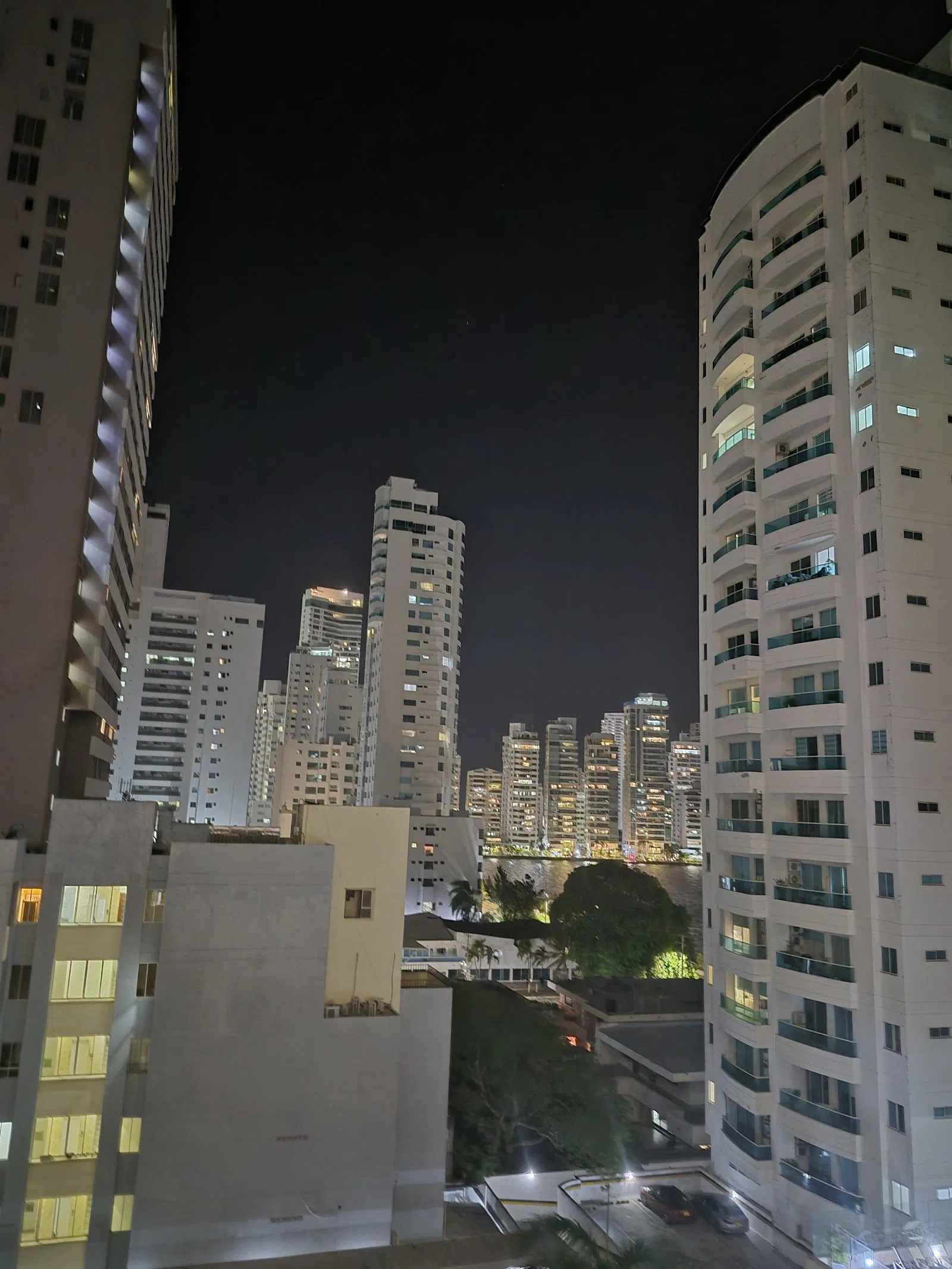
Travelers Orange Cartagena is a residential apartment block on Carrera 10 in Castillogrande, with 64 and 92 sq m flats, full kitchens and balconies, a small outdoor pool on the deck and sea and bay glimpses between the neighbouring towers. The apartments sleep four and six, and there is a lift, laundry and 24-hour reception. Rates are $300,000 to $500,000 COP a night per apartment, and the beach is a five-minute walk. It suits families or friends travelling together who want a kitchen and a pool.
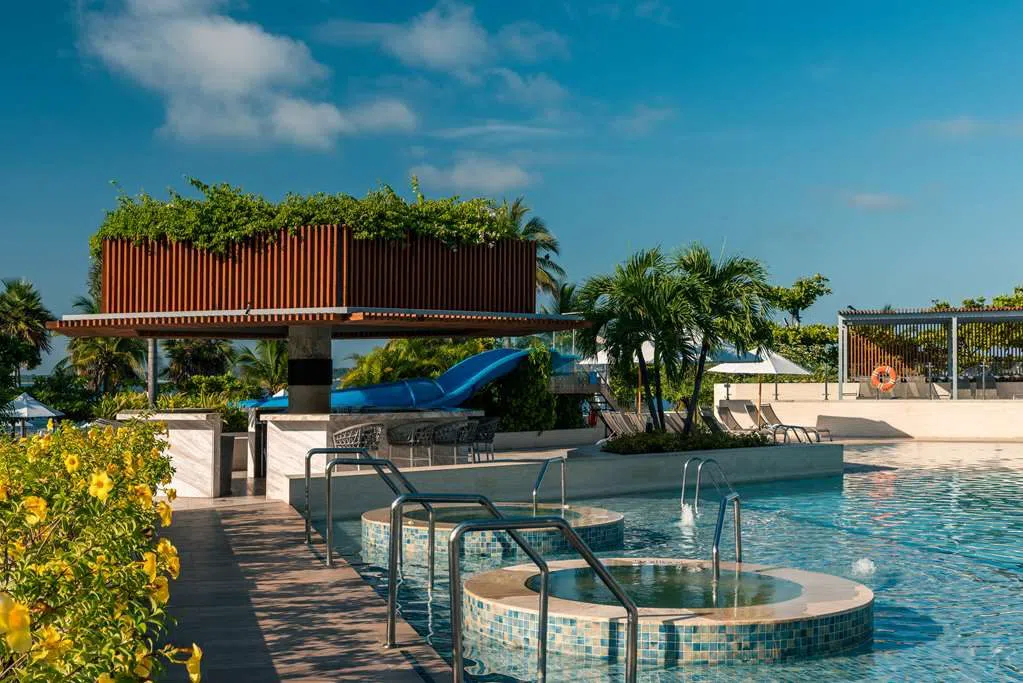
Hilton Cartagena is the upscale bed closest to Castillogrande without being in it, a curved mid-century tower standing alone on the tip of El Laguito with water on three sides, the only hotel in this corner of the city with that outlook. Outdoor pools step down towards the sea past palms, sun loungers, a tennis court and its own beach. Rates run $700,000 to $1,400,000 COP a night, and the hotel has meeting space and tour-group check-in. Book a bay-facing room for the sunsets.
Planning notes
The park, the beach and the malecón have no gate and no closing day, and the Club Naval is the one door on the peninsula that can shut your plan, so get a member to sign you in before you count on dinner there. Book Nami, book a weekend table at 7 Cielos, and be on the sand by 4:30 p.m. for the paddle.
See the Cartagena guide and the Cartagena hotel search.
Before you go
Is Playa de Castillogrande good for swimming?
The bay water is calm and flat, and 10 reinforced groynes built under the city's Defensa Costera 2050 scheme have put sand back where there was loose rubble a year ago. Entry is free, and umbrella or cabana hire runs $30,000 to $60,000 COP. Lifeguard cover is thin, so watch children yourself.
Can you visit the old fort at the Club Naval?
Only as the invited guest of a member. Club Naval Santa Cruz de Castillogrande admits Navy officers' club members and their guests; a member has to sign in any group, and the dining rooms are not walk-in restaurants. The surviving rampart fragment of the 1600s Castillo Grande de Santa Cruz is inside the grounds.
Where do you get breakfast in Castillogrande?
CasaMía Cocina, on the ground floor of the Hotel Barahona on Avenida San Martín, opens 7 a.m. to 11 p.m. daily; mains are $40,000 to $80,000 COP. For coffee alone, Bajo La Palma on Carrera 3 opens at 6:30 a.m. and closes at 6:30 p.m., with drinks at $15,000 to $35,000 COP.
What is there to do at sunset?
Walk the Malecón de Castillogrande, free and open, while the Bocagrande skyline across the water turns gold. Karib Kayak & Paddle Center runs its sunset paddle daily at 4:30 p.m. from the Castillogrande sand at Calle 5, 2 to 3 km in an hour for $150,000 to $220,000 COP per person.
Where should you stay in Castillogrande?
Hotel CastilloMar on Calle 5A is $200,000 to $350,000 COP a night, a four-minute walk from the beach. Travelers Orange Cartagena on Carrera 10 has apartments sleeping four and six at $300,000 to $500,000 COP. Hilton Cartagena, round the point on the tip of El Laguito, is $700,000 to $1,400,000 COP.