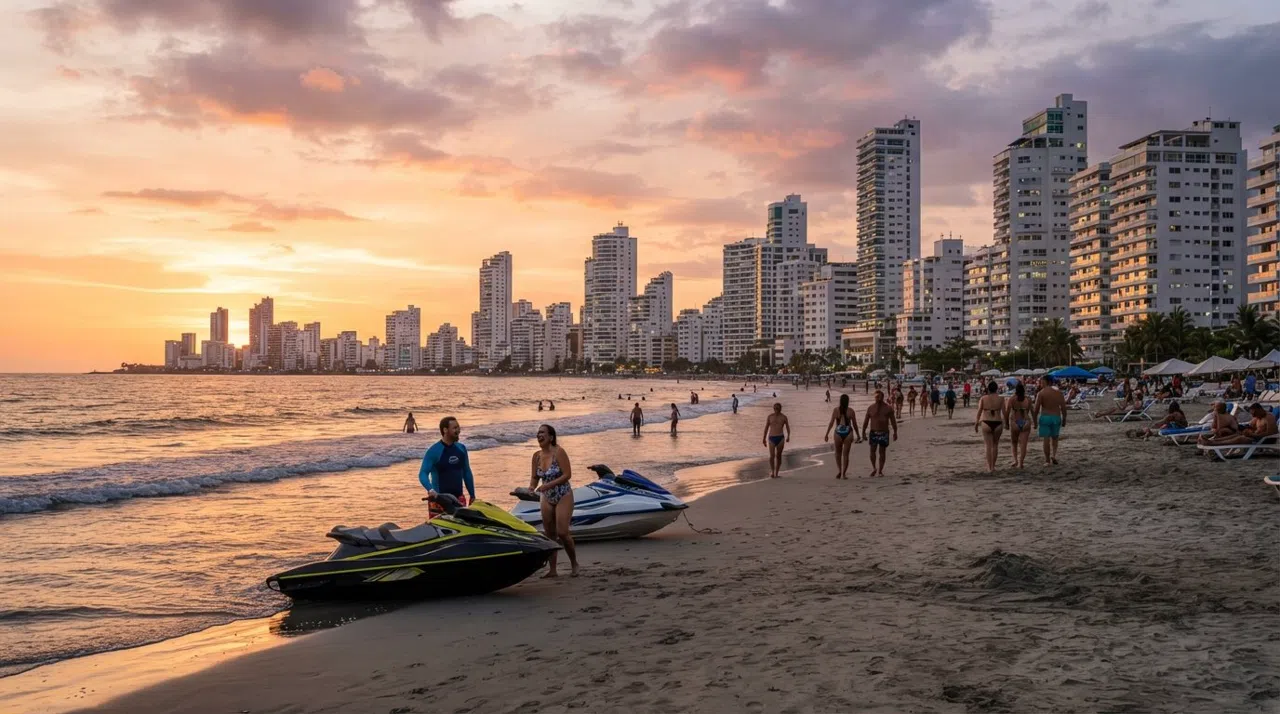
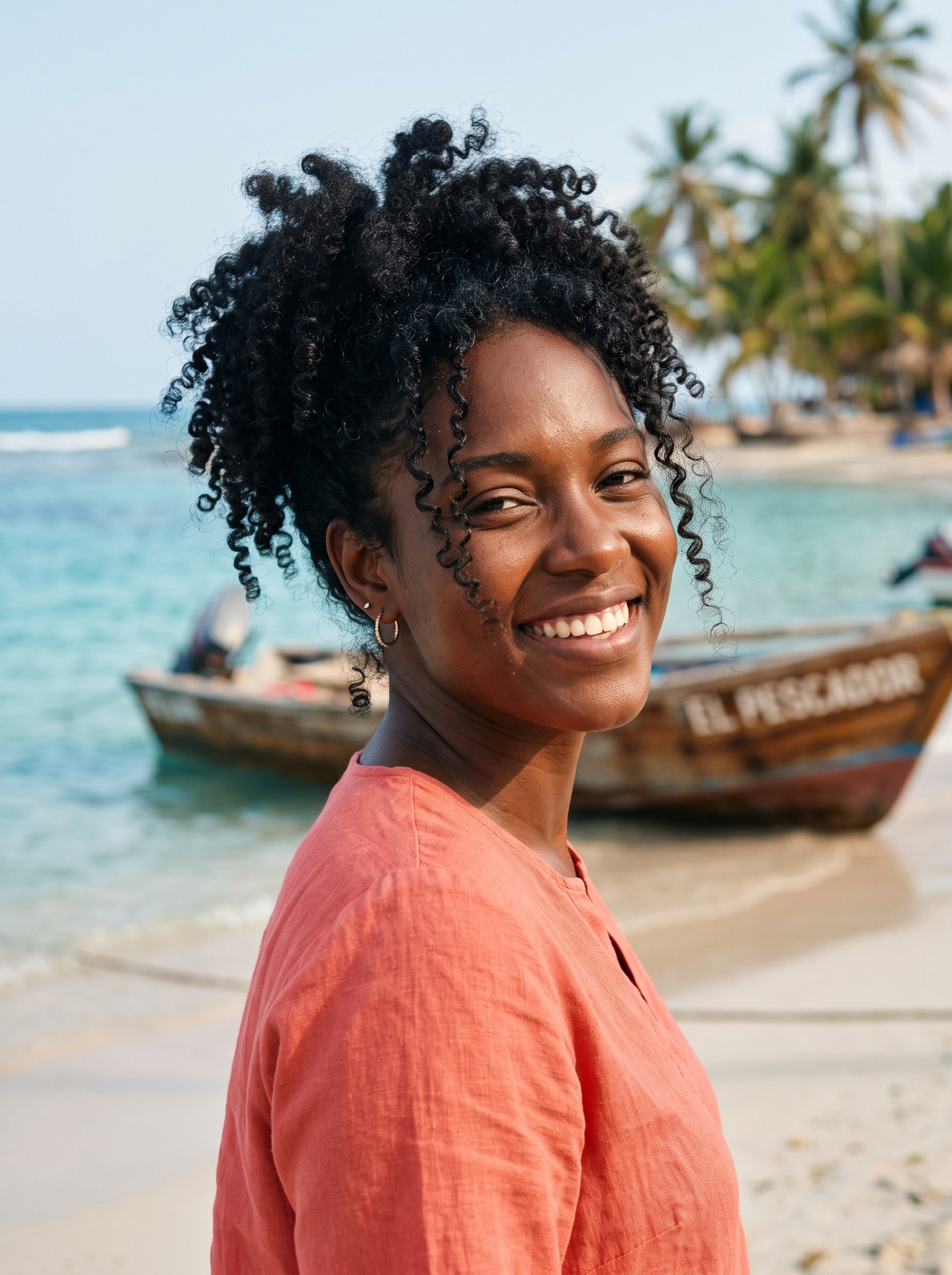
The first thing Bocagrande gives you is movement: a long, flat sweep of Carrera 1 where the city beach runs beside the road, the Caribbean breathing on one side and towers rising on the other. By late afternoon the malecón starts to fill, the vendors come into voice, and the peninsula feels less like a postcard than a working resort strip with a pulse of its own. This is Cartagena with its shoes on — sunscreen, sandals, a pool key in your pocket, and the old city close enough for dinner but far enough away to keep the sand under your feet.
What Bocagrande is known for
Bocagrande is Cartagena’s modern face, built out on a three-kilometre peninsula that was once mangrove and open beach and then, from the 1940s onward, became a wall of condos, hotels and commercial towers. It does not pretend to be the old town. It is the Miami-facing side of the city: high-rise, beach-first, efficient, and very much designed for people who want to wake up to sea views and still be in a taxi to the walled city in ten minutes.
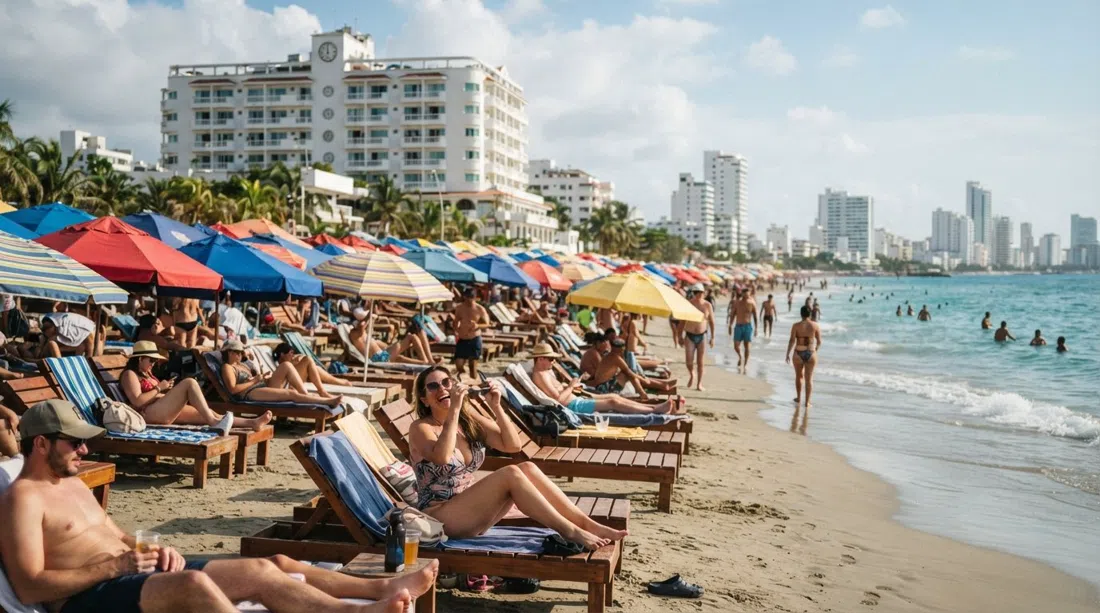
What defines it is the beach, but not the fantasy version. The city beach is grey-gold rather than white, warm rather than crystalline, and broken into sectors by rock jetties. The central stretch is Playa Hollywood, the busiest and most talked-about sand in Bocagrande, and yes, it is busy for a reason: umbrellas, loungers, vendors, people-watching, and a constant sense that half of Cartagena has decided to have lunch here. Further down, El Laguito and Castillogrande calm things down. The beach widens, the crowds thin, and the peninsula starts to feel residential again.
The skyline is the second signature. Bocagrande is the only part of Cartagena that really reads like a Latin American resort city — a dense vertical line-up of hotels and apartment towers, with international chains and older landmark properties standing shoulder to shoulder. Hotel Caribe has the old glamour of the district in its bones, with tropical gardens where sloths and peacocks still roam. Hyatt, Hilton, Holiday Inn and Hampton all have a presence here too, which tells you the kind of neighbourhood this is: practical, polished, and built around the idea that the sea should be visible from the room.
And then there’s the infrastructure, which matters more than people admit. Bocagrande has malls, banks, pharmacies, juice stalls, casinos, supermarkets, and enough restaurants to make a week here easy. Avenida San Martín, or Carrera 2, is the strip’s spine — noisy, useful, unromantic in the best possible way. A block west, Carrera 1 hugs the beach and the malecón. Together they make a neighbourhood that works hard for visitors, especially families, repeat Cartagena travellers and anyone using the city as a base for boat days out to the Rosario Islands and Barú.
Where to eat & drink
Eating in Bocagrande is better than the resort-strip reputation suggests, provided you understand the rhythm of the neighbourhood. This is a place of seafood decks, hotel rooms, brunch cafés and sensible international kitchens — a place where lunch can be a fish chosen at the counter and dinner can be tapas on Avenida San Martín before a rooftop drink.
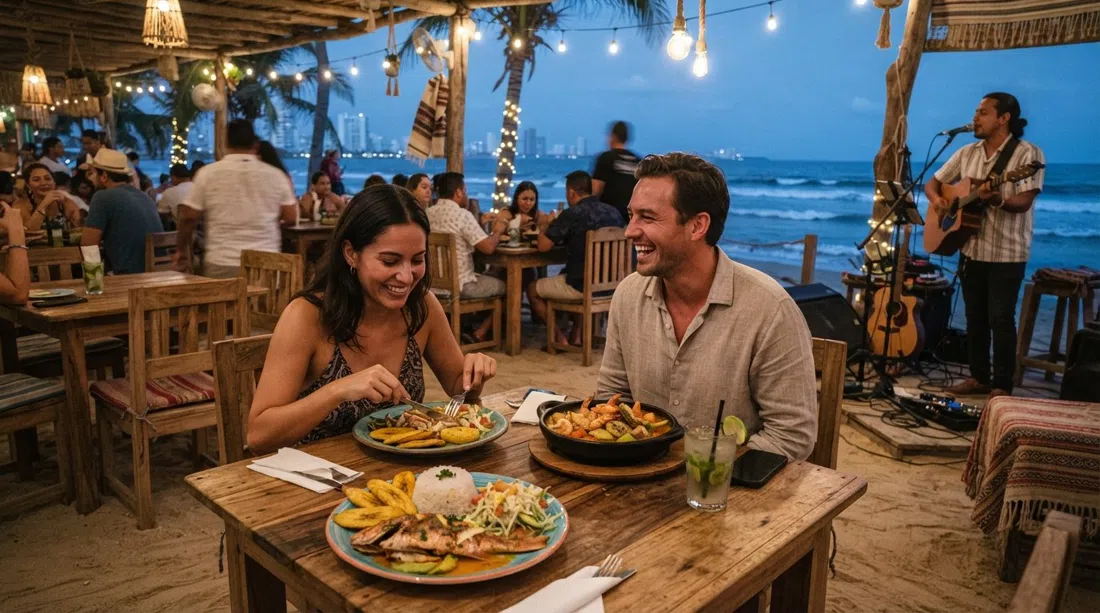
For the classic beach meal, El Muelle at the El Laguito tip is the one to know. It sits right out over the sand at Carrera 1 #1A-23, a two-storey deck where you pick your fish and let the kitchen do the rest while drinks and ceviche drift back to the loungers. It is the sort of place that makes sense at sunset, when the light softens and Tierra Bomba starts to darken across the water. That is Bocagrande at its most convincing: not glossy, not precious, just easy.
Morena, at Carrera 1 #9-6, is the room everyone photographs, and for once the photos are justified. Chef Erick López has given it a rustic-bohemian feel that fits the beachfront setting, with nightly live music and a Caribbean seafood menu that leans into the coast rather than trying to dress it up. It stays open late — to midnight, and until 1am on weekends — which makes it one of the few places in the area that can carry you from dinner into a proper evening without changing address.
On Avenida San Martín, La Bokería at Carrera 2 #9-184 does the Spanish side of Bocagrande with confidence: paella, tapas and more than ten rice varieties, from Valenciana to lobster arroz. It is the sort of menu that rewards a group and a long lunch, especially if you want something more structured than beach food without leaving the peninsula. A few blocks away, La Brioche Bocagrande at Carrera 2 #9-124 is the dependable café stop — French-leaning, brunch-friendly, and known for almond-chocolate croissants and burgers. It is not trying to be precious; that is part of the charm.
For pasta and pizza, Di Silvio Trattoria at Carrera 3 #6-40 is the steady Italian answer, wood-fired and familiar, from a long-running local group that knows how to keep a neighbourhood place moving. Restaurante Nami, at Carrera 2 #5-100, goes in a more modern direction with Asian-Caribbean fusion and local ingredients, while Yo Amo Bazurto at Calle 8 #2-24 brings Cartagena’s coastal classics into a more comfortable dining room, with wood-fired preparations that nod to the city’s Bazurto market food without the market heat.
Bocagrande drinks as it eats: with sea views, live music, and the sense that you can start early and still be within taxi distance of the old town if the night wants to stretch. That is the trick here. You do not come to Bocagrande to chase mystery. You come because a good fish, a cold drink and a view are enough.
Going out
Nightlife in Bocagrande is not about sweaty clubs and all-night chaos. It is rooftop bars, casino floors and hotel terraces, a pre-party neighbourhood rather than the main event. That suits it. The people who stay here are often already in holiday mode — families, honeymooners, business travellers, Colombians on beach break — and the evening energy follows that lead.
The obvious headline is 51 Sky Bar, on the 51st floor of the Estelar Cartagena de Indias hotel and convention-centre tower. It is Colombia’s highest bar, and the view is the whole argument: 360 degrees over the walled city, the bay, the peninsula and the open Caribbean. The menu follows the room’s ambitions, with cocktails, sushi, ceviche and Italian plates, and DJs to keep the skyline company. It is the kind of place where you go to look at Cartagena from above and end up staying longer than planned because the lights are doing half the work for you.
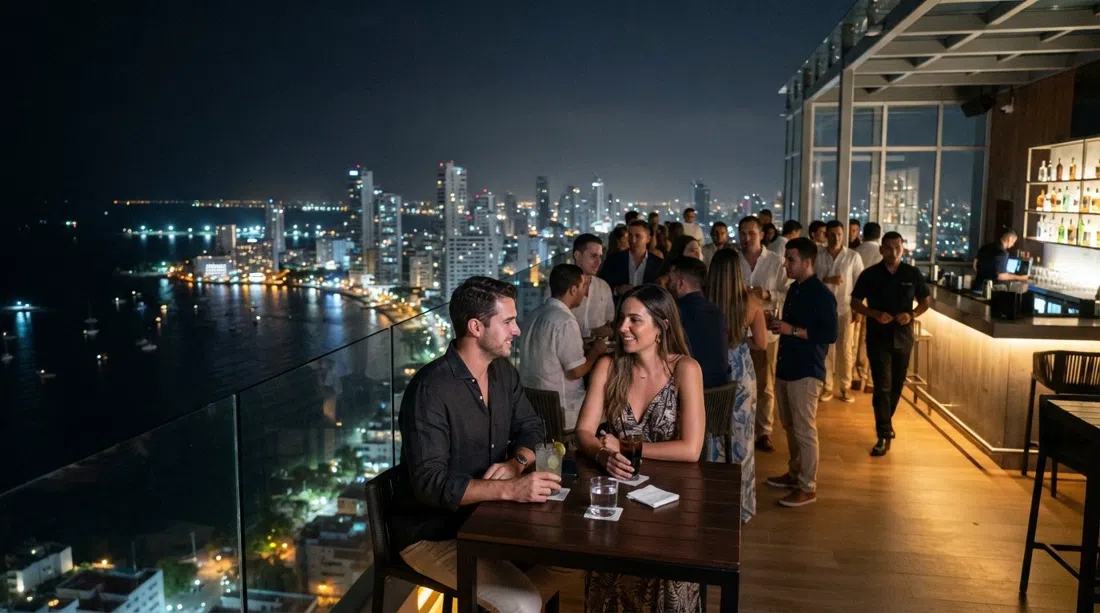
Beyond that, Bocagrande’s after-dark life is quieter and more practical: sunset drinks at beachfront restaurants, a casino in one of the bigger towers or malls, a lounge that trades on the sea view. If you want a loud night, the local playbook is simple — dinner on San Martín, a drink on a terrace, then a taxi into El Centro or Getsemaní, where the salsa floors and the city’s most exclusive clubs actually live. Bocagrande is the warm-up, not the finale.
Things to do / what to see
The beach is the headline act, but the way you use it changes the day completely. Playa Hollywood, the wide central stretch in front of Hotel Caribe, is the busiest and most vendor-heavy part of Bocagrande. That is not a flaw; it is the urban beach in full voice. You will hear massage offers, oyster calls, cocada sellers and bracelet hawkers before you’ve even settled into your chair. The trick is simple and very local: a firm no, gracias, and a little patience. The beach is not trying to be private. It is trying to be alive.
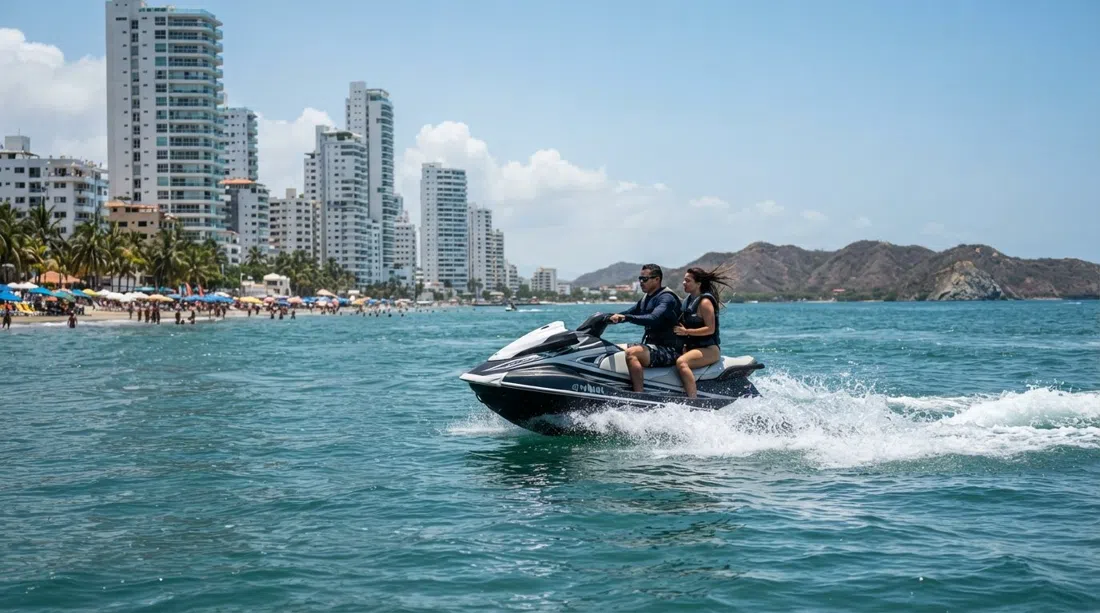
For a calmer version of the same coastline, walk to El Laguito or out toward Castillogrande. The sand gets wider, the crowds thin, and the peninsula starts to feel less like a strip and more like a neighbourhood again. If you want movement on the water, jet-ski rentals run straight off the sand, with 30-minute rides costing roughly COP 150,000–250,000. It is not subtle, and that is the point: a fast loop in the bay, towers behind you, Tierra Bomba across the water, wind in your face, done before the afternoon heat gets rude.
If your idea of a beach day includes a lounger, pool, DJ and lunch rather than a rented umbrella, WALA Beach Club in El Laguito is the neatest answer. A full pass with a meal runs around COP 240,000, with a sunset-only option at about half that. It is a clean, controlled way to spend a day on the peninsula without giving up the water.
For walking, the Bocagrande malecón is the ritual that makes the neighbourhood feel local. At dusk, Carrera 1 becomes a promenade of strollers, families and couples watching the towers light up one by one. It is not dramatic in the old-town sense; it is better than that. It is ordinary, and therefore revealing. You see how Cartagena actually lives at the beach.
The practical beauty of Bocagrande is that the colonial city is never far away. The walls, the Naval Museum, San Felipe castle — all of it sits a short taxi ride from here. And for the island days that Cartagena sells so well, the marinas and boat docks in and around Bocagrande are where the Rosario Islands and Barú departures begin. If you are using the city as a base for boats, this is the sensible shore to sleep on.
Shopping & markets
Bocagrande is Cartagena’s mainstream shopping district, which is useful if you are living here rather than merely passing through. The beachfront anchor is Centro Comercial Nao on Carrera 1 at the corner of Avenida San Martín, a modern mall with international and local stores, cafés, a cinema and a casino. Its top floor gives you an almost aerial view over Playa de Bocagrande, which is a fine reminder that this neighbourhood is built to make the sea part of everyday errands.
Inland, Plaza Bocagrande is the other mall, with brand stores, a food court, cinema and the sort of services that make a stay easier — not glamorous, but necessary. Avenida San Martín itself functions like an open-air high street: pharmacies, supermarkets, jewellers, banks with ATMs, souvenir stalls, and enough practical retail to solve most problems without leaving the peninsula.
The beach adds its own market, mobile and constantly in motion. Vendors bring hats, sarongs, fruit, ceviche and cold beer to your lounger, and while that can be tiresome if you want a quiet lie-down, it is also part of the beach’s economy and rhythm. Bocagrande is not where you come for artisan craft browsing or designer-boutique wandering. Those live in the walled city and Getsemaní. This is where you buy sunscreen, withdraw cash and keep the day moving.
Where to stay in Bocagrande
Bocagrande’s greatest strength is the range of places to sleep, from mid-range chain hotels to full-on resort towers, most with pools and sea views and all close enough to the old town that you can have breakfast by the water and dinner behind the walls. The central beachfront near Playa Hollywood is where the big family-friendly names cluster: Hotel Caribe by Faranda Grand, open since 1945, with its tropical gardens, sloths, peacocks and one of the largest pools in the district; the InterContinental; the Hyatt Regency with rooftop pools and skyline views; and reliable mid-range towers like Holiday Inn and Hampton by Hilton.
Out at the quieter tip, El Laguito gives you calmer sand and a more residential feel, with the Hilton and a cluster of resort towers. Castillogrande is quieter still, and best if you want space over nightlife. The pattern is simple: central Bocagrande for convenience and buzz, El Laguito or Castillogrande for calm. Compared with the boutique old town, the value here is often better too — more pool, more view, less romance tax.
Getting around
Bocagrande is easy to understand on foot. Carrera 1, Avenida San Martín and the numbered cross streets are flat, direct and sensible to walk, though the heat can make even short distances feel longer than they look on a map. For anything beyond the peninsula, you will probably take a taxi. The walled city is about 10 to 15 minutes away by cab off-peak, longer if traffic is behaving badly, and it is technically walkable in 25 to 30 minutes along the water if the sun is kind and you are not carrying anything heavy.
Taxis are cheap but unmetered, and tourists do get overcharged, so agree the fare before you get in or use a ride-hailing app. The Transcaribe T103 line is the useful bus connection for visitors, and it is cheap — around COP 3,000 — and frequent. Rafael Núñez International Airport is close by too, roughly 7 km away and about 15 to 25 minutes by taxi depending on traffic, which is one reason Bocagrande works so well as a first or last night in Cartagena.
You do not need a car here. You need sandals, a sense of direction, and the willingness to let the beach dictate the pace.