
On the shaded flank of the Palace of the Inquisition, on the narrow lane that took the building's name, there is a small window set low in the wall, barred, with a stone cross above it and a ledge rubbed smooth by two and a half centuries of hands. Most visitors photograph it as ornament and walk on. It was a letterbox for accusations, and for the better part of two hundred years it was the most dangerous square metre in the city.
What the barred window on Calle de la Inquisición was for
The Holy Office arrived in Cartagena in 1610, by royal order, and set up one of only three tribunals in the whole of Spanish America. Its jurisdiction was enormous: the Caribbean coast, the interior of New Granada, the islands, the whole arc of ports feeding the slave trade. It ran from here until independence swept it out in 1811, with a short, sour revival under Spanish reconquest before it was finished for good.
The window is known locally as the ventanilla de denuncias, the denunciation window, and sometimes less politely as the informer's window. The idea was procedural rather than theatrical: an accusation could be handed in at the street, in writing, without the accuser crossing the threshold or being seen in the building. The cross above the opening did the moral work, blessing the act of informing on your neighbour.
The record has limits, and they are worth stating. Very few Cartageneros of the period could write, so most denunciations were made in person and taken down by a notary inside, and historians argue about how much traffic the window actually saw. What is not in doubt is what it advertised. A city where the state installs a slot in a wall for anonymous accusations is a city where your cook, your rival, your creditor and your lover are all a short walk from ruining you.
And the people ruined were mostly not the European heretics the word Inquisition conjures. Here the tribunal's casework ran overwhelmingly to sorcery, healing and pacts with the devil, and the accused were overwhelmingly Black and often enslaved or recently freed women: herbalists, midwives, card readers, the people the port's poor actually went to when they were sick. The best documented of them, Paula de Eguiluz, a freedwoman and healer, was tried in the 1620s and hauled back more than once afterwards. She survived, partly because wealthy clients kept wanting her remedies. Stand at the window with that in mind and the building stops being a horror attraction and becomes something far more uncomfortable: an instrument of social control pointed at the city's Black population.
Reading the doorway before you buy a ticket
Give the exterior ten minutes before you queue. The limestone portal facing Plaza de Bolívar is dated 1770 (the palace you are looking at is late colonial, built long after the tribunal began work in an earlier house on the same ground), and it is the finest baroque doorway in the old town: paired columns, a broken pediment, the royal arms, all in a soft stone that holds the morning light. Above, two long balconies in dark wood run the width of the facade on heavy brackets, deep enough to sit in. Then walk around the corner into the lane for the window, which is deliberately plain. The grandeur faced the square; the mechanism faced the side street.
The plaza itself is the shadiest public space inside the walls, and the most worked. Shoeshiners, hat sellers and palenqueras, the women in bright skirts balancing bowls of fruit on their heads, all trade here, and the fruit is largely a prop for paid photographs. There is nothing dishonest about it as long as you agree the figure before you raise a camera, in cash, and accept that a group of six will be quoted six times. If you would rather not, the shaded benches on the far side are free and nobody will bother you much.
Where the museum earns its ticket and where it does not
Inside, the palace is the city's historical museum, and it is two buildings in one. The ground-floor rooms by the courtyard are the famous part and the weakest: a collection of torture instruments, thinly captioned, several with no documented connection to this tribunal at all. The giveaway is the guillotine, a device of a later century and another country entirely, standing in a colonial courtyard as if it belonged. Children find it thrilling. Anyone who came for the history will find it closer to a fairground.
The building redeems itself upstairs and in the courtyard. The historical rooms carry the city's own story: the siege maps, the models and plans of the walls, colonial furniture and religious painting, the documents that make the tribunal legible as an administrative body rather than a monster. The courtyard, with its arcades and dripping greenery, is the clearest surviving picture of how a working colonial institution was laid out. Allow 45 minutes to an hour and a quarter. Ticketing and hours move with the season and the cruise calendar; expect to pay in the same band as the other walled-city museums, expect the desk to stop selling well before closing, and do not arrive in the last half hour.
Guides tout at the door and some are excellent. The test is simple: ask whether they will cover 1610 to 1811 and who was actually accused. If the answer steers straight to the torture room, keep your money. The interior rooms are small and low-ceilinged, which makes this a good building for couples, solo travellers and anyone who reads labels, and a poor one for a party of twenty arriving at eleven. Groups should come at opening or after three.
The moral counterweight five minutes away
Walk five minutes south and the same decades look entirely different from inside Santuario y Museo de San Pedro Claver (San Pedro, walled city). Claver spent his life meeting slave ships at the quay, baptising and treating the people coming off them and arguing their case against their owners, at the same port, in the same years, that the tribunal was policing for sorcery. The convent rooms, the cloister, the church and his relics are all here, and the two buildings together give you the full moral span of colonial Cartagena in under half a kilometre.
Entry runs approximately COP 30,000 for foreign adults and COP 21,000 for Colombian adults, with concessions around COP 13,000 to 22,000 and residents of the city and Bolívar from COP 8,000. It opens Monday to Friday 9am to 4.30pm and weekends and holidays 10am to 4pm. It is a standard fixture on walled-city tours and takes groups comfortably, with guides at the door; if you want the cloister quiet, go at nine.
The layer the tribunal was built on top of
Thirty seconds from the palace door, on the same plaza, Museo del Oro Zenú (Plaza de Bolívar, Centro) is free and better than free museums have any right to be. The Zenú worked the river plains to the south with an engineered system of canals and raised fields for centuries before any Spanish ship arrived, and their goldwork, filigree ear ornaments so fine they look woven, is the civilisation the walled city was laid on top of. It takes 30 to 40 minutes.

It closes Mondays, including public holidays, and opens Tuesday to Saturday 9am to 5pm and Sunday 9am to 2pm. Free guided tours run in Spanish at 10am, 11am, 3pm and 4pm and in English at 11am and 3pm, which makes it the easiest stop in the city for a group with a mixed budget.
Why the city needed walls at all
On Calle San Juan de Dios, next door to Claver, Museo Naval del Caribe (Centro, walled city) answers the question the prettiness of the old town suppresses: why does a small colonial port have eleven kilometres of military masonry around it? Because everything leaving the interior went out through here, and everyone with a fleet knew it. The galleries lay out the sieges, the engineering and the slow arms race with the sea in a way no walking tour manages in an hour.
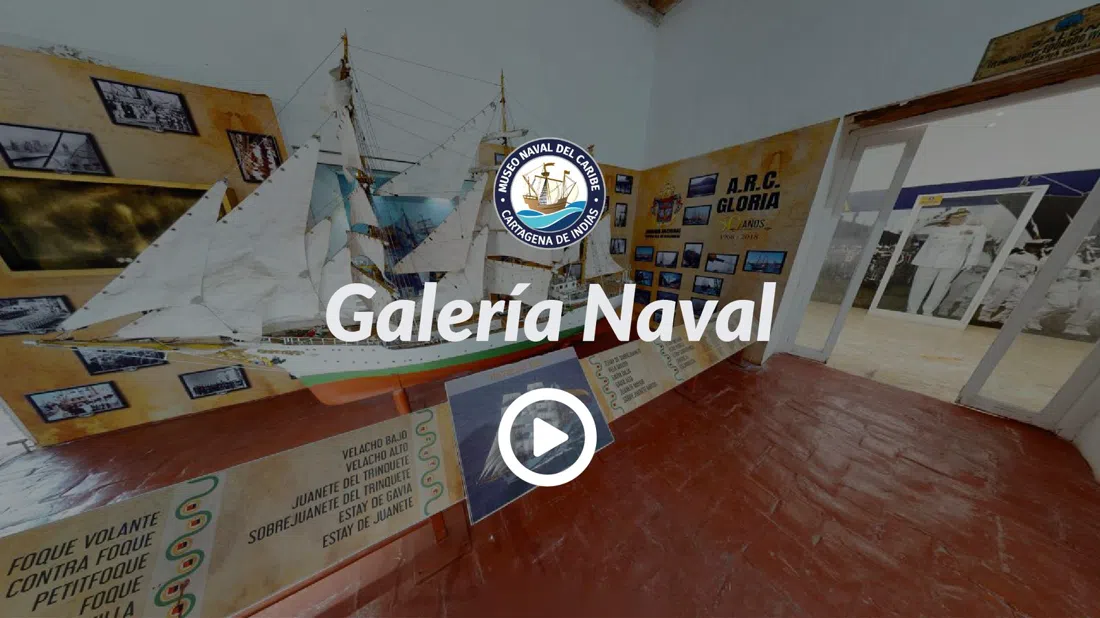
Admission is approximately COP 24,000 for adults, COP 10,000 for students and COP 5,000 for children and military. It opens daily 10am to 6pm, from 9am in Colombian holiday periods. It takes groups daily and also rents space for events, so large parties are routine here and you will not feel rushed.
What careful restoration actually looks like
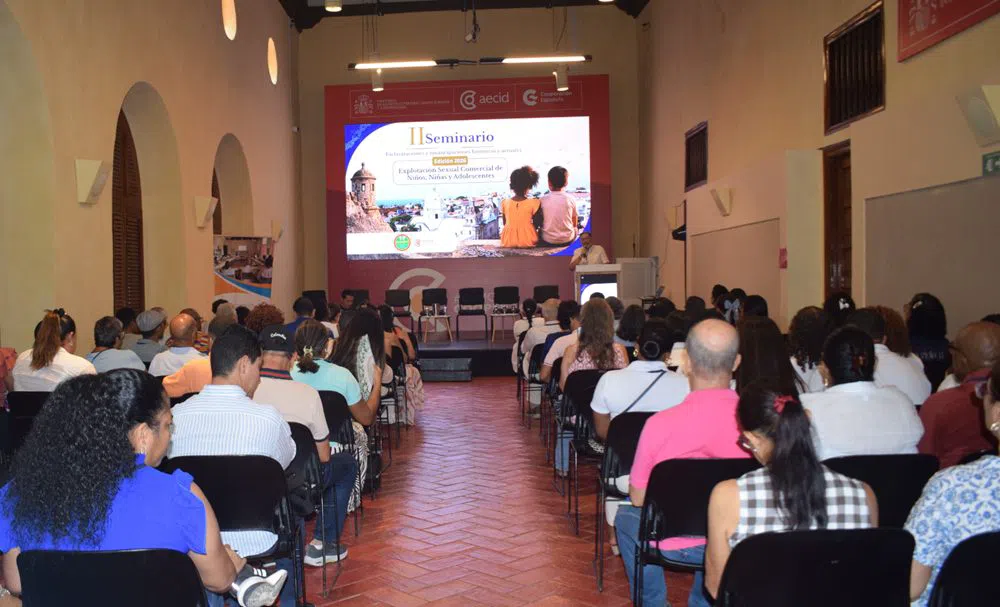
A short walk northwest, Claustro de Santo Domingo — Centro de Formación de la Cooperación Española (AECID) (Santo Domingo, Centro) is the quietest building on this list and the most instructive. It is a separate building and a separate operator from the famous church beside it: the Archdiocese owns it, and Spain's development agency restored it and has run it as a training centre since 2004. Exhibitions and most public events are free, and the restored arcades show you what the Inquisition palace and half the convents in the old town could look like with patient money behind them.

It is not a museum and does not keep museum hours. Access follows the exhibition and events calendar, so check the agenda or call (+57) 605 654 5466. It takes groups for exhibitions and programmed events, but it is primarily a working institution, so ring ahead for anything larger than a handful of people.
The military half of the same story
Castillo San Felipe de Barajas (San Lázaro hill, Pie de la Popa) is the obvious second half of the day and the natural sequel to the palace, because the tribunal and the fortress were two departments of the same project. It is the largest Spanish fort in the Americas, a hill rebuilt into a machine of batteries and tunnels, and it is built for volume: coach groups, cruise groups and school parties all day, with guides touting at the gate.

Entry is COP 50,000 for foreign visitors and COP 22,000 for Colombians, with an audio guide at around COP 15,000, and it is free on the last Sunday of the month, which is wonderful value and extremely crowded. Go at 8am or late in the afternoon. The terraces have no shade at all and midday on that hill is genuinely punishing; the tunnels are low, narrow and not for anyone claustrophobic. It is a 15-minute taxi from the walled city or a hot 25-minute walk.
The chain across the channel
If you want the siege story without the coaches, Fuerte de San Fernando de Bocachica (Bocachica, Isla de Tierrabomba) is the better landmark and emptier than San Felipe by an order of magnitude. It guards the narrow southern mouth of the bay, and a chain once ran across that channel to the battery opposite, the physical reason the city survived the fleets sent to take it.
Entry is around COP 25,000. Organised boat tours take groups and handle the logistics; independent travellers negotiate a lancha at the Muelle de la Bodeguita dock, agree the return time in writing or in front of a witness, and should expect the crossing to cost considerably more than the ticket. A full-day island tour costs more again. The fort is open daily around 8am to 5pm. Allow half a day, take water and cash, and understand that a small open boat in choppy afternoon water is wet, loud and not for everyone.
Planning, cash and timing
Everything inside the walls on this list is within a ten-minute walk of the palace door, which means one morning covers the Inquisition palace, Zenú and either Claver or the naval museum for roughly COP 55,000 to 60,000 per person, plus coffee. Add San Felipe in the late afternoon and the day costs about COP 110,000; Bocachica is a separate half-day. For where to base yourself, the Cartagena guide covers the walled city against Getsemaní and Bocagrande, and the Cartagena hotel search is the fastest way to compare rates inside the walls, where you will pay a premium for being able to walk home at two in the afternoon and lie down.
Carry cash in Colombian pesos, in small notes. Larger museums take cards, smaller ticket desks and every boat, taxi and photograph do not, and nobody will have change for a 100,000 note. Taxis inside the old town are cheap and unmetered, so agree the fare before you get in. Ride-hailing works but can be awkward at the walled gates.
Time the day around the heat rather than the opening hours. Be at a museum door for nine, be indoors or under a balcony between noon and three, and save the unshaded forts for the last two hours of light. From September to November expect a hard afternoon downpour that empties the streets for 40 minutes and then stops; the stone lanes flood at the kerb, so bring shoes you do not mind soaking. Dress is relaxed everywhere on this list except the church at Claver, where shoulders covered is the courteous minimum.
And before you leave the plaza, go back round to the lane and look at the window once more. It is unremarkable in every way a piece of architecture can be: low, small, barred, cheap. That was the point. The grand doorway was for the city's self-image; the slot in the side wall was where the thing actually worked.