Cartagena专刊
El Cabrero, the Cartagena barrio just outside the walls
Rafael Núñez's house by the sea, a neo-Gothic chapel holding two presidents' tombs, a jetty along the ramparts, and the beach Cartagena locals walk at dusk.
作者:Sanne VermeerWalls, courtyards and the slower Cartagena
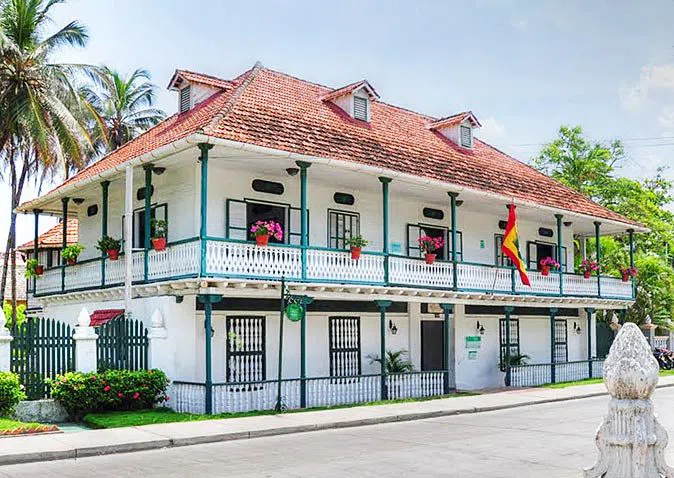
Rafael Núñez died in a cream and white timber house on the edge of the Cabrero lagoon, and his desk, his books and his papers are still in the rooms, free to walk through. At the other end of the palm-shaded park in front of it stands a small white chapel his wife had built in 1885. Both of them are buried inside it, in twin mausoleums either side of the altar.
The Núñez house and the chapel
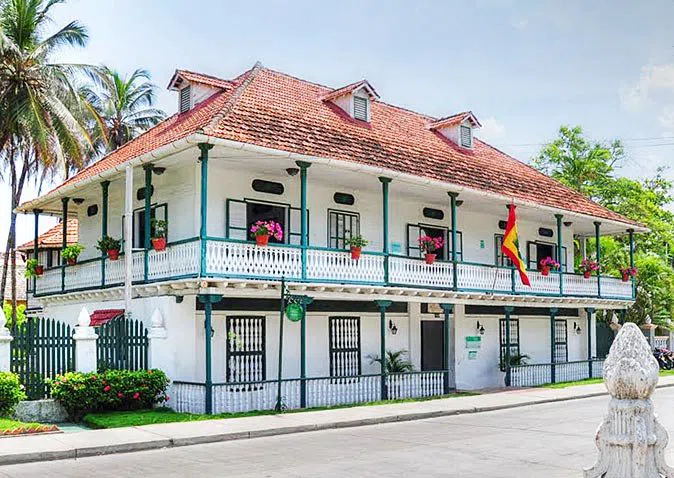
Casa Museo Rafael Núñez (El Cabrero, on the lagoon) is the single reason the barrio appears on a visitor's map. Núñez, four times president of Colombia and the man who wrote the words of the national anthem, died here, and the place has been kept as a house rather than a display, his desk and shelves still in position. It is a two-storey 19th-century Caribbean building on turned wooden posts, with a deep wraparound veranda, louvred shutters and a first-floor balcony, mango trees in the yard and the lagoon water directly behind. Entry costs nothing. It opens Tuesday to Friday 9 a.m. to 5 p.m., and Saturday, Sunday and holidays 10 a.m. to 4 p.m., closed Mondays. Walk-ins are fine, though the rooms are tight, so split a party of more than 12 or ask the guard at the door to stagger your entry.
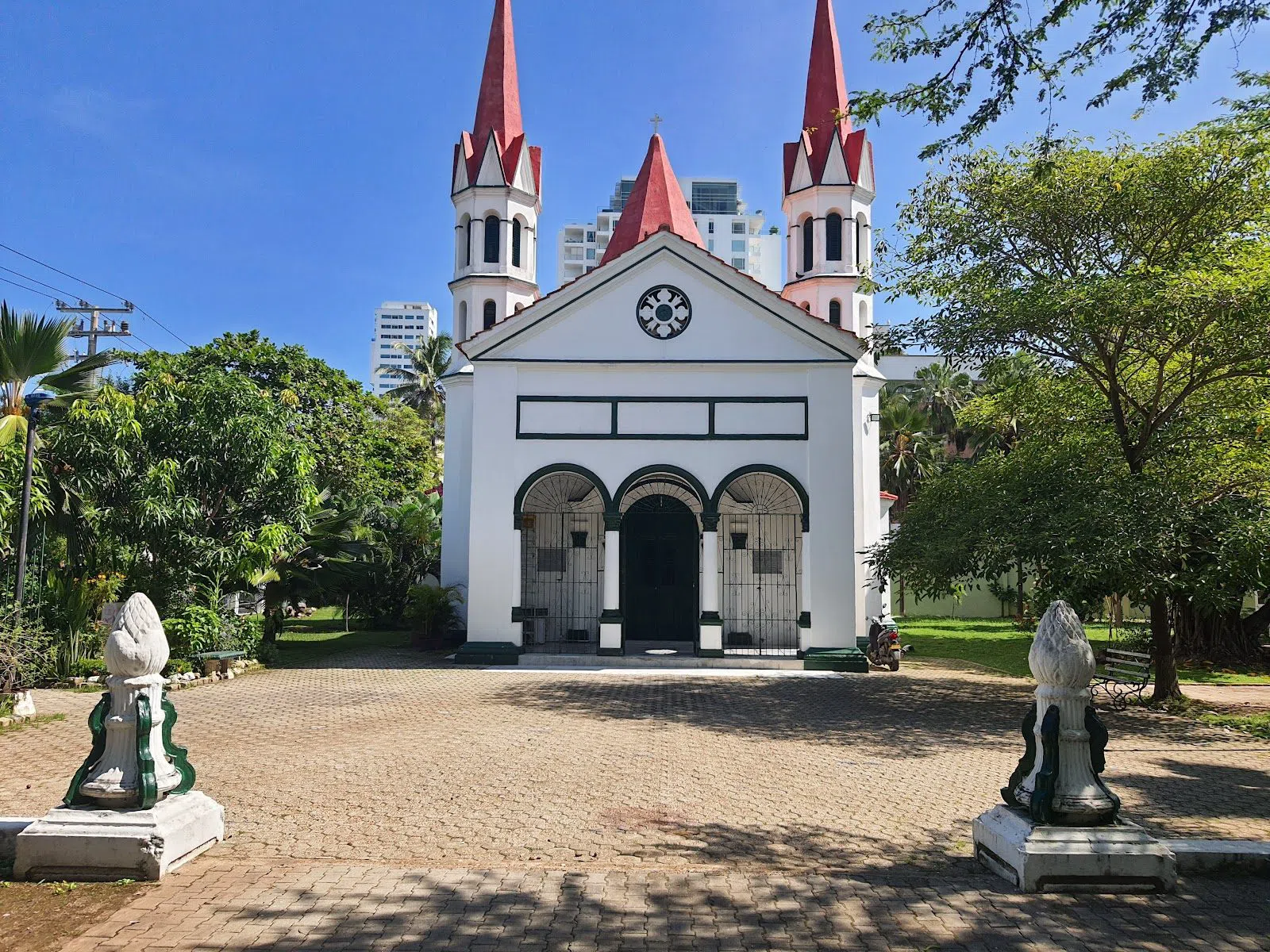
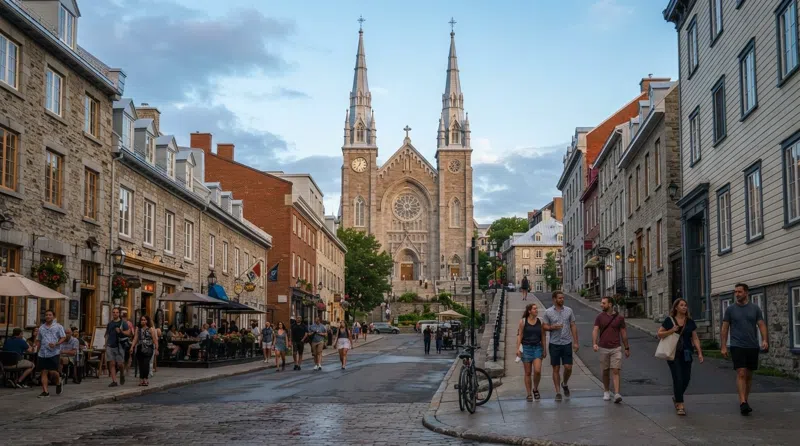
Ermita del Cabrero, also called the Iglesia Nuestra Señora de las Mercedes, sits at the east end of the same park, facing the house. Soledad Román de Núñez promised it to the Virgin of Las Mercedes during Gaitán Obeso's siege of the city, and it went up in 1885. It is a small neo-Gothic chapel, whitewashed, with two slender conical spires under crosses and tall pointed-arch windows. Nothing else in Cartagena looks like it. Entry is free, there is a donation box inside, and the doors stand open for worship and for quiet visits. Keep voices down in the mausoleum chamber. The house and the chapel belong to the same two people, and an hour covers both.
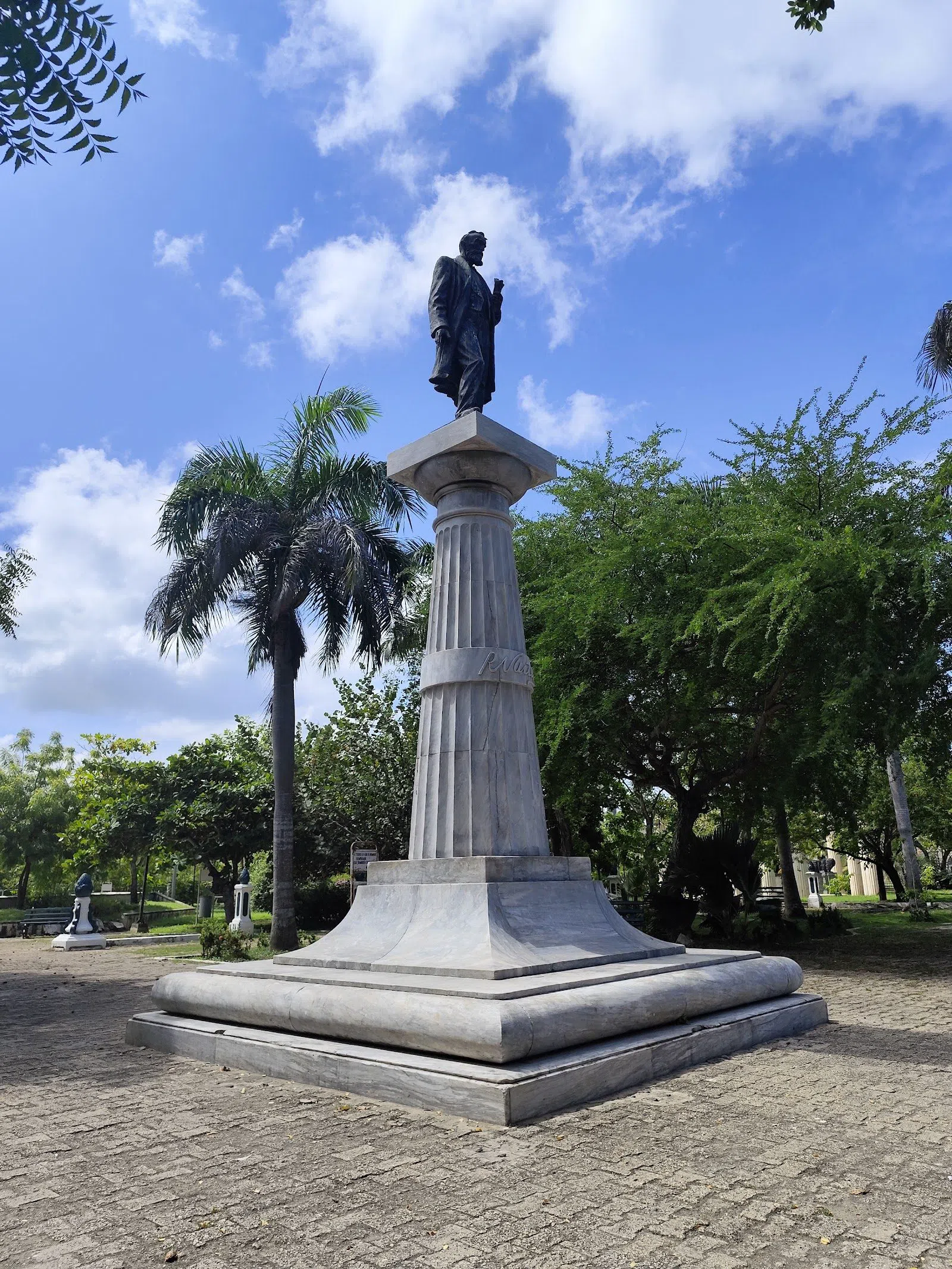
Parque Apolo, also written Parque El Cabrero, is the narrow green plaza that holds the two together. It opened in 1994, and nine bronze busts stand on white plinths along the shaded paths, among them Benkos Biohó and General Juan José Nieto. Tall palms, benches, a police post on the corner. Arrive before the museum opens and read the plinths while you wait; the nine of them take about five minutes, and the park is the obvious place to gather a walking party.
规划您的Cartagena之旅
实时价格,来自我们的预订合作伙伴。
许多客房可免费取消。您预订时,我们可能会获得佣金。
The ramparts and Las Bóvedas
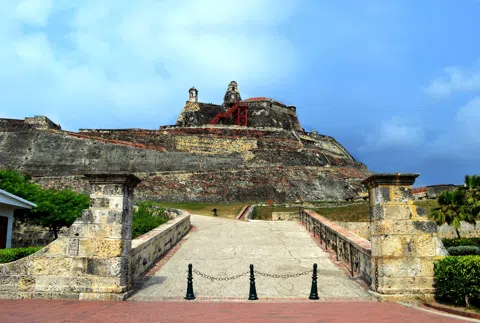
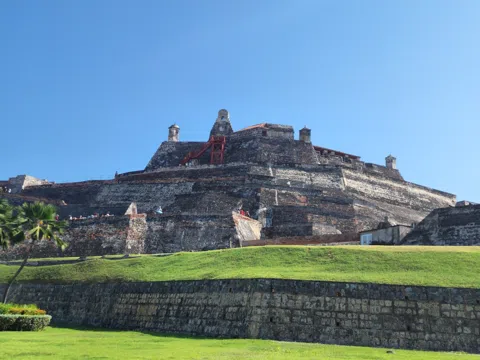
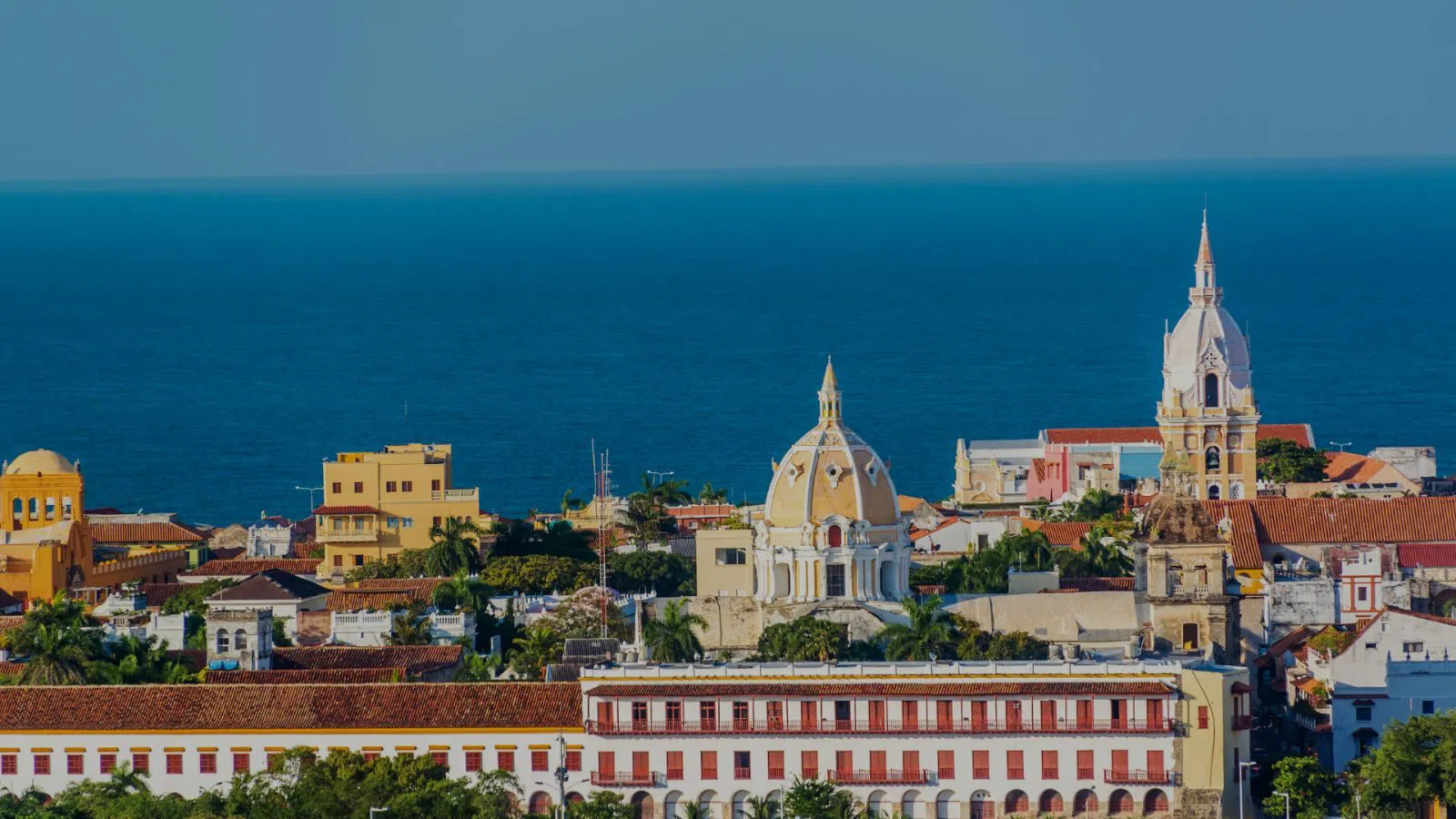
Espigón de la Tenaza and the Baluarte de Santa Catalina stand where the walled city gives way to El Cabrero. Antonio de Arévalo built the spur in 1779 to meet the sea head on, and it still does that: a low coral-stone rampart, a fortified jetty thrust straight out into the Caribbean, surf breaking white against the rock base, a domed sentry box on the corner and a vaulted troop tunnel running from the bastion out to the spur. Walking it is free, with no ticket, and at sunset it is the least crowded rampart in the city. The jetty is narrow and it gets wet. In heavy swell the waves come clean over the stone, and on those evenings stay up on the bastion.
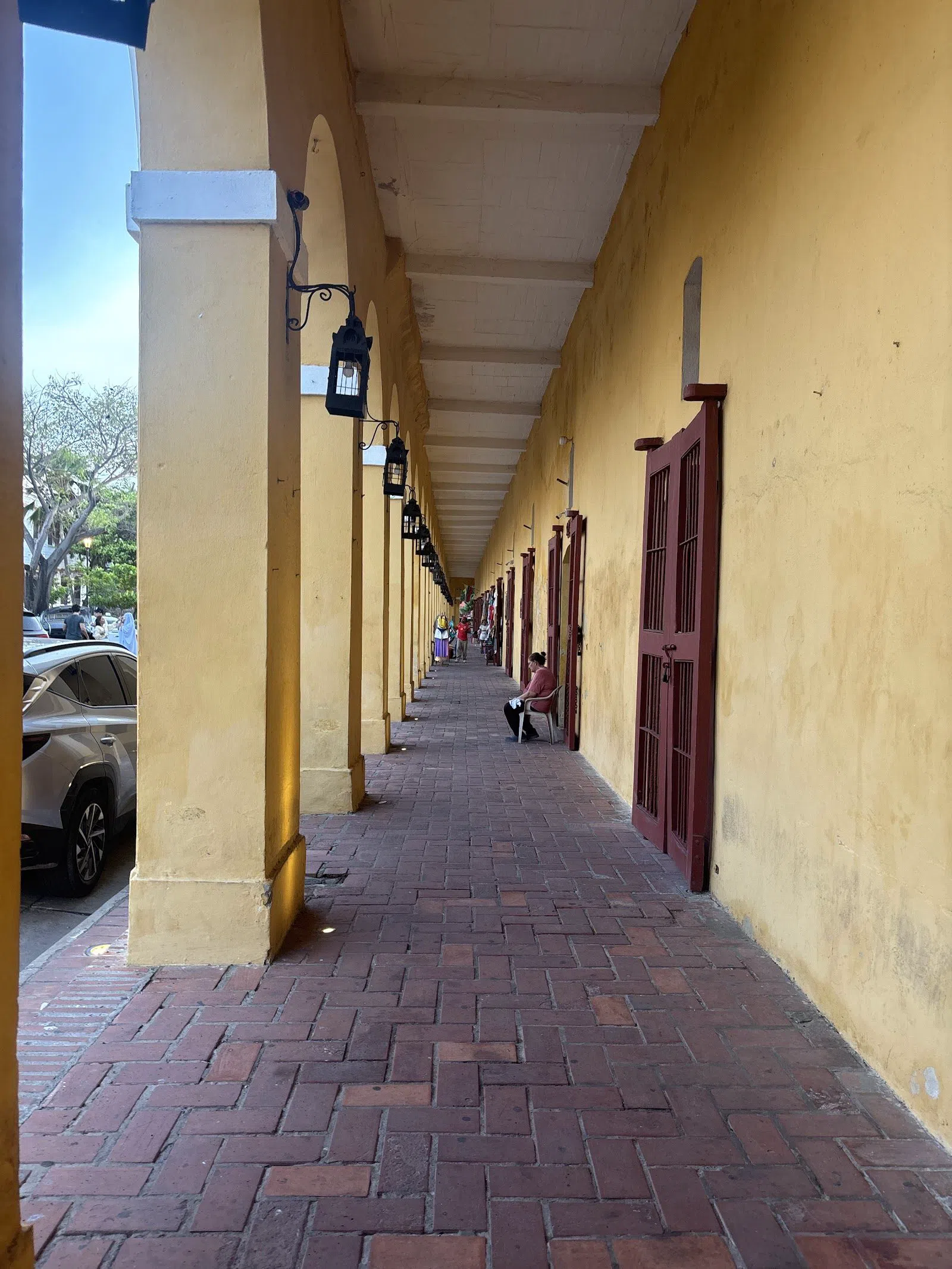
Las Bóvedas is a four-minute walk from Parque Apolo along the wall: 23 whitewashed barrel-vaulted alcoves behind 47 arches set into the ramparts, with a grass embankment above and a stone stair at the far end that climbs onto Santa Catalina. The vaults were built between 1789 and 1798 as powder stores, served later as damp prison cells, and now hold artisan shops, with hammocks and striped Wayuu mochilas hung across the openings. Mochilas and hammocks start at $60.000. The arcade itself charges nothing to walk into. Coach parties are the norm mid-morning, so shop early or late.
The beach and the 2026 coastal works
Playas de Marbella, also called Playa El Cabrero, runs behind Avenida Santander as a long grey-gold strip with the open Caribbean breaking straight onto it, rock groynes stepping out at intervals and mid-rise apartment blocks at your back. The pavement meets the sand without a step. Late afternoon, as the heat drops, is when the neighbourhood comes down to it.
A cold front in February 2026 brought swell of more than 4m and stripped much of the sand away, and the Defensa Costera 2050 works began in the Cabrero-Marbella sector in late October 2026, which means machinery, fencing and a narrower beach in places. The beach is public and nobody gates it. Chair-and-umbrella vendors will unfold a whole row for you, and a lounger with an umbrella runs $20.000 to $40.000. Agree the price before anyone unfolds anything.
Across the lagoon to the Plaza de Variedades
Timber and concrete boardwalks thread the black mangrove at Parque Espíritu del Manglar, and an elevated deck looks back across the Laguna del Cabrero to the walled-city skyline. That view is the best free one of the ramparts you will get from this side of the water. The Plaza de Variedades opened on the same ground on 20 February 2026, on 10,000 m² of what had been wasteground in Chambacú, facing El Cabrero across the lagoon. It has an open-air stage with tiered seating and light removable food kiosks, and theatre, live music and dance run at weekends with no door policy and no charge. The mangrove is under pressure from illegal clearing. Stay on the walkways.
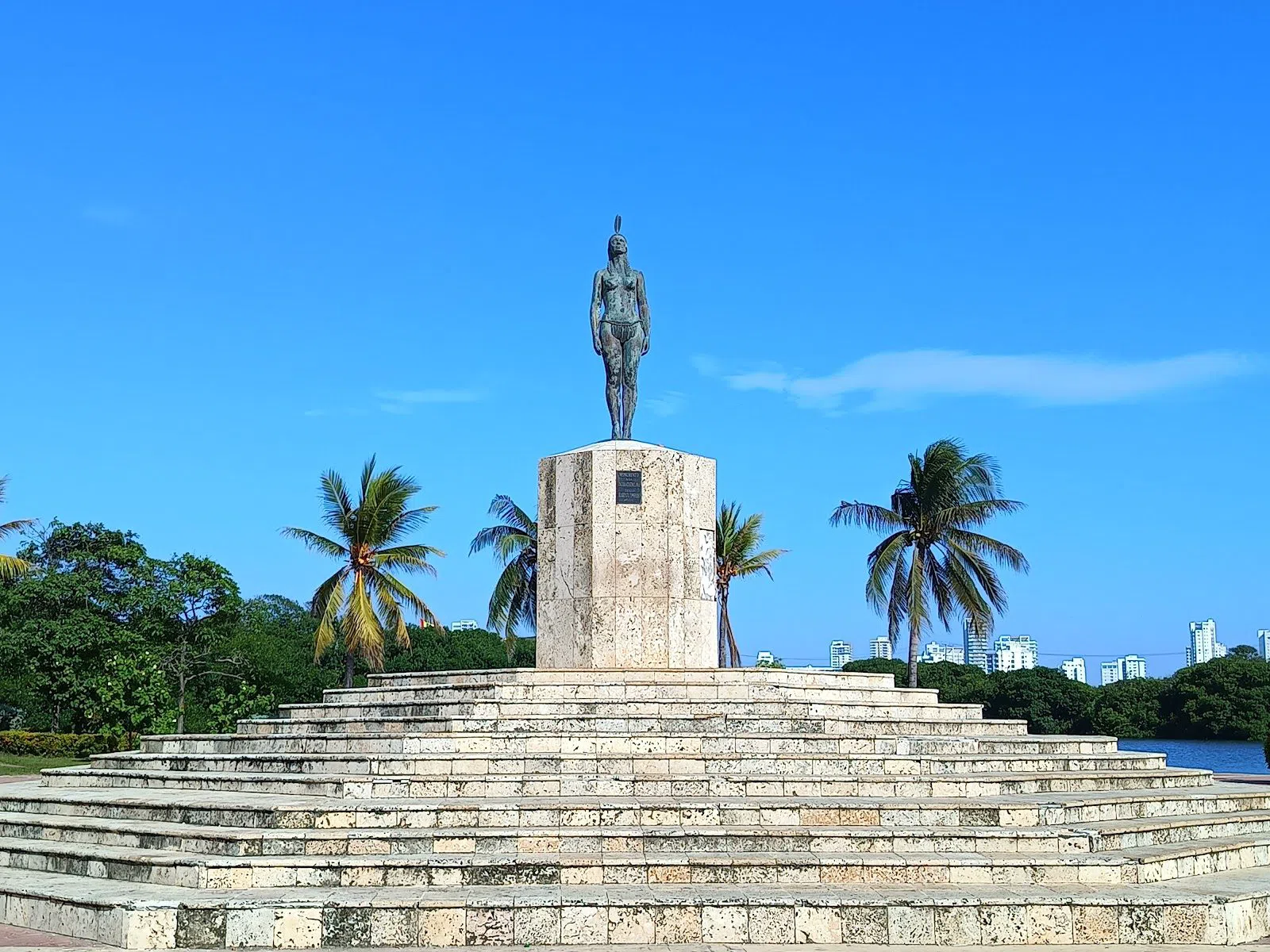
Monumento a la India Catalina stands at the Puente Heredia approach, at El Cabrero's southern gate, in the Nuevo Puerto Duro sector. Eladio Gil Zambrana cast the figure in 1974, an indigenous woman with one arm raised, the interpreter who worked for Pedro de Heredia. She had gone 15 years without care until a full restoration finished in July 2026, and the sector around her was reinaugurated in August, so the bronze is freshly re-patinated and the paving and planting at the plinth are new. It sits free and open on a busy road junction. Cross with care from the Cabrero side.
Eating on Calle Real and Avenida Santander
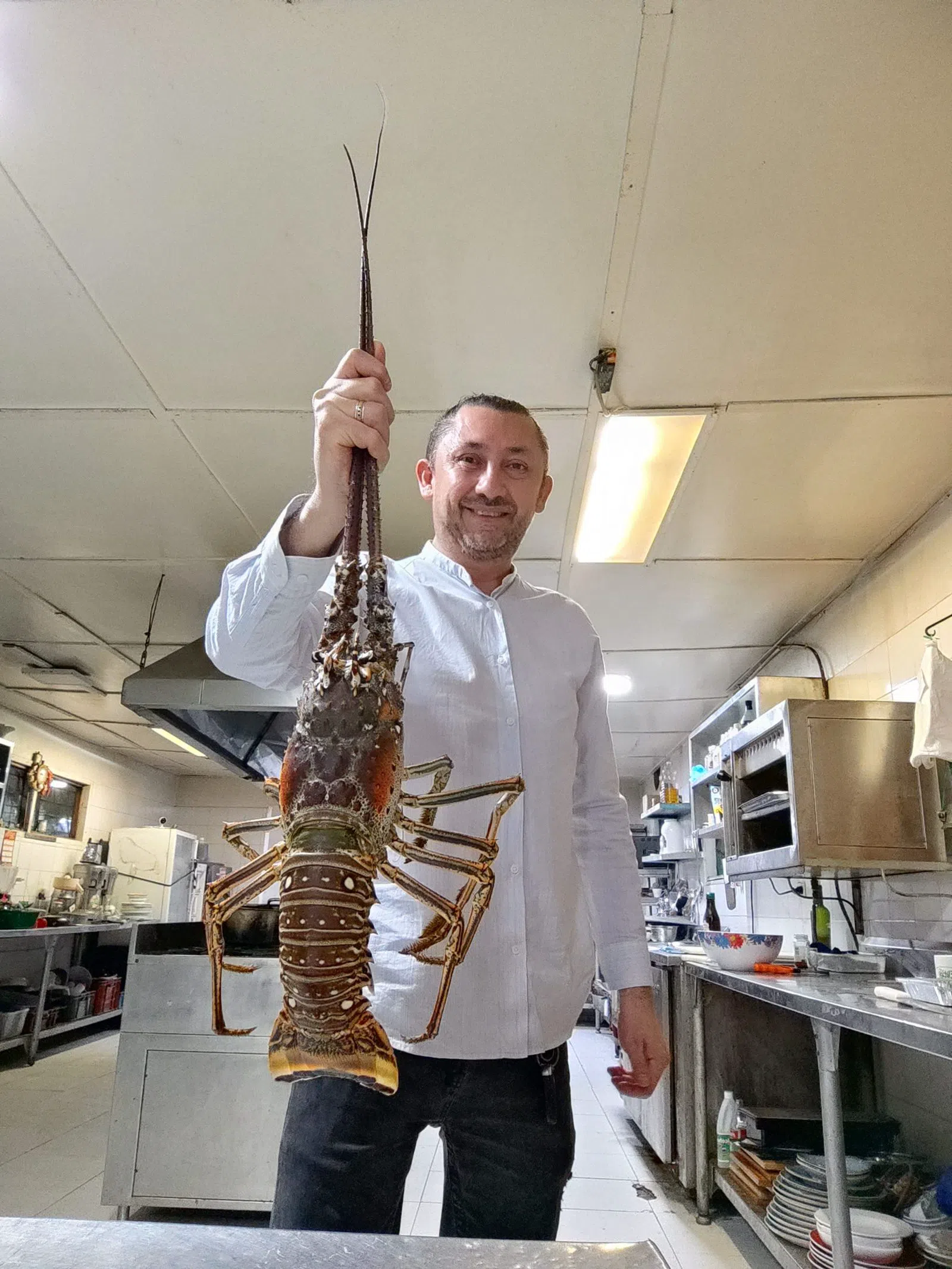
La Langosta Latina (Calle Real) is one of the city's long-running fish houses and the serious meal inside the barrio: an old-guard Cartagena dining room with white linen, dark timber, nautical prints and lobster medallions arriving on oval platters. Starters are $33.000 to $44.000 and fillets $64.000, which puts it in the $$$ band. It opens Tuesday to Saturday noon to 4:30 p.m. and 7 p.m. to 10 p.m., Sunday noon to 8 p.m., closed Mondays. Reservations are taken, and groups, events and weddings are part of the business; send a WhatsApp message for any table of more than six.
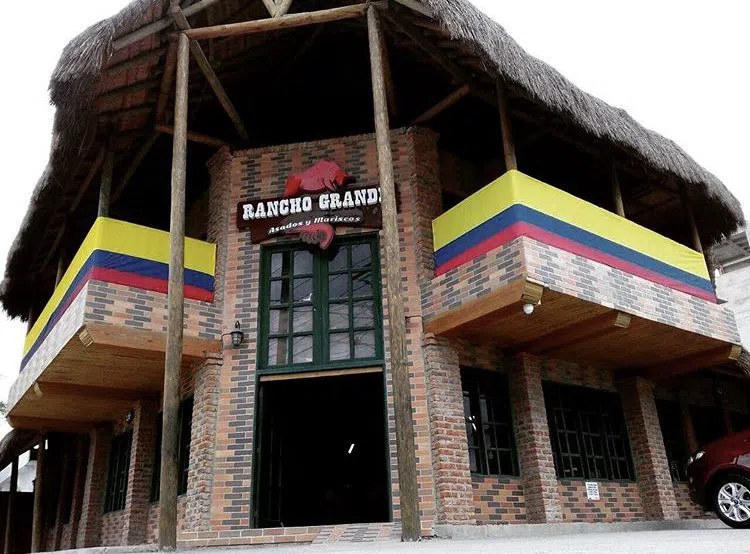
Rancho Grande Asados, Mariscos y Bar (Avenida Santander 41-224) grills meat and seafood with coastal seasoning in an open ranch-style room: timber posts, ceiling fans, a charcoal parrilla throwing smoke and a parking yard out front. Reckon on $40.000 to $60.000 a head, the $$ band. The long tables fill at weekend lunch, and nobody makes a fuss about a big booking.
Where to stay in El Cabrero
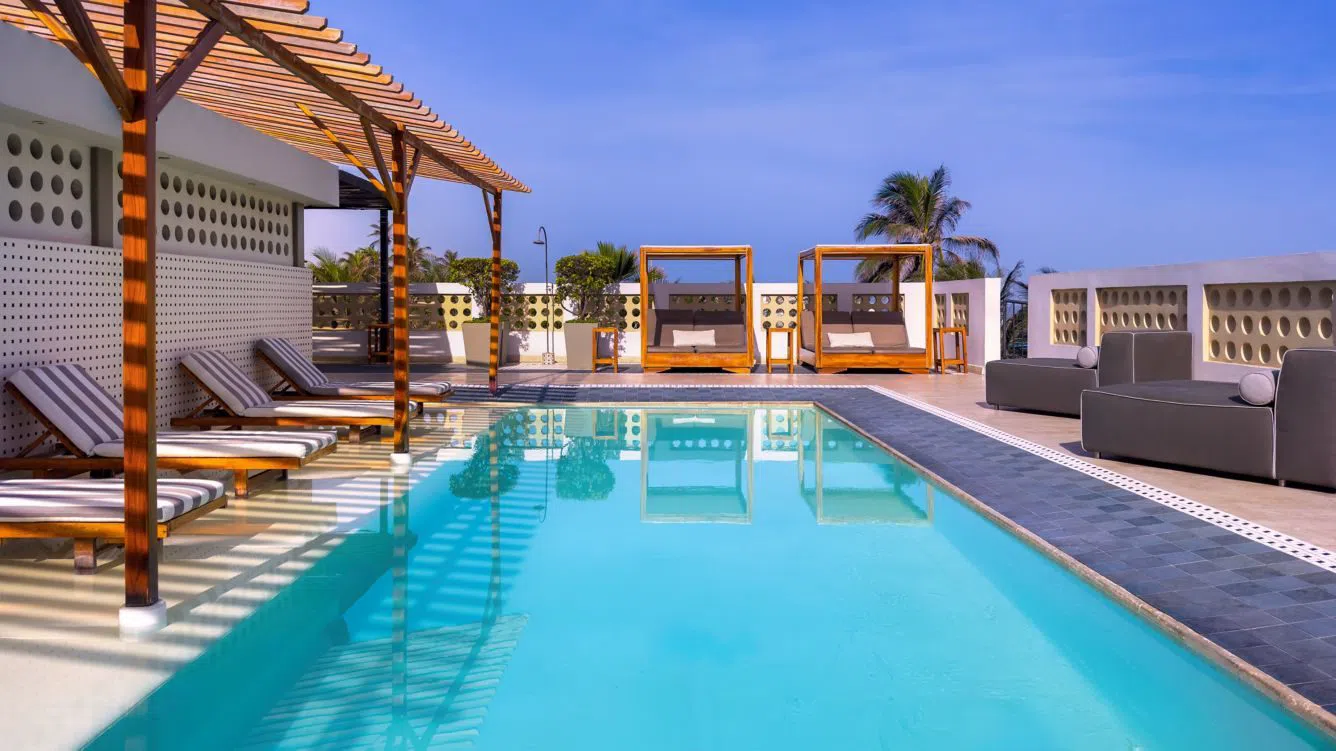
Ermita Cartagena, a Tribute Portfolio Hotel (Avenida Santander) is the neighbourhood's flagship and the easiest answer for a bed and a drink at once, at $$$$. The building is a clean white contemporary block facing the sea, with a third-level rooftop pool terrace, loungers and an open Caribbean horizon. Señora Ayda, the Middle Eastern-leaning restaurant, serves 11:30 a.m. to 10:30 p.m. daily and asks for smart casual. La Biblioteca Bar downstairs is a book-lined room for coffee and light plates. The Oasis Pool Bar runs on the roof until 7 p.m. Both bars are casual.
Hotel Agena Cabrero (Avenida Rafael Núñez) is the most characterful small stay inside the barrio, at $$. It has 12 individually named rooms across five types, quadruple and family among them, and several keep their original stone vault ceilings washed in warm indirect light. It is a quiet house with no pool and no kitchen, which leaves dinner to La Langosta Latina or Rancho Grande. Direct bookings take 5% off with the code DIRECTO, valid to 31 January 2027. Book direct and book early.
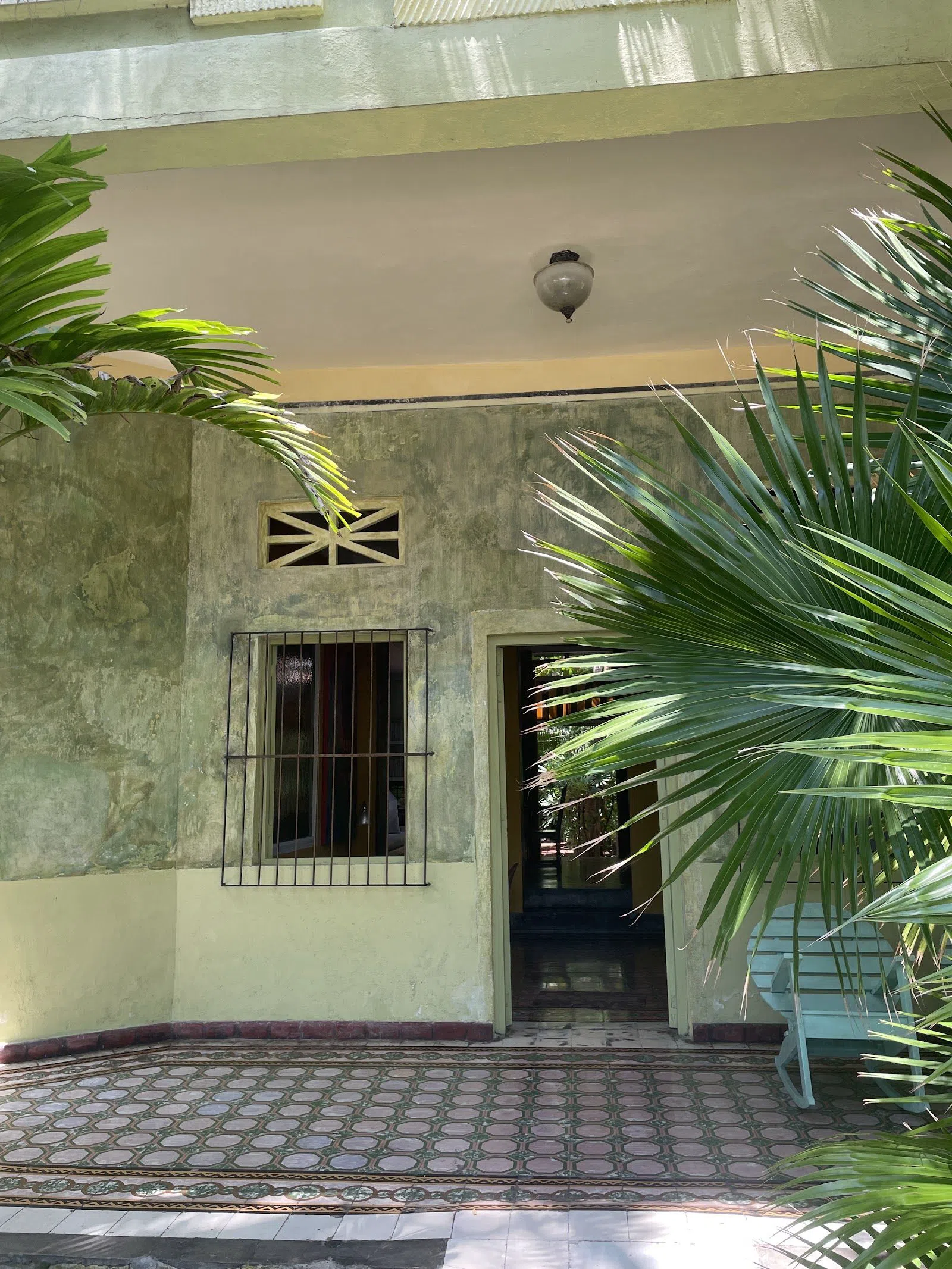
Casa Real del Cabrero by Soho (Carrera 2, Calle Real) is a restored house with a planted courtyard and shuttered windows on the same quiet street as the museum and the chapel, at $$, $340.000 a night. Free private parking off the street makes it the practical pick if you are driving.
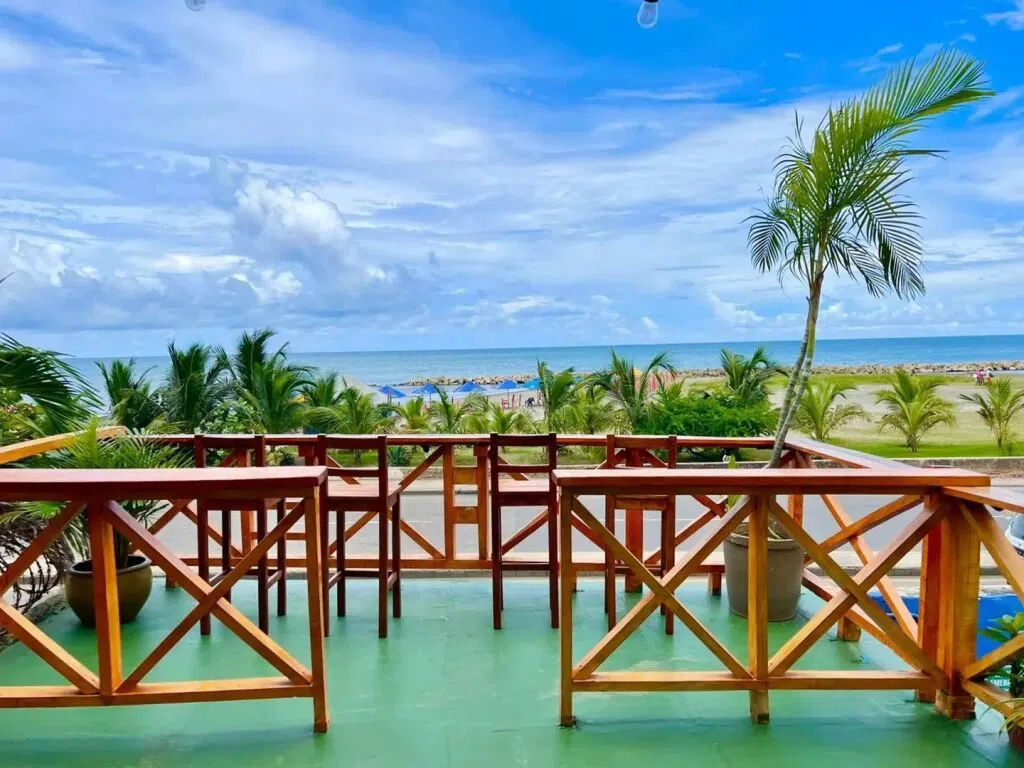
Casa Hotel Terraza del Cabrero is the cheapest credible bed in the barrio with its own beach access, at $. It is a plain beachfront casa with a gate straight onto the sand, family and private rooms and a large shared common room. The rooftop terrace is plastic chairs and sea views, and it is where you want to be at sunset.
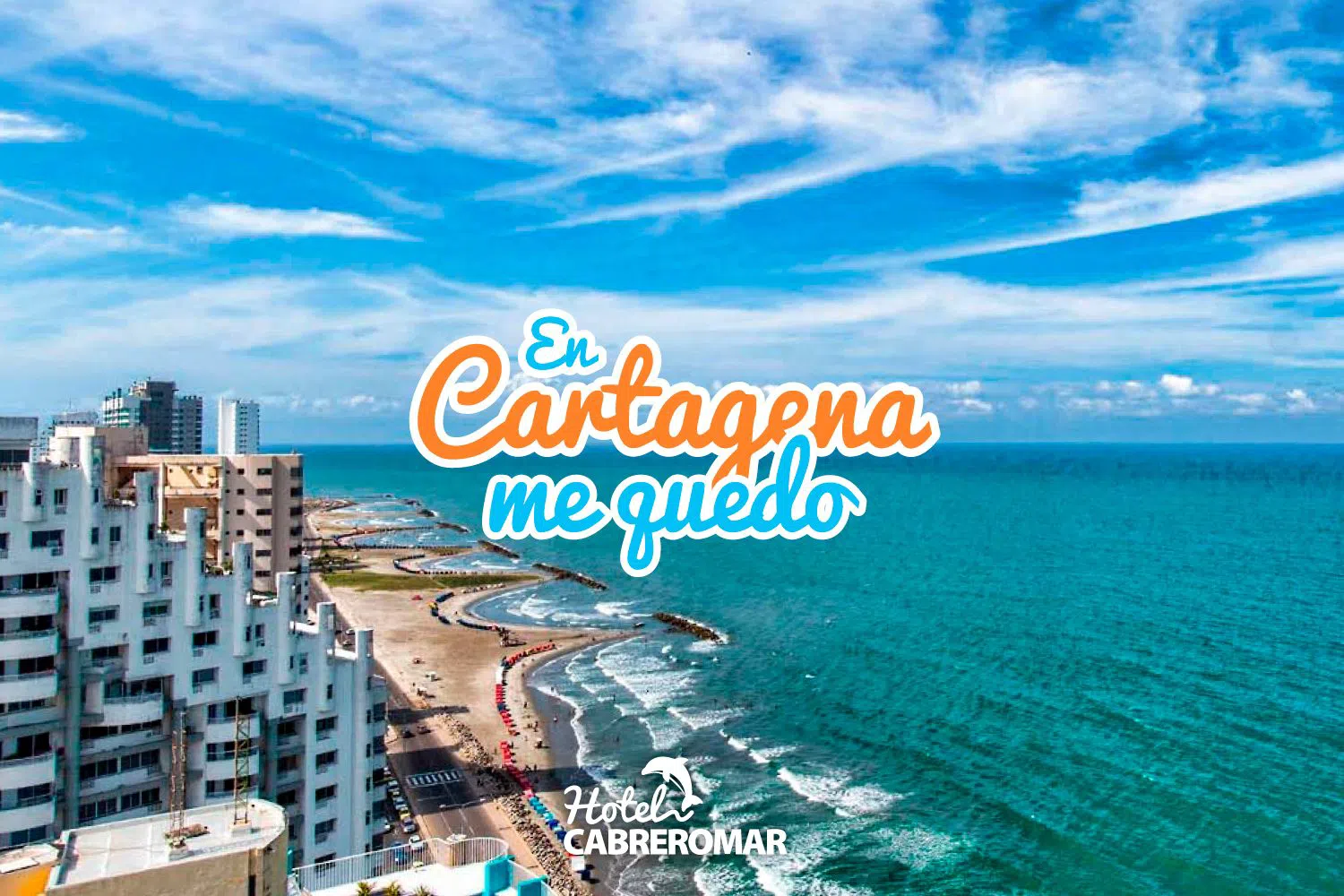
Hotel Cabrero Mar (Carrera 3 46B-83) is a three-star block at the Cabrero-Marbella edge, at $$, with apartsuite layouts, free parking, free WiFi and an outdoor hot tub. Its Terraza Marbella restaurant puts light Latin plates on an open terrace from 5 p.m. to 10:30 p.m., one of the few outdoor dinners in El Cabrero that is not a five-star hotel. Evenings only, and a table is worth reserving.
Practical notes
Both the Casa Museo Rafael Núñez and La Langosta Latina close on Mondays, and the restaurant takes larger bookings by WhatsApp. Expect fencing and machinery on the Marbella sand while the coastal-defence work runs, and stay off the Espigón in heavy swell.
See the Cartagena guide and the Cartagena hotel search.
出发之前
How much does the Casa Museo Rafael Núñez cost, and when is it open?
Entry is free. Open Tuesday to Friday 9 a.m. to 5 p.m., Saturday, Sunday and holidays 10 a.m. to 4 p.m., closed Monday. The rooms are tight, so a group of more than 12 should split up or ask the guard to stagger entry.
Can you still use the beach in El Cabrero in 2026?
Yes, it is public and there is no gate, but there is less sand than there was. A cold front in February 2026 brought swell of more than 4m and stripped much of it, and the Defensa Costera 2050 works reached the Cabrero-Marbella sector in late October 2026, so parts are fenced off, machinery is about and the strip is narrow. A vendor's lounger and umbrella runs $20.000 to $40.000; agree the price first.
Where do you eat in El Cabrero rather than in a hotel?
La Langosta Latina on Calle Real is the formal fish house: starters $33.000 to $44.000, fillets $64.000, open Tuesday to Saturday noon to 4:30 p.m. and 7 p.m. to 10 p.m., Sunday noon to 8 p.m., closed Monday. Rancho Grande at Avenida Santander 41-224 grills meat and seafood for $40.000 to $60.000 a head and has its own parking.
Which hotel suits a group or a family in El Cabrero?
Hotel Agena Cabrero has 12 rooms in five types, quadruple and family among them, and takes 5% off direct bookings with the code DIRECTO until 31 January 2027. Casa Hotel Terraza del Cabrero has family rooms, big common areas and its own gate onto the sand, at the cheapest price in the barrio. Hotel Cabrero Mar is laid out as apartsuites and parking is free.
What is worth seeing besides the museum?
The Ermita del Cabrero, the 1885 neo-Gothic chapel where Núñez and his wife lie in twin mausoleums; Parque Apolo with its nine busts; the rampart walk along the Espigón de la Tenaza and the Baluarte de Santa Catalina; Las Bóvedas, four minutes along the wall from Parque Apolo; the restored India Catalina bronze at the Puente Heredia approach; and the Plaza de Variedades across the lagoon, open since 20 February 2026 with free weekend programming.