
The boats leave before the heat does. At twenty past eight the pier at La Bodeguita smells of diesel and wet rope, a few hundred people are counting out notes for taxes nobody warned them about, and out past the breakwater the water has gone the colour of bottle glass. Seven hours later you come back salt-stiff and sunburnt in one unflattering stripe, half-convinced the archipelago deserved longer than a day. That is roughly the honest verdict on the Rosario Islands, and the reason it pays to plan this day rather than buy the first version of it offered to you in the street.
What you are actually visiting
The Rosario archipelago is a scatter of low coral islands, mangrove fringes and sandbars sitting in shallow water about an hour south-west of the city by fast boat. There is no town out there, no road, no promenade. There are jetties, a handful of hotels on private land, canoe channels cut through mangrove, and reef in the gaps between the islands.
Water, coral and most of the sand all lie inside Parque Nacional Natural Corales del Rosario y de San Bernardo (offshore, reachable only by boat from Cartagena), and that single fact shapes your whole day. The park is the legal frame: it admits groups only through operators it has authorised, it requires boats to leave from La Bodeguita or a registered marina, and it makes every visitor register and sit a short mandatory induction before entry. Park entry for the Rosario sector is COP 13,500, with a compulsory tourist insurance component of around COP 8,800 on top. Both are cash.
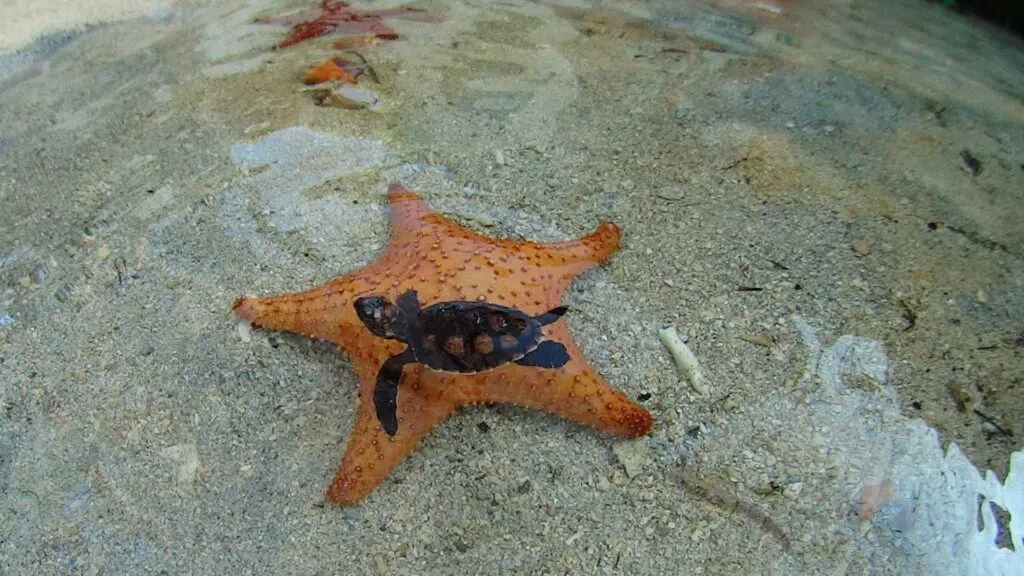
The induction is not theatre. Park bylaws ban touching or standing on coral, taking shells or starfish, single-use plastics and loud music, which is why a well-run boat feels calmer than the party boats you can hear coming from half a kilometre away. If a crew hands you a starfish to hold for a photograph, you are on the wrong boat, and you can say so. The city end of the trip, including where to stay and what to do with the evening you come back to, sits in our Cartagena guide.
Cash, the 8.30 window and the fee nobody quotes
Almost every ruined island day starts on land. The Muelle Turístico de La Bodeguita (Centro, hard against the old city walls) is built for groups, and under the maritime authority's rules it and the registered nautical clubs and marinas are the only legally authorised departure points. A boat loading off an unregistered beach is a boat to walk away from.
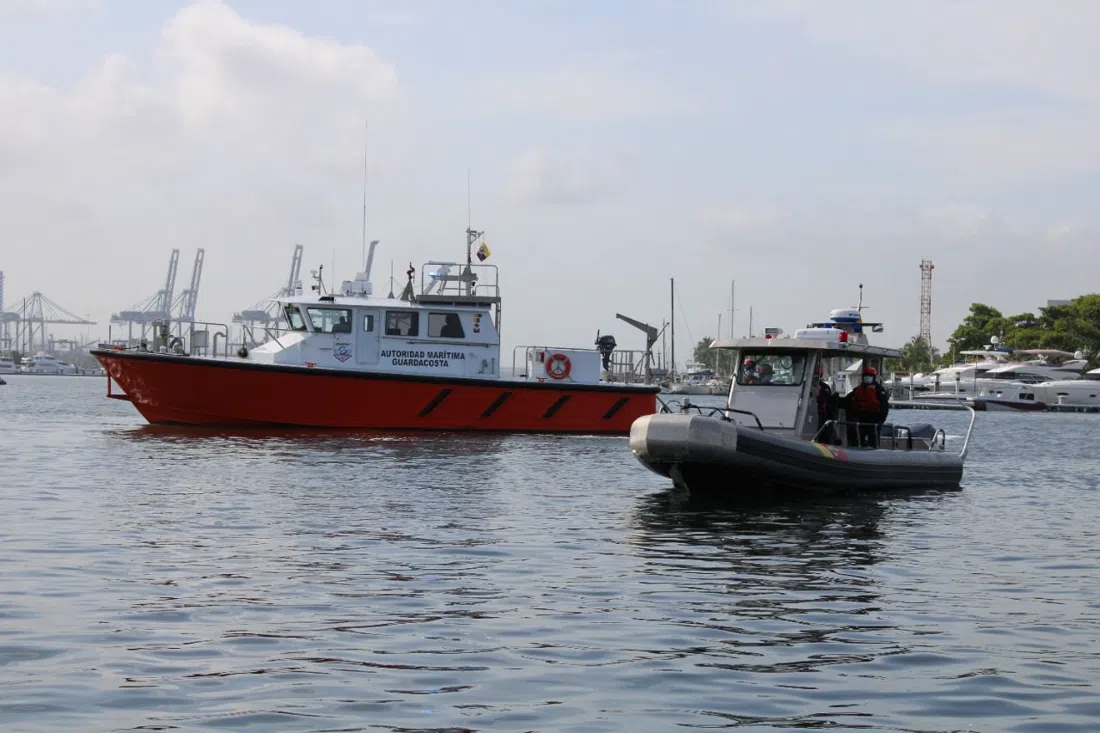
Two things catch people out. First, the zarpe, or port tax, is COP 31,500 per person, plus the insurance component, paid in cash at the gate, and it is almost never included in the price you were quoted. Card payment at the pier is unreliable; bring the exact money in small notes and you will be through in minutes rather than arguing at a window while your boat loads. Second, the timing is tight. Registration runs in a narrow window between 8:30 and 8:45am, and boats cast off between 9:00 and 9:30. There is no second sailing to catch. Be at the gate by 8:15 with your passport or ID and your cash already counted.
How the day unfolds
A standard island-hopping day is about seven hours door to door. The crossing is 45 minutes to an hour in an open speedboat with bench seats, and it is a physical experience rather than a cruise. The hull slams, the spray comes over the bow, conversation stops. Sit mid-boat if your back or neck is delicate, and keep phones and documents in something genuinely waterproof rather than a plastic bag you trust.
Once inside the park the day usually breaks into a snorkel stop over shallow reef, a museum-style stop, lunch somewhere with a jetty, and a stretch of beach time before the run home in mid-afternoon. The snorkelling is honest rather than spectacular: warm, shallow, fish in real numbers, and visibility that depends on how much wind and rain the coast has had in the previous days. Mornings are reliably clearer than afternoons, which is one more argument for the early departure.
These full-day runs operate seven days a week and start from around 70 USD per person before the park and port fees, and they carry 10,631 traveller reviews between them, with the most-booked option sitting at 4.8 out of 5 from 6,521 reviews. Book ahead if your dates are fixed, not out of panic but because the morning you want is the only one that day.
The Oceanario and the dolphin question
The Oceanario Islas del Rosario (CEINER) (Isla San Martín de Pajarales) is the archipelago's only museum-style attraction and the default stop on hopping itineraries, which means you move through it with your boat's party rather than at your own pace. It holds around 1,400 animals across 140 species and works as a marine research centre as well as an aquarium. Entry is COP 40,000 for adults and COP 30,000 for children aged 2 to 10, paid at the gate; a dolphin photo or swim adds roughly COP 50,000 or more.
Be clear about what that last line means. The Oceanario still keeps performing dolphins and runs shows, and plenty of international visitors will want nothing to do with it on welfare grounds. You are entitled to skip it. Stay on the jetty, swim off the boat, read in the shade; no reputable crew will make a problem of it. If you are travelling with children who have strong feelings about captive animals, decide this before you board, not at the ticket window.
The quietest hour out there
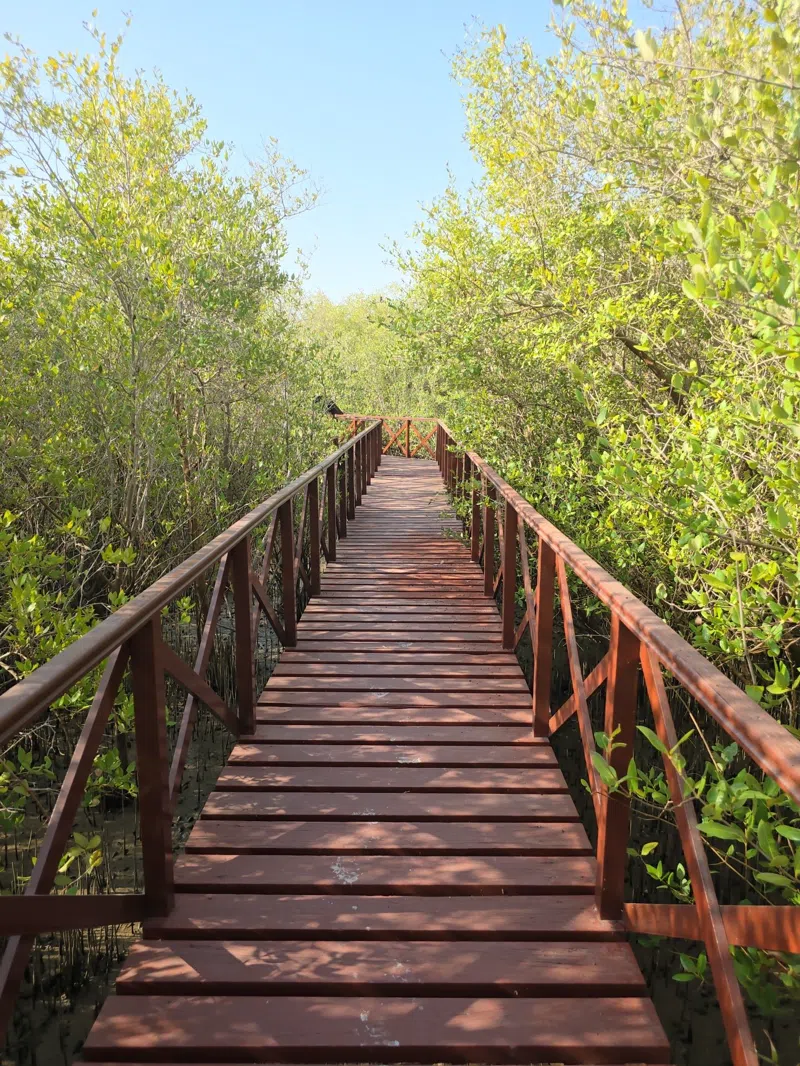
The best thing on Isla Grande is not a beach. The Isla Grande mangrove tunnels (Isla Grande) are a network of narrow channels paddled in canoes with local guides, usually as a 60-minute run, at roughly COP 50,000 to 100,000 per person or bundled into the upper tiers of some hotel day passes. Motors cannot follow you in. The sound drops to paddle-drip, birds and the creak of roots, and the light comes through in slices.
It only works in small groups, and the channels enforce that for you. It is the obvious antidote if you have found the speedboat day too loud. If you do one paid extra out there, do this one rather than the dolphin photo.
Day passes and how much quiet they buy
If the hopping format sounds exhausting, buy a single island instead. A day pass puts you on one property with lunch and a boat transfer included, and the price ladder is a ladder of crowd levels.
Hotel San Pedro de Majagua (Isla Grande, with a shared boat transfer from a private dock in Manga) is the most polished pass actually in the Rosario islands rather than on the Barú coast. Tiered plans (fish, lobster, seafood grill) run roughly 110 to 200 USD with transfer and lunch, the boat returns around 3:00pm, and it takes group reservations and events without strain. The advantage is two beaches: one with a bar and music, one effectively silent, so a mixed group can split rather than compromise. The mangrove canoe run is bundled into its top tier.
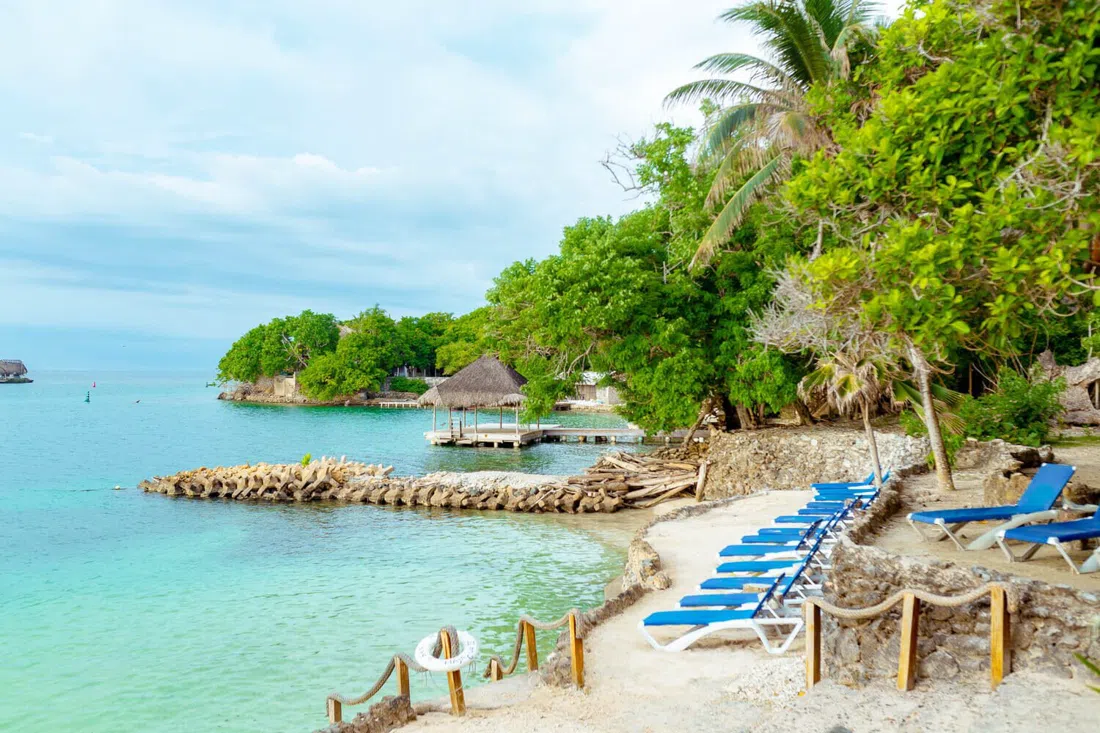
Hotel Rosario de Mar by Tequendama (Rosario archipelago) is the workable mid-range choice for larger parties, with free boat transport, an à la carte restaurant and two plans, a classic pass or one with a two-hour open-bar window, at roughly 90 to 150 USD. One warning worth more than the price: this is the property long sold under an older name, and that old domain has lapsed into an unrelated gambling site. Search for the current name only, and ignore any guide or listing still pointing you at the dead address.
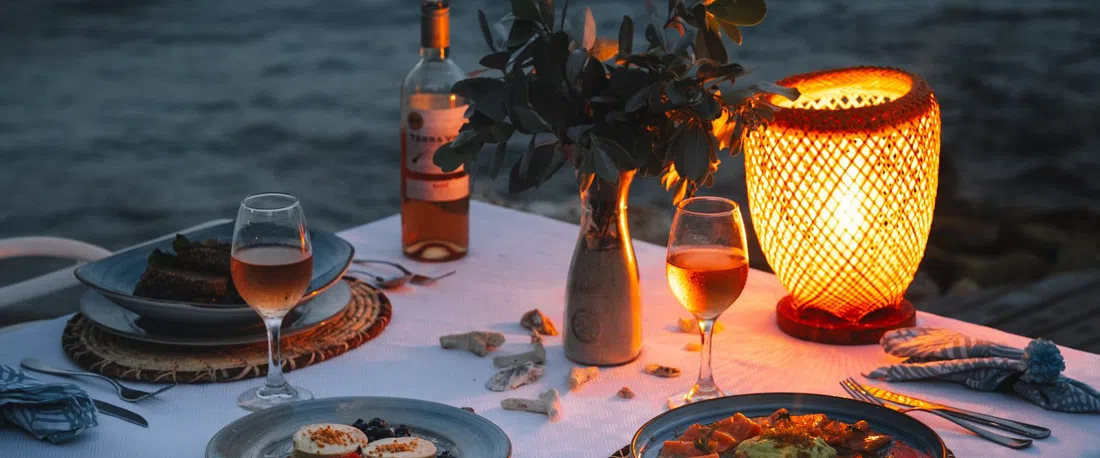
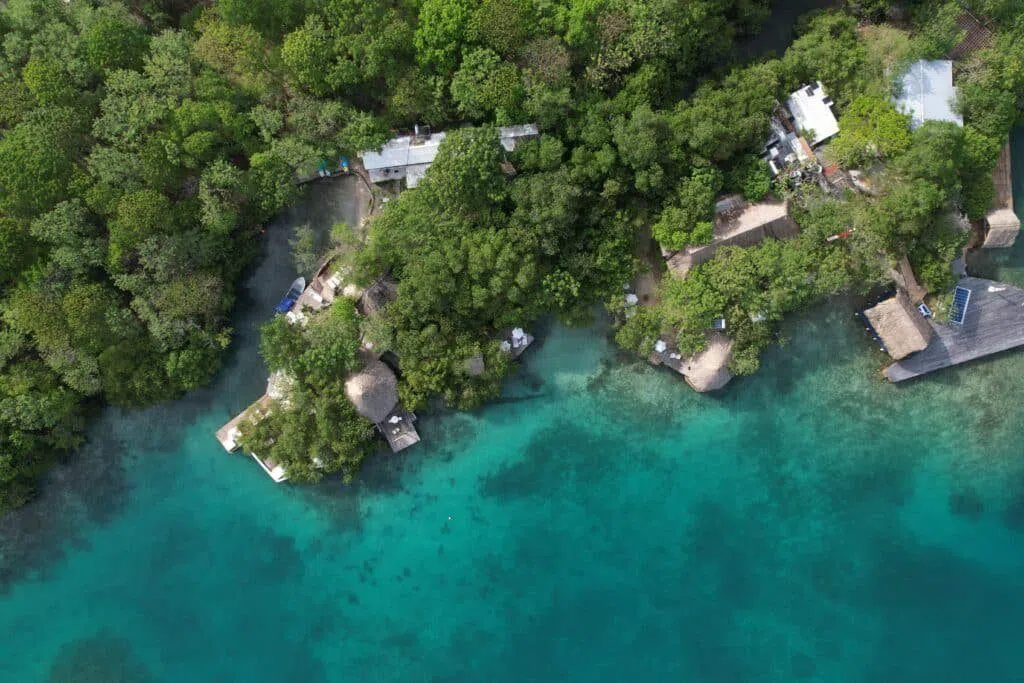
Coralina Island (Rosario archipelago, about an hour out) is the answer for readers whose real fear is crowds. Capacity is capped deliberately, it takes small groups and whole-island buyouts up to 19 guests, and walk-ups are not a thing: you book or you do not come. Passes run around 180 to 360 USD depending on tier, with massage, open bar or a private boat attached at the top. That is roughly triple a standard island day, and what you are buying is the absence of other people.
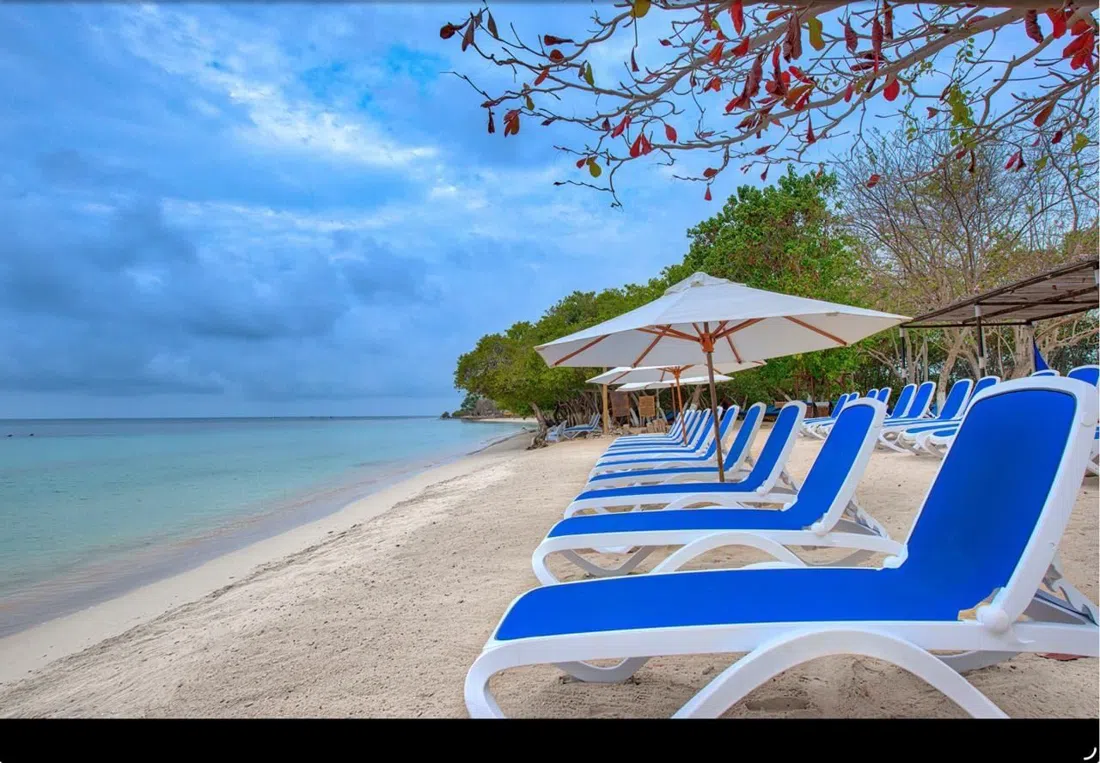
Hotel Isla del Encanto (Barú) is the family pick. Hotel pickups from Bocagrande, Centro and Zona Norte start at 8:00am, lunch is a buffet, and because Barú is road-connected you can arrive by land instead of by hull-slamming speedboat. The standard plan sits around COP 420,000, the gold plan with open bar higher, with port fees of about COP 40,000 in cash on top. It is a gated private beach with no roaming vendors and water flat enough for weak swimmers. Barú is not the Rosario islands proper, so if seeing the archipelago is the point, this is not it.
Playa Blanca and what the postcard crops out
Playa Blanca (Barú) is the image that sells this coast and the most oversold stop on it. There is no door policy at all, which is exactly the problem by midday: every pasadía, bus and boat aims at the same strip of sand. A road-based pasadía starts from around COP 65,000 plus the roughly COP 8,800 insurance; arriving by boat adds COP 17,000 to 31,500 in pier and park fees.
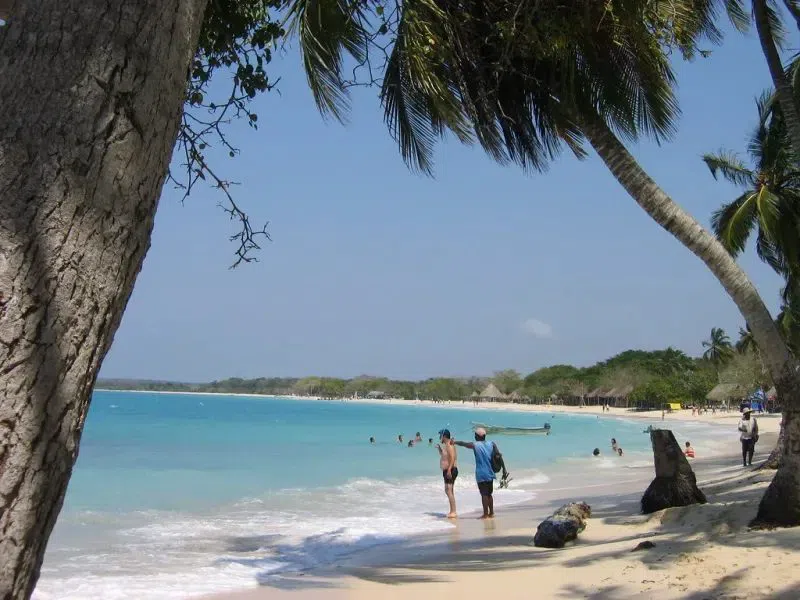
Beaches across the district are legally usable only from 6am to 6pm. Playa Blanca has been closed before on reaching capacity, so a plan that depends on it is a plan with a failure mode. And chair and umbrella prices are not posted, so agree the number out loud before you sit down, or you will be negotiating from a sun lounger you have already committed to. The only way to see the place calm is to arrive early or to stay the night and have the sand to yourself once the day boats leave.
Is it worth a whole day
Yes, provided you choose the right format. The hopping tour suits first-timers and anyone who wants to see several islands, snorkel once and be fed, and who does not mind spending two hours of the day in a boat. A day pass suits couples, families and anyone whose idea of a good day is one beach, one lunch and no further decisions. Coralina or a mangrove morning suits people who came for quiet and will resent paying for noise.
Skip the trip entirely if you are prone to seasickness and the wind is up, if you have only one full day in the city and have not yet seen the walled town, or if your mental image is an empty white beach. That version of the Caribbean exists out here, but it costs either money or an overnight stay, not a 70-dollar ticket.
Best time to go
Time of day matters more than season. The reef reads best in the morning, when the water is glassiest and the light is still coming down rather than across, and the boats that leave on the 9:00 to 9:30 window get the clear hour. By early afternoon the wind has usually got up, the surface has chopped, and the return crossing is wetter and harder than the outbound one.
By day of the week, go midweek. Weekends and Colombian public holidays load every pier and every beach at once, and this is the difference between a reef stop with three boats on it and a reef stop with a dozen. Across the year, the December-to-March trade winds give you the driest skies and the bumpiest crossings; the wetter stretch around September to November brings short heavy showers but frequently calmer, clearer mornings, which is a genuinely good trade for snorkelling. Tours run seven days a week year-round, so the binding constraint is the weather on your specific morning, not the calendar. If you have two possible days, hold the decision until the night before and pick the one with less wind.
Before you go
Transport. For the archipelago proper, you need a boat from Muelle Turístico de La Bodeguita or a registered marina. Nothing else is legal. For Barú properties, road transfer is an option and spares you the crossing. Day passes with their own private docks, including Majagua's dock in Manga, tell you where to be when you book; confirm the pickup point the day before.
Cash. Bring more than you think, in small notes: COP 31,500 zarpe, COP 13,500 park entry, about COP 8,800 insurance, plus COP 40,000 if you plan to enter the Oceanario and COP 50,000 to 100,000 if you want the mangrove canoe. Card readers at piers and island kiosks fail often enough to plan around.
Timing. At the pier by 8:15, registered by 8:45, back on the mainland mid-to-late afternoon. Day-pass boats typically return around 3:00pm.
Budget. A hopping day runs from around 70 USD per person before fees; a mid-range island pass lands roughly 90 to 150 USD all in; the quietest private-island tiers climb to 360 USD; the cheapest honest version of the day is a road pasadía from around COP 65,000 and low expectations about company on the sand.
Stay. If you want the archipelago without the clock, go out on a late boat and come back on an early one the next morning. Island rooms are limited and book out long before city rooms do. For the mainland base, start with our Cartagena hotel search and pick somewhere walkable to the pier.