Speciale Cartagena
Santo Domingo church in Cartagena opens around mass
Cartagena's oldest church has no ticket desk and no booking system. Whether you get through the door at all depends on the mass schedule.
Di Sanne VermeerWalls, courtyards and the slower Cartagena

Cartagena's oldest church keeps no ticket desk and no booking system. Work on the Iglesia de Santo Domingo began in the 1570s and the temple was finished in 1630, and it is effectively open only around mass. On a Tuesday that means 11:00 and 17:00.
What you see inside Santo Domingo
Iglesia de Santo Domingo (Plaza de Santo Domingo) has a squat ochre facade of coral stone and a stubby truncated bell tower that visibly leans. You can see the lean from the plaza without looking for it.
Inside is a single barrel-vaulted nave. The baroque altar of gilded marble at the end holds the Virgen del Rosario, crowned in gold and emeralds. A dark 19th-century carved wooden Christ stands in the same room.
Entry is free, though a donation box and nuns at the door invite a small contribution.
Organizza il tuo viaggio a Cartagena
Prezzi in tempo reale dai nostri partner di prenotazione.
Cancellazione gratuita su molte camere. Potremmo ricevere una commissione quando prenoti.
Best time to go
Monday has four masses: 06:30, 09:00, 11:00 and 17:00. Tuesday to Friday run 11:00 and 17:00. Saturday has 17:00 only. Sunday has 11:00 and 17:00. Plan your arrival around one of those times; a mid-afternoon visit leaves you looking at the facade from the square.
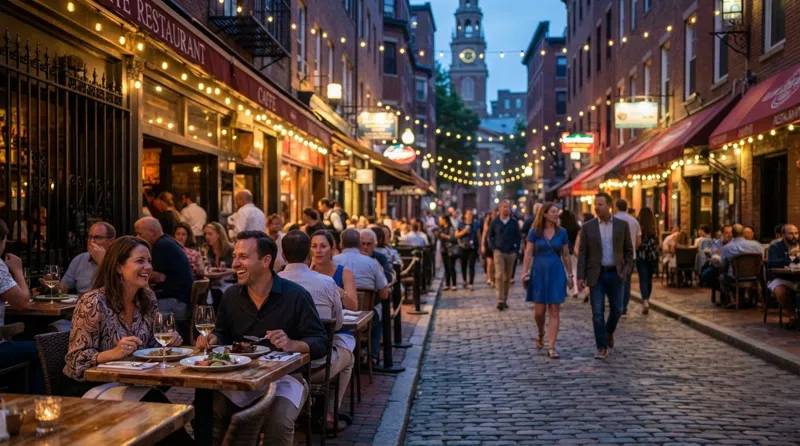
The plaza is the walled city's nightlife hub. Come early in the morning if you want the church facade without a crowd in the frame.
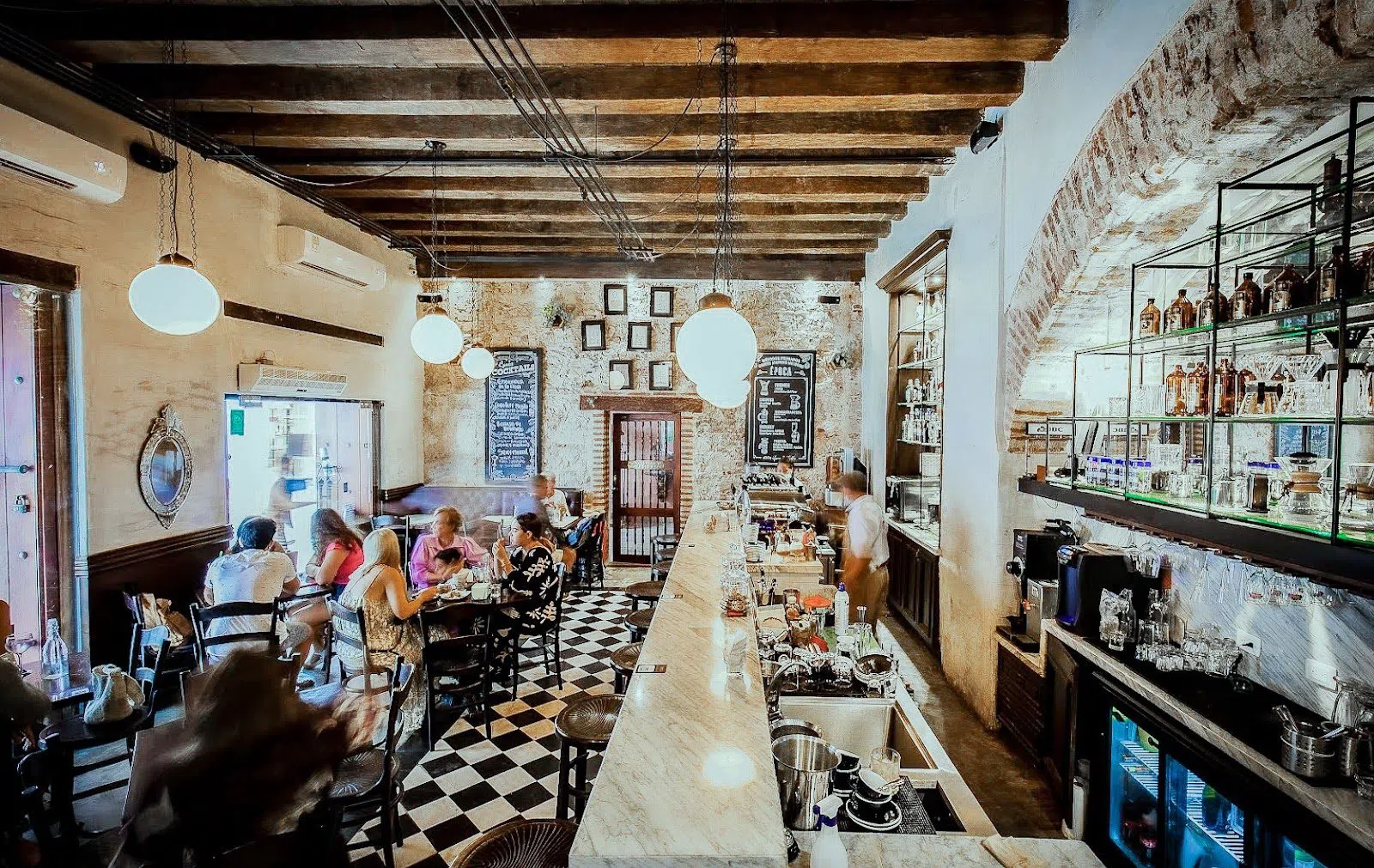
Época Café Bar (Cra. 5 #34-52), two minutes away, opens at 07:00 and suits the cool, well-lit hour before the first mass. It closes at 17:30 Monday to Wednesday and 22:00 Thursday to Saturday, and it roasts coffee from eight small Colombian farms. The room is small, with a patterned tile floor, the roaster and brew bar on show, and antique mirrors and ceiling fans over small marble-topped tables. Walk-in only, no bookings. $$.
Getting in and the rules at the door
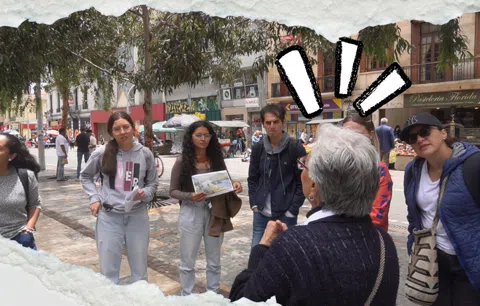
Walk in. Walking-tour groups stop here constantly, and the guides brief outside and send people into the nave a few at a time. During mass, groups are expected to stay silent and clear the nave.
Guided walks of the walled city run seven days a week and book up steadily, so reserve ahead if your dates are fixed.
The cloister beside the church

Claustro de Santo Domingo (Plaza de Santo Domingo), now the Centro de Formación de la Cooperación Española, is the convent attached to the church and the single most overlooked thing on this plaza. Spain's AECID restored it between 1999 and 2004, and it reopened on 21 February 2004 with 7,700 m² of exhibition hall, site museum and library. It is one of FICCI's main venues. The public gets in free for exhibitions and events.
Two storeys of whitewashed colonial arcade run round a bright patio, ten-metre arcades on square stone piers, with palms, wooden shutters and a flagstone floor. The courtyard doubles as a working training venue and is sometimes closed for sessions.
Gertrudis and the plaza tables
Plaza de Santo Domingo holds Botero's reclining bronze nude, Gertrudis, rubbed shiny on the breast and foot by decades of hands. The 650kg figure was shipped in 2000 as the artist's gift. Local lore says touching it brings luck in love.
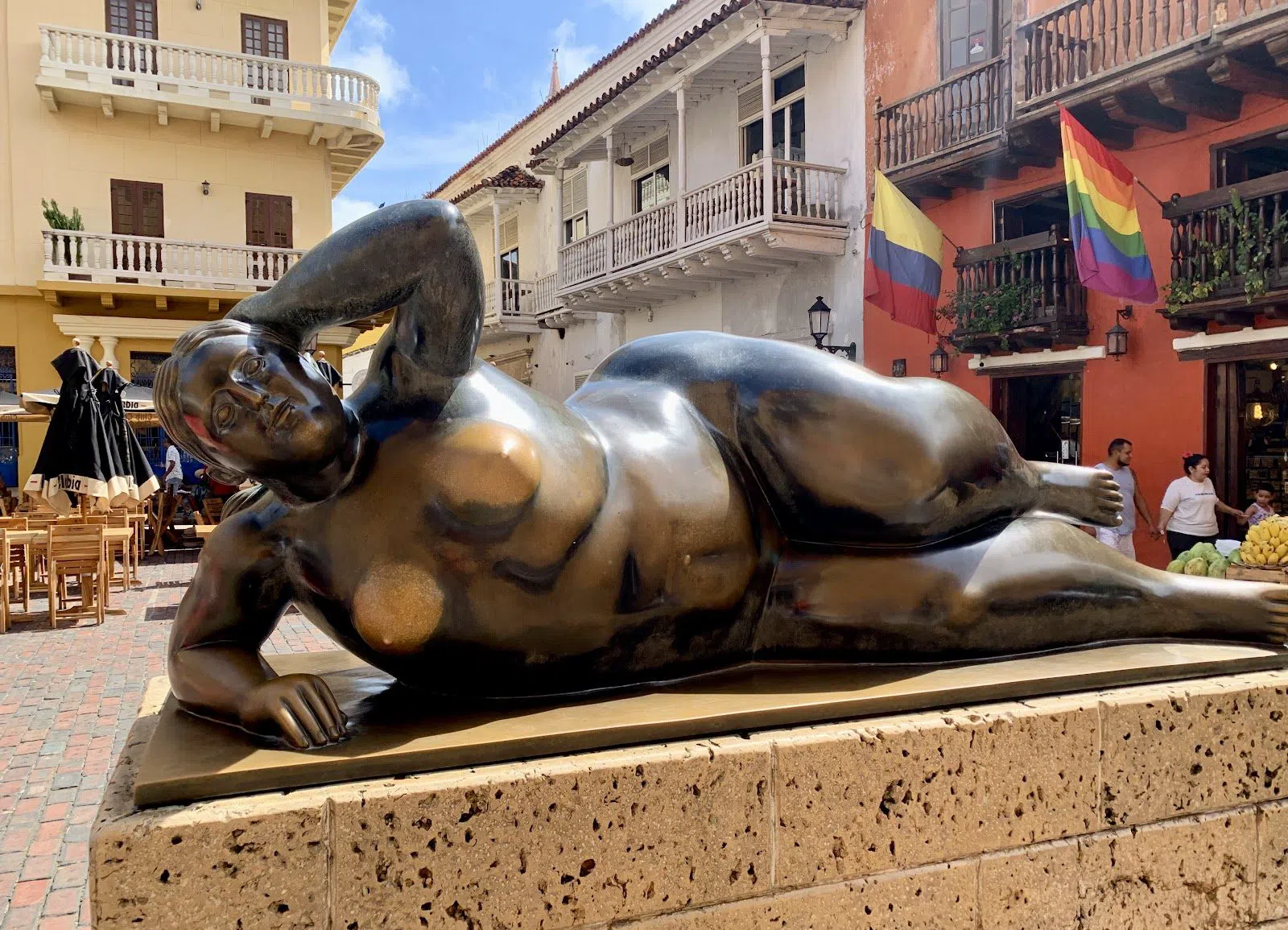
White-parasol cafe tables ring the square against the church's rough stone flank, with bougainvillea dripping from the balconies above. The plaza itself is free to stand in. Its tables sit in the $$$ band, a steep location premium over the streets one block away, and waiters compete hard for them and will push menus at you.
Is it worth going
It suits a traveller willing to shape an hour around a mass time. The church is one room and costs nothing, and the cloister next door carries the other half of the site.
The bastion behind the church
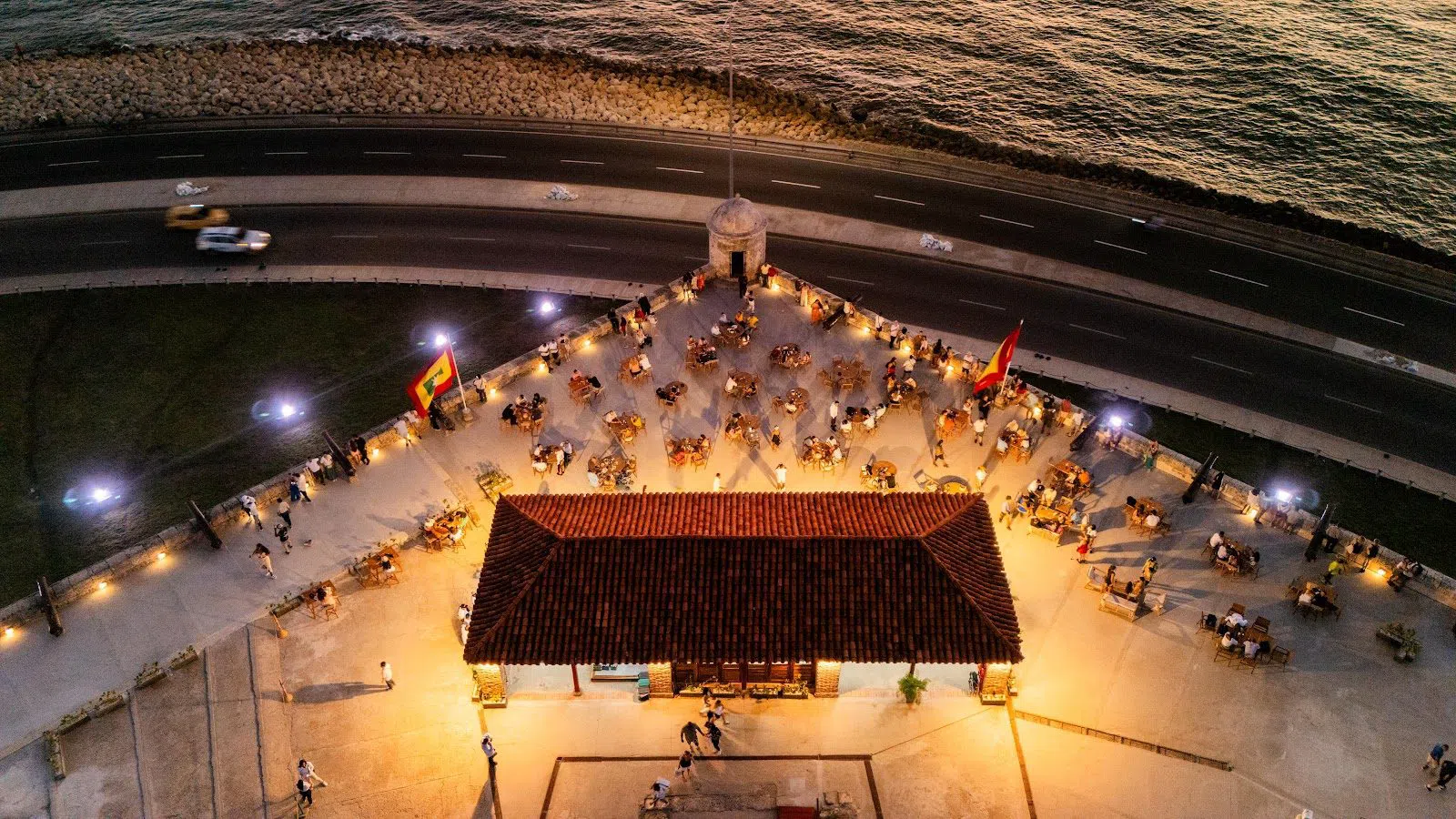
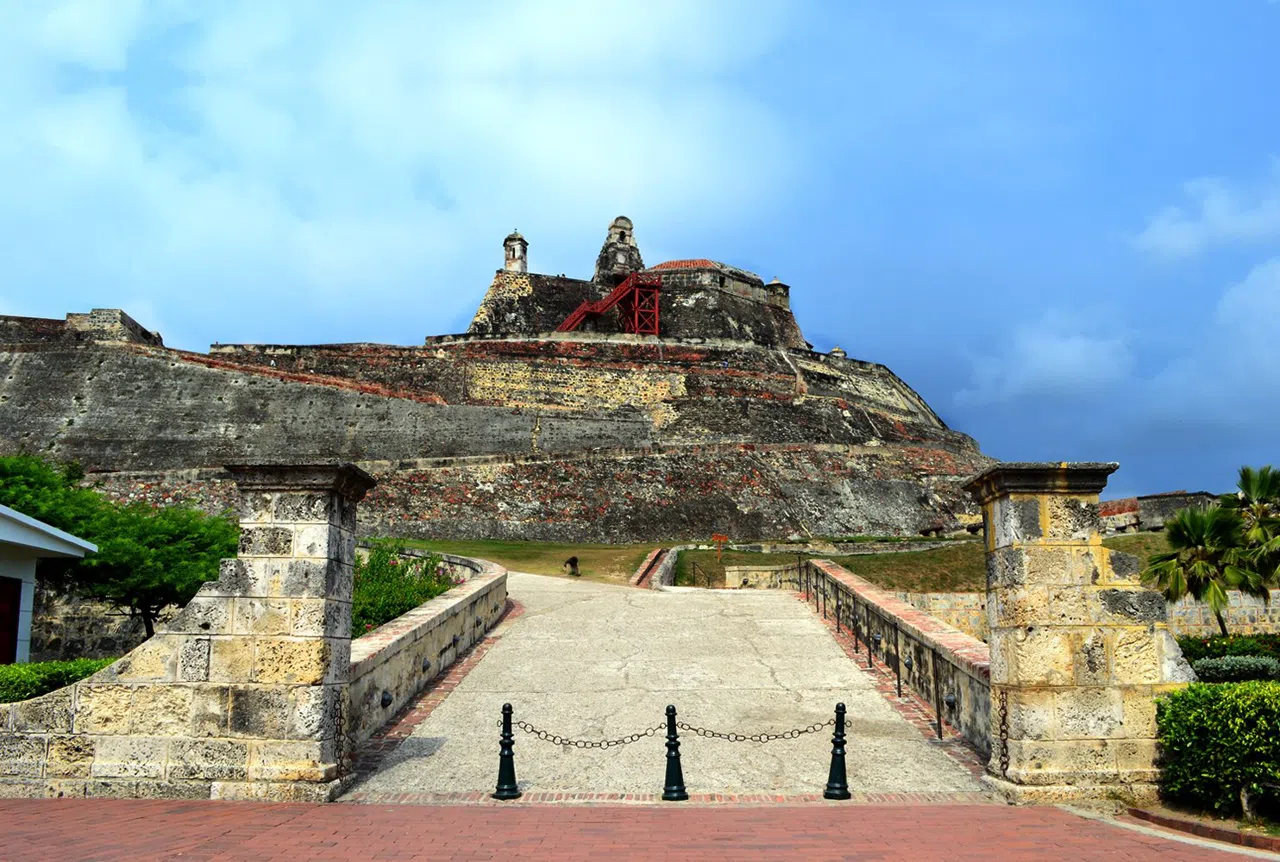
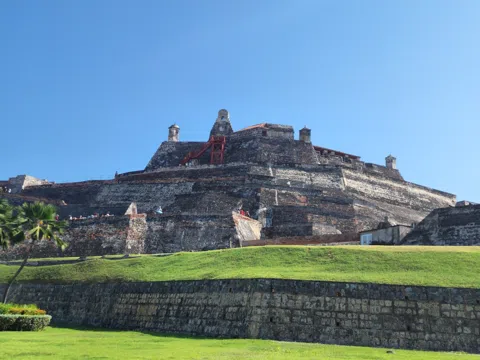
Baluarte Santo Domingo, two minutes from the church door, is a flat coral-stone bastion on the sea wall with old cannons pointing out to sea. Open-air tables and low walls face straight into the Caribbean sunset, with waves breaking below. It is a public space, free to walk up, with free cultural programming.
The name on the wall changed recently. Café del Mar held this bastion for two decades and was evicted on 3 September 2024 after losing at the Consejo de Estado. The city's Escuela Taller Cartagena de Indias reopened it in May 2025 as a social gastrobar staffed by its graduates, serving 16:00 to 23:00 daily. Caribbean plates and drinks run a deliberately wide price range, $$. Sunset tables go first-come.
Churches and museums within walking distance
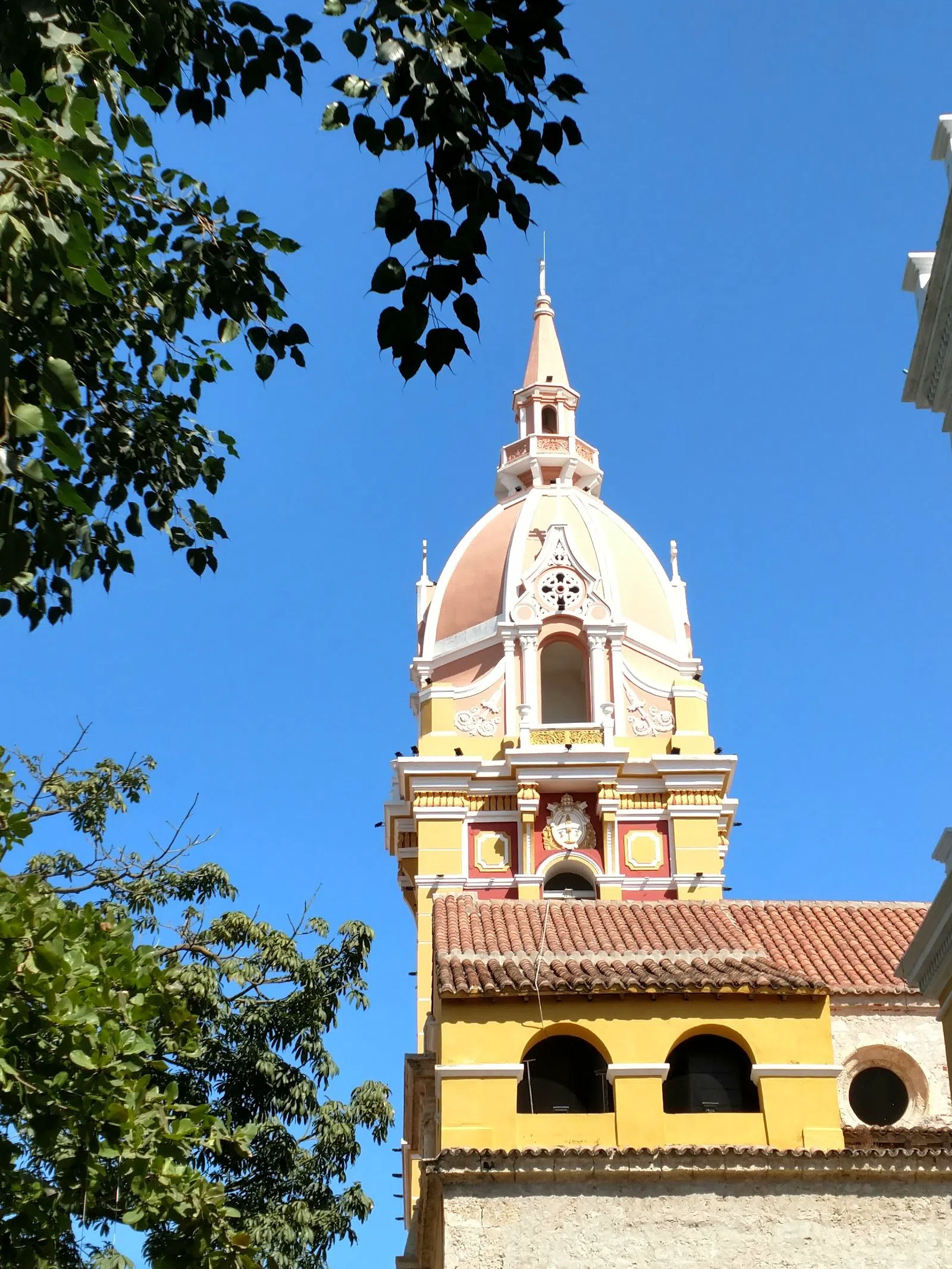
Catedral Basílica Menor de Santa Catalina de Alejandría (Plaza de la Proclamación), three minutes away, was built between 1577 and 1612. The fat coral-stone bell tower is rendered in ochre and terracotta under a red-and-cream banded cupola, and it is the landmark you navigate the whole quarter by. Inside are thick stone columns, a gilded altar and an 18th-century pulpit. Entry is free; the audio tour is $12,000 COP. Mass runs Monday to Friday at 10:00 and 12:00, Saturday at 12:00, and Sunday at 10:00, 12:00 and 19:00. Access outside mass hours can be unpredictable.
Santuario y Museo de San Pedro Claver (Plaza San Pedro Claver) is the nearby church where you pay and get a proper museum and cloister for it. A tall bare coral-stone facade carries the dome; the adjoining Jesuit cloister is planted with mango and palm trees around a well, and the saint's remains are displayed in a glass reliquary beneath the high altar. The slavery-and-abolition story told here gives Santo Domingo's colonial setting the context it lacks on its own. Open Monday to Friday 09:00 to 16:30, and Saturday, Sunday and holidays 10:00 to 16:00. Foreign adults pay $30,000 COP, reduced $22,000 COP. Colombians pay $21,000 COP, reduced $13,000 COP. Bolívar residents pay $8,000 COP, and under-sixes are free. Allow extra time at the single ticket window.
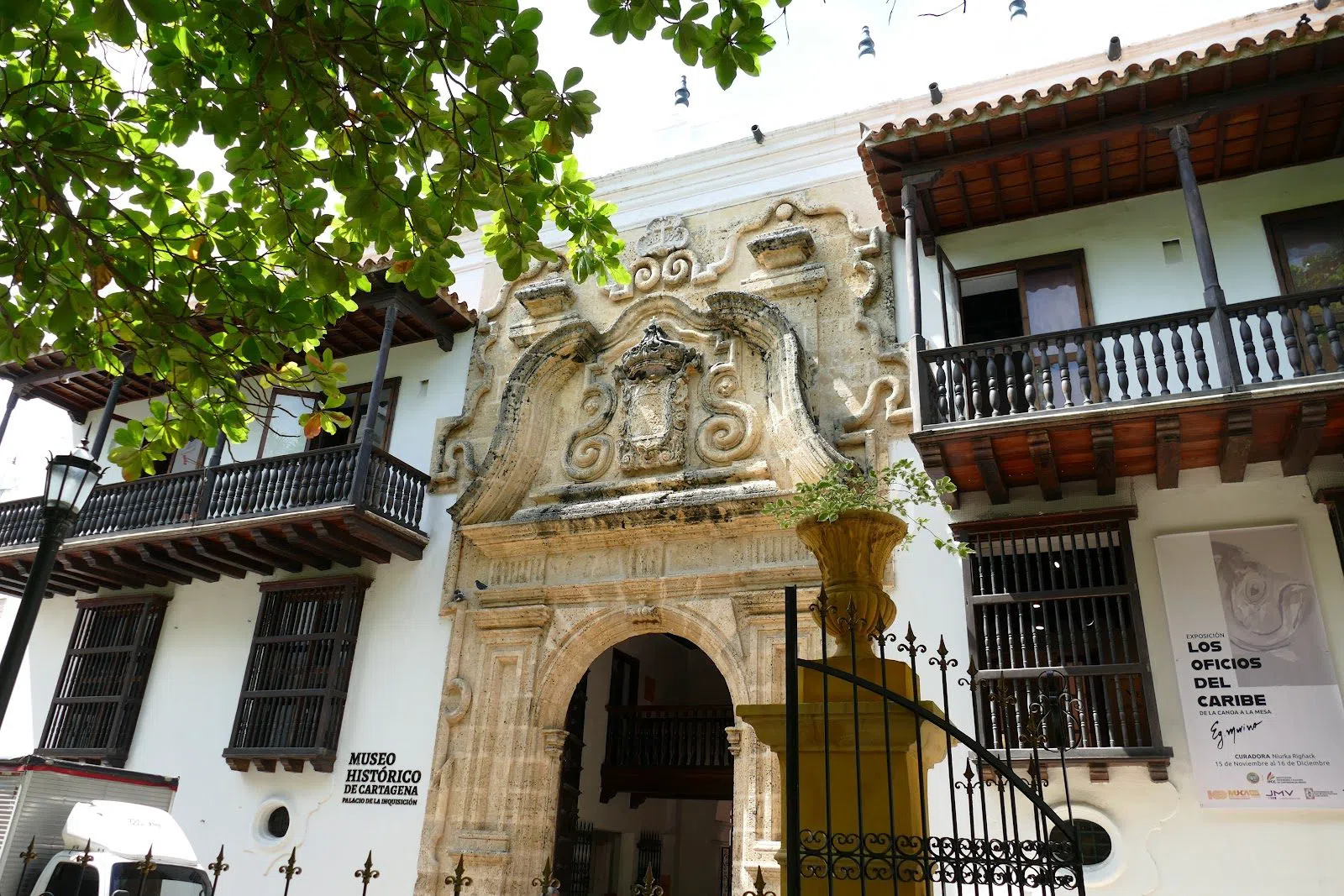
Museo Histórico de Cartagena de Indias (Palacio de la Inquisición, Plaza de Bolívar) is five minutes from the church. The baroque carved stone doorway is crowned with a Habsburg coat of arms, a long dark wooden balcony runs the whole facade, and a small street-side denunciation window is marked with a cross. Open Monday to Saturday 09:00 to 18:00, Sunday and holidays 10:00 to 16:00. Adults pay $24,000 COP; children, students, teachers and seniors pay $20,000 COP. Under-fives are free. The last Sunday of the month is free and also the busiest.
Museo del Oro Zenú (Cra 4 #33-26) is free and the obvious fallback in rain or midday heat. Darkened galleries on Parque Bolívar hold spotlit cases of Zenú gold filigree ear ornaments and nose rings, fine woven-wire work and painted ceramic funerary vessels. Open Tuesday to Saturday 09:00 to 17:00 and Sunday 09:00 to 14:00, closed Mondays, with last entry one hour before closing. No booking needed.

Museo Naval del Caribe (Calle San Juan de Dios 3-62) explains why Cartagena is a walled city at all, the missing half of the Santo Domingo story. It fills a long white two-storey colonial building with arcaded galleries beside Plaza San Pedro Claver: rigged ship models, cannon, charts of the 1741 siege and a walk-through submarine section. Open daily 10:00 to 18:00, and from 09:00 in Colombian holiday periods. Adults pay $24,000 COP, students $10,000 COP, and children and military $5,000 COP.
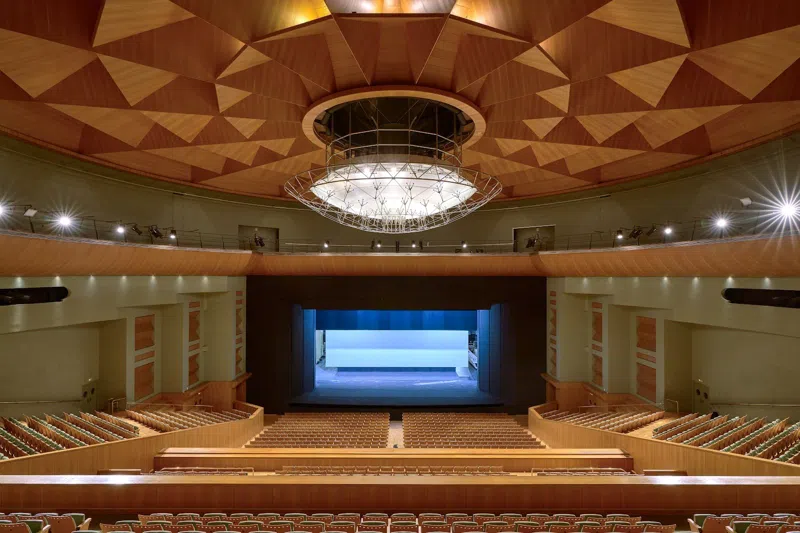
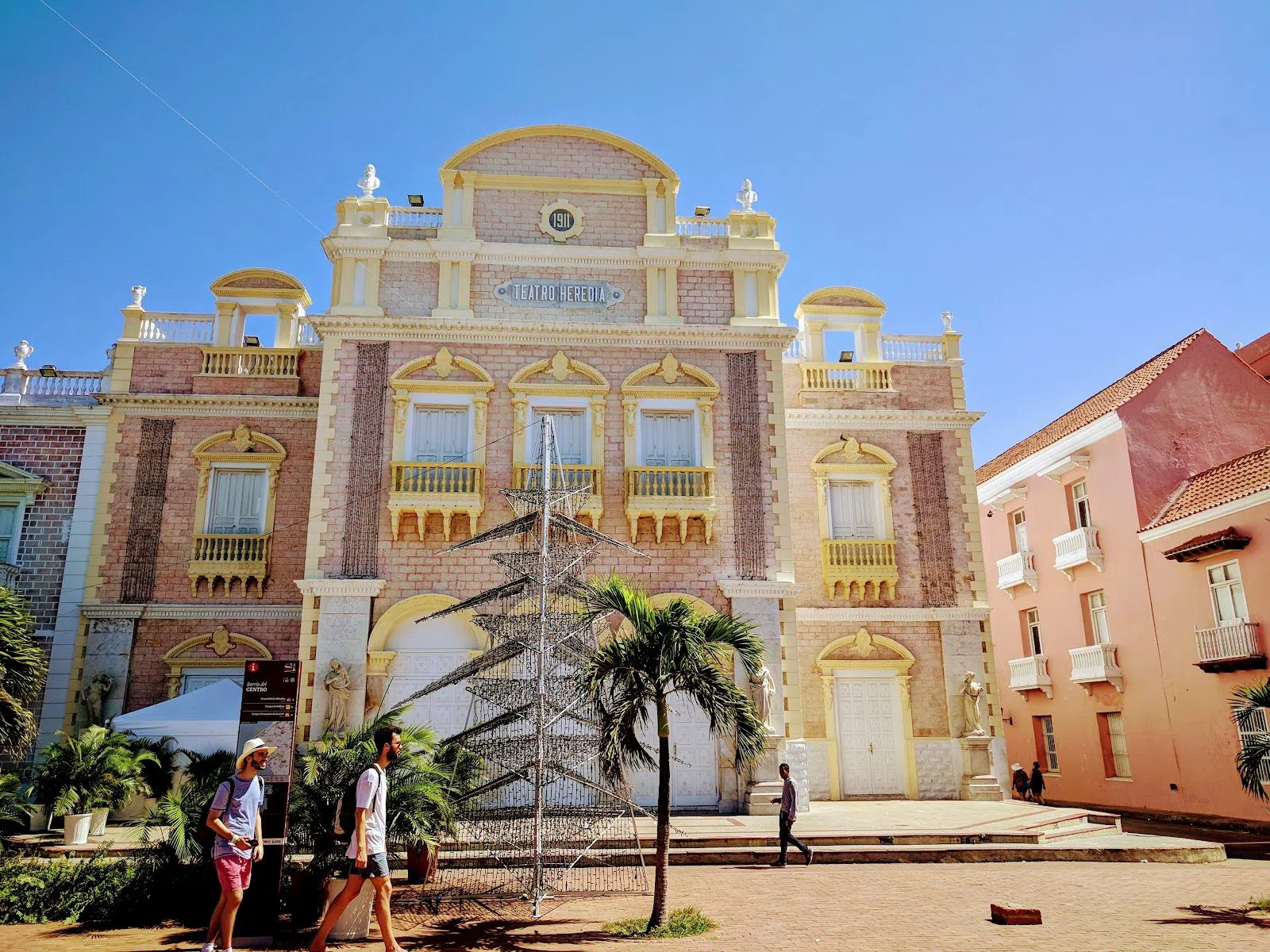
Teatro Adolfo Mejía (Plaza de la Merced 38-101) opened in 1911 as the Teatro Municipal to a design by Luis Felipe Jaspe, shut in 1970 and reopened restored in 1998. Behind the pale neoclassical facade is an Italian-style horseshoe auditorium seating 700 under three tiers of carved balcony boxes and a painted ceiling mural. Entry is by performance ticket, and the interior is the reason to go. Much of the 2026 programme, including concerts in the Cartagena Festival de Música, is free to the public. Check the programme before you walk over.
Books, dinner and drinks nearby
Ábaco Libros y Café (Calle 36 #3-86) has been open since 2002 and is the best place in the walled city to buy a decent book on Cartagena's architecture. Floor-to-ceiling dark wood shelving covers every wall, with Spanish and English spines, large-format regional photography books and a small espresso counter at the rear. Open Monday to Saturday 09:00 to 21:00 and Sunday 11:00 to 21:00. $$.

La Cevichería (Calle Stuart, San Diego) is the walled city's most famous seafood room, open daily 12:00 to 23:00. It is a small painted street-front with a handful of pavement tables under an awning and a chalkboard menu, and diners wait on the kerb. It takes no reservations, and a party of six or more will wait a long time at peak lunch and dinner. Arrive at opening or mid-afternoon. $$$.

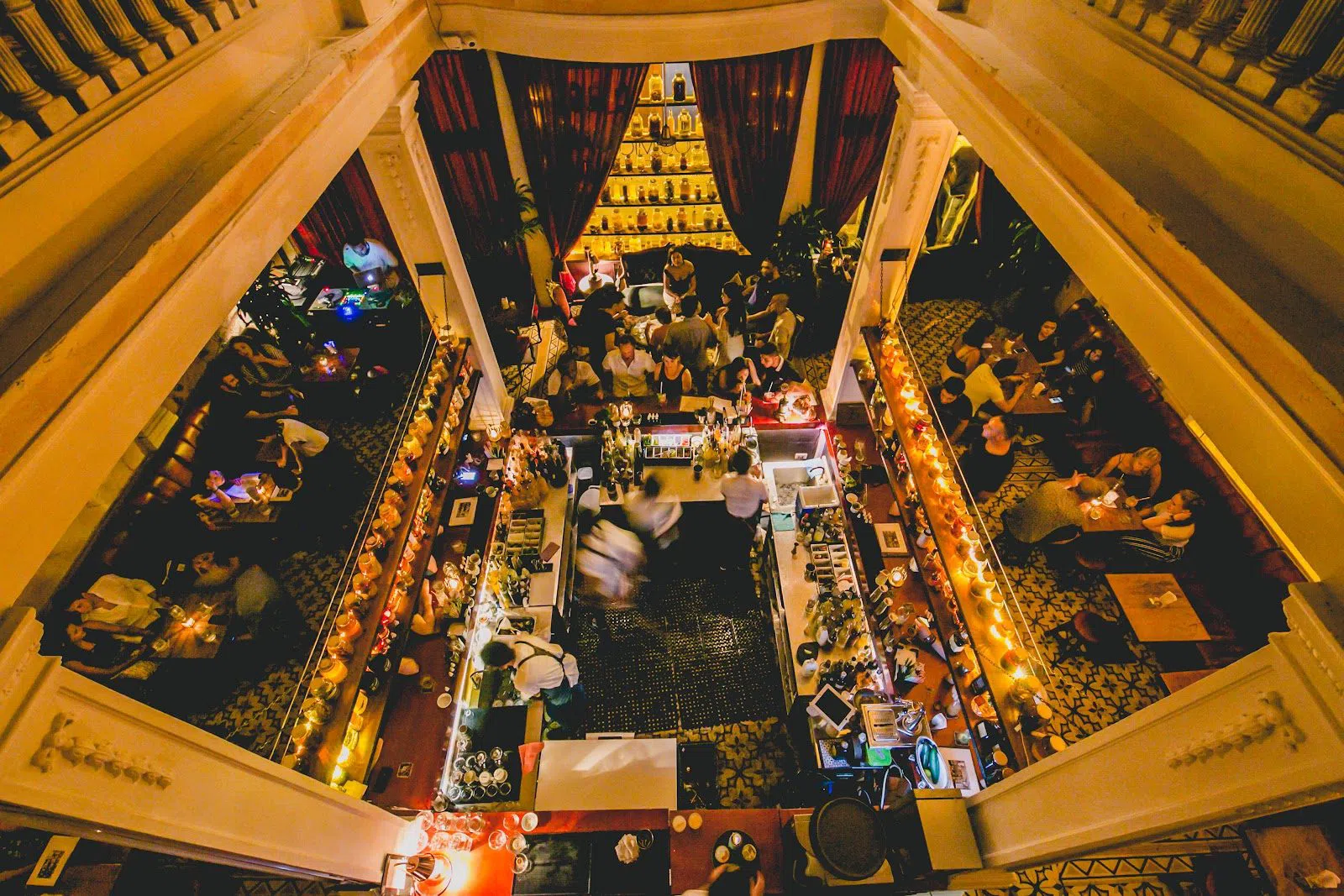
Alquímico (Calle del Colegio), 150 metres from the church, is the after-dark pairing. The restored three-storey mansion puts an apothecary-style bar walled with glass bottles and botanicals on the ground floor, a darker and clubbier room above it, and a rooftop planted with greenery around a DJ booth. It placed 11th on The World's 50 Best Bars 2026 and took that year's Michter's Art of Hospitality award, and it is busy from opening. Reservations are not taken in practice, and a queue forms at the door after about 21:00. Split a party above six, or arrive at 19:00 when it opens. $$$.
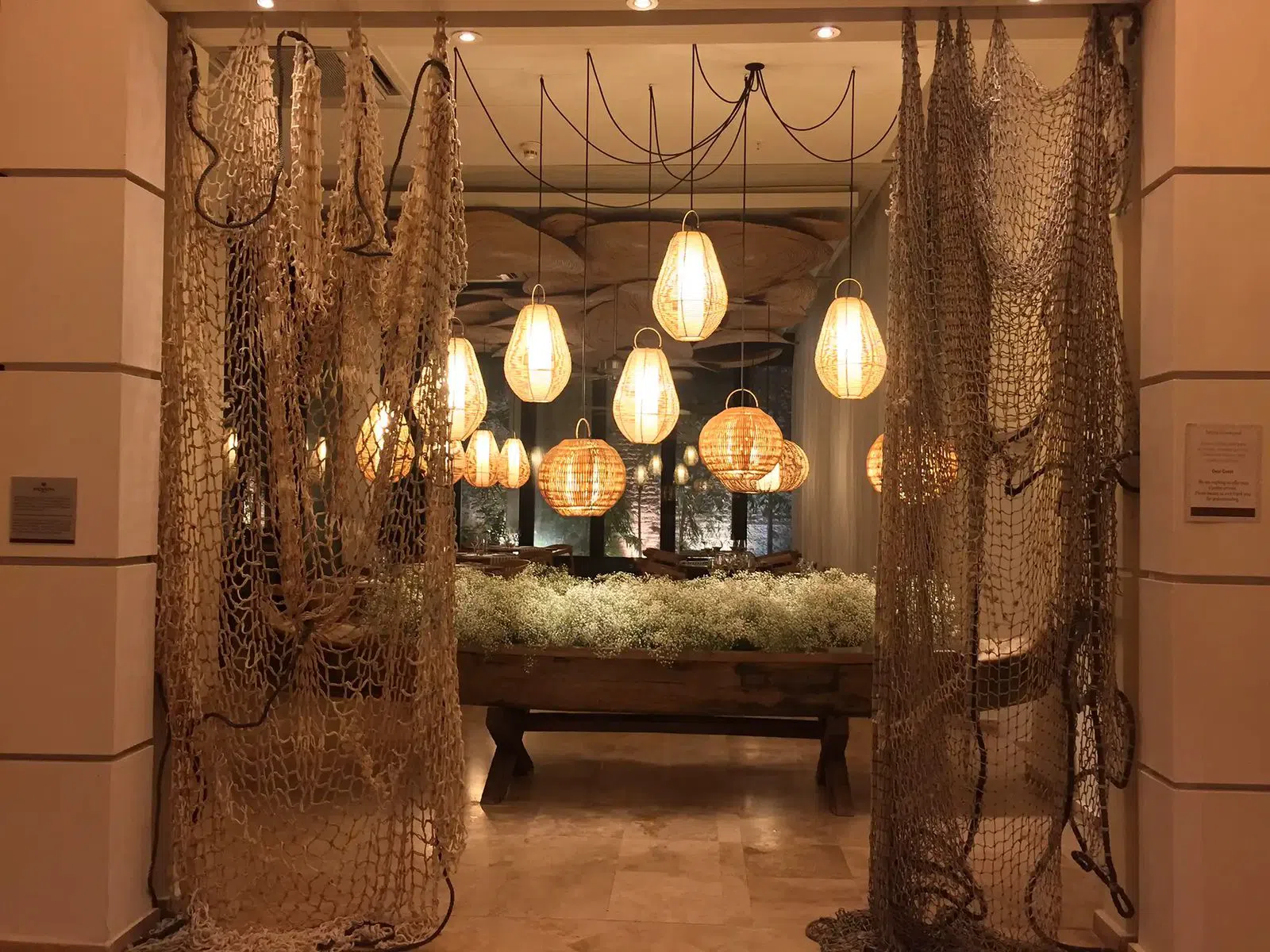
Alyzia Rooftop & Dining by Movich Hotel (Calle Vélez Daníes #4-39) is the paid vantage point for understanding where Santo Domingo sits in the old town. A small infinity pool, loungers and a long bar occupy a colonial rooftop with a 360-degree view across terracotta roofs, the cathedral's striped dome on one side and the Bocagrande high-rises and bay on the other. The rooftop bar runs 09:00 to 23:00 and the restaurant 12:00 to 22:30. Reserve by WhatsApp or phone, because sunset slots go first. $$$$.
Plaza de la Trinidad (Getsemaní) is a 15-minute walk from the church and fills after 21:00. A floodlit white 17th-century church facade stands above broad concrete steps packed with people after dark, arepa and skewer carts smoking at the edges, murals down the side streets and dance circles forming where there is room. Street food and drinks are cash only, $. Watch for stray dogs and over-eager sellers.
Practical details
The church takes no bookings, and its mass schedule is the whole access plan; the Museo del Oro Zenú closes on Mondays and the cloister courtyard closes for training sessions. Reserve the rooftop by phone, book a guided walk ahead, and carry cash for Getsemaní.
See the Cartagena guide and the Cartagena hotel search.
Prima di partire
Do you need a ticket to enter Iglesia de Santo Domingo?
No. Entry is free, with no ticket desk and nothing to book, so you walk straight in. There is a donation box, and the nuns at the door will take a small contribution.
When is Santo Domingo church actually open?
The doors are open around mass and little else: Monday at 06:30, 09:00, 11:00 and 17:00; Tuesday to Friday at 11:00 and 17:00; Saturday at 17:00; Sunday at 11:00 and 17:00. Turn up mid-afternoon and you stay outside.
Can you look around while mass is on?
The church expects groups to keep quiet and to leave the nave during mass. Walking-tour guides do their talking outside on the plaza and send people in a few at a time.
What is worth seeing inside?
Inside there is one barrel-vaulted nave, a baroque altar of gilded marble holding the Virgen del Rosario, crowned in gold and emeralds, and a dark carved wooden Christ from the 19th century. Outside, the squat ochre facade is coral stone, and the bell tower above it is stubby, truncated and leans enough to see.
What is the best time of day to photograph the facade?
Early morning. The plaza is where the walled city's nightlife happens, so later in the day you will have a crowd in the frame.